Potage (thick vegetable and chickpea soup)

One of Iaia’s great winter staples, this thick vegetable soup can take just about anything you throw at it. She often puts small pieces of diced Serrano ham, or whichever vegetable looks good at the greengrocers.  You can use vegetable stock for a vegetarian soup, but I happened to have chicken stock in the freezer so this recipe was made with that.

Chickpeas are somewhat contentious in our household. Oscar loves them but I am a little less enamoured and tend to add far fewer than he would like (occasionally omitting them altogether, by accident, of course). However, they really do make this soup properly filling and really satisfying.  We buy dried chickpeas and soak them overnight in a heap of water before adding them to any slow-cooked stew or soup for a full couple of hours at least. If you are using the canned version, pop them in at the same time as the haricot beans to heat through and absorb some of the flavours. As with most stew-like dishes, this one improves after sitting quietly overnight.

ingredients

What you need for four people:
1 large onion
3 cloves of garlic
2 large (3 small) pear tomatoes
2 carrots
1 stick of cardoon if you can find it
4 medium young artichokes
250g chickpeas (pre-soak if dried)
1 small jar of white haricot beans
600ml or so of good stock
2 hard boiled eggs
salt
olive oil

IMG_9694

What you do:
I prefer to do all the washing, chopping and grating before turning any heat on as it saves me the frustration of watching my base veggies burn because I can’t peel or chop something quickly enough (and yes, I learnt this the hard way). So, finely chop your onion and garlic, then chop the carrot and cardoon into smallish pieces and wash your spinach thoroughly. Now grate the tomatoes, discarding the skin, and last of all, peel the tough outer leaves off the artichokes, slice off the base and the leaf tips so that only tender pale artichoke, which you will cut into eighths, remains.
When everything is ready, put a generous tablespoon of good olive oil into a large, heavy-based saucepan and gently fry the onion and garlic. Once they have softened, add the tomato and stir for a couple of minutes so that it gets a bit of a fry, too – this brings out a deeper flavour than just letting it boil along with everything else.  In go the carrots, cardoon and artichoke with a stir. If you are using pre-soaked chickpeas, pop them in now too.
The amount of stock you use will depend on how large your vegetables are. I used about 600ml for this particular potage. The idea is to just cover everything so that you end up with a really thick broth.  Once you have put the liquid in, you can add some salt to taste and then you have to turn everything down to the lowest heat possible and let it simmer very gently for at least 2 hours. Iaia says, “fes-ho poquet a poquet” which means “do it little by little”.
Towards the end of the cooking time, add the spinach, beans and canned chickpeas, which will be happiest (and tastiest) with about 20 minutes of gentle simmering.  Just before serving, roughly chop your two boiled eggs and let them sink into what should be a very good-looking pan of potage.
Serve with: bread and red
Spinach omelette

Oscar and I work in the evenings and often don’t get home before 10 pm during the week. With only a bit of fruit between lunch and then, dinner is always a bit of a desperate affair, often involving bits of cheese, salami, avocado…in short, anything that doesn’t require cooking and can be shoved quickly into a roll or forked hastily into a hungry mouth.
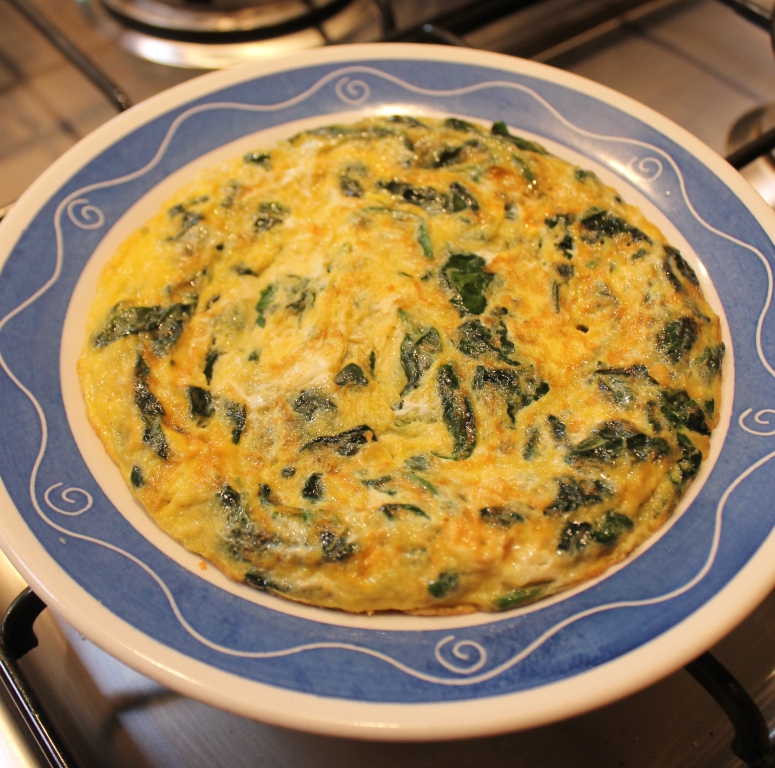
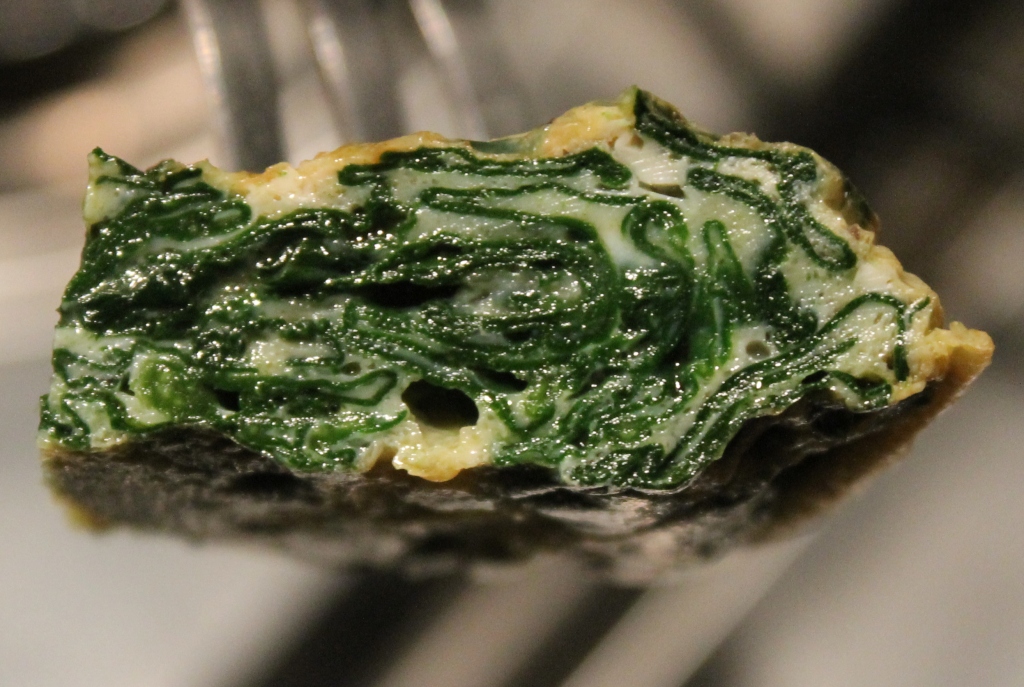
Pre-cooking an omelette and leaving it to cool while we are at work means that we have something more substantial to accompany our bread, and one of our favourites is Iaia’s IMG_9399spinach omelette, to which she usually adds ajos tiernos (spring-garlic). As I find the ajos a little strong for late evening supper, I prefer to use a small clove of normal garlic to flavour the gorgeously convoluted dark green leaves. I know this recipe is simple, but it is one of Iaia’s staples, so it really can’t be left out!

What you need:ingredients
3 eggs
a small bunch of spinach
a clove of garlic
salt, nutmeg
olive oil

What you do:
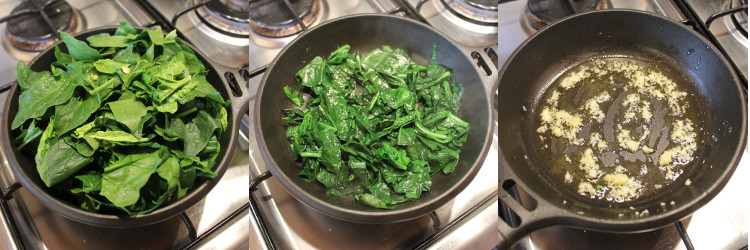
Wash your spinach carefully and chop it roughly. Wilt in a non-stick frying pan – the water from washing will be enough, no need to add any – then leave to drain in a colander while you get the eggs and garlic ready.  I like to microplane my garlic rather than slice it, but if you prefer little slivers, by all means, slice away.  Once peeled and prepped, gently fry your garlic in about a tbsp of olive oil; make sure you don’t burn it, or it will be horribly bitter.
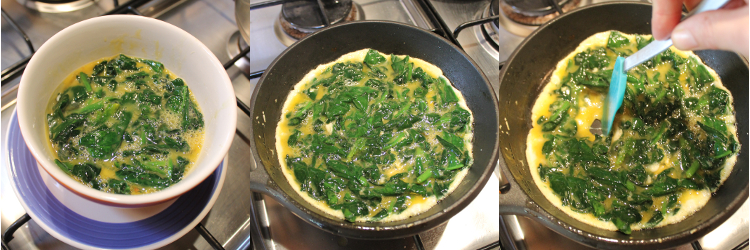
Add the cooked spinach and continue to fry until there is hardly any wateriness left.frying Remove from the heat. Beat your three eggs in a medium-sized bowl, adding salt and a little nutmeg or any other seasoning you fancy. Put your spinach into the same egg bowl and stir until thoroughly mixed.
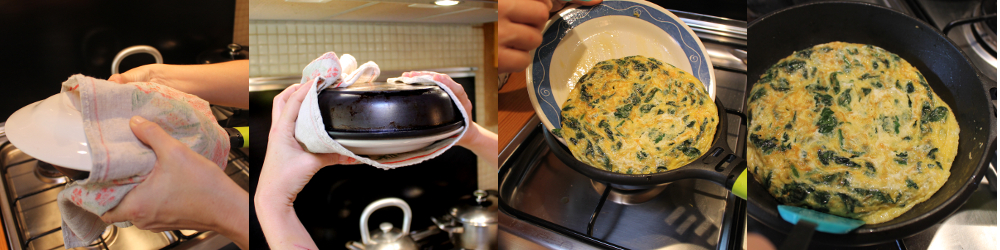
Get your pan good and hot, and coat it with a little oil. Pour your egg and spinach mix in. If the mix is very deep in the pan (ie. you have a small pan), you will need to gently push it around (without disturbing the edges) so that the omelette cooks evenly, but take care not to turn it into scrambled egg. preflipAfter a few minutes, you will have a browned bottom and edge with a curd-like centre. It is time to flip.  Take your pan off the heat and cover it with a plate. Wrap a tea towel over the top and base of the pan to avoid burning yourself, and grip firmly from either side. Flip everything over with conviction so that the omelette flops out onto your plate in one piece. Put your pan back on the heat and slide your now raw-side-down omelette back into the pan to finish cooking. I like to use a spatula to tuck the edges under a little because it gives a lovely rounded finish, which is especially important if you are cooking a larger omelette. flippingHeat off. Omelette out. Eat hot, or leave to cool for a delicious roll filling.

IMG_9395

Arros d’hivern (winter rice)

Winter is never very long or arduous in Valencia but there are some days when the cold gets right into your bones and hot, nourishing soupy rice is the only thing that will warm you up.  This is one of the first things I learnt to cook here and one of my favourite rice dishes. It is also incredibly easy!

The cardet (cardoon in English) is delicious but it may be a bit hard to find. If you can’t manage to get your hands on any, just leave it out – there is no need (and no way) to substitute it.

What you need:

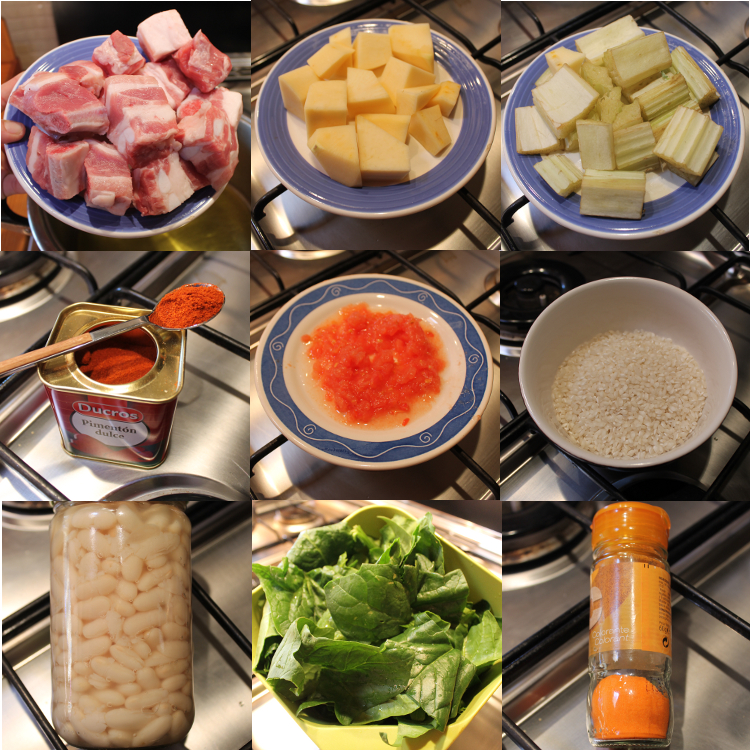
Two meaty pork ribs cut into pieces (650g)
A medium-sized swedeingredients
A stick of cardoon
Sweet paprika
One pear tomato
A jar of white beans
A bunch of spinach.
8 small handfuls of white rice (250g)
Enough water to cook the rice and still be soupy
Saffron or turmeric powder*
Olive oil
Salt (season as you go and to your own taste).

 *People have a strange aversion to white rice here. They love to see it coloured yellow. Saffron is bloody expensive and gets lost in this dish, so I usually use turmeric. Otherwise, just leave it white.

What you do:

Peel and chop the swede into bite-sized chunks.  Strip the cardoon of any leaves and if the stringy fibres are particularly thick, strip some off. Chop into mouth-friendly lengths. Slice the tomato in half and grate it onto a plate, discarding the skin. Wash the spinach thoroughly and chop or tear it a bit, so you don’t get giant leaves on your spoon when it comes to eating.
Pour enough oil into a large saucepan to coat the bottom and heat (if your pork is especially fatty, use less olive oil).
Pop the pork into the pan to brown; the browner it gets, the tastier the rice – but don’t burn it!
Put a generous pinch (or a small teaspoon) of sweet paprika into the pan and stir quickly so that it doesn’t stick and burn. After about 30 seconds, add the grated tomato and stir to deglaze the pan.
Pour in enough water to cover the pork, then add the swede and cardoon and top the water up so that everything is generously covered. Bring to a boil.
Cover the saucepan and turn the heat down. Simmer for at least two hours or until the swede and cardoon are cooked through (there are two factors to take into account here; one is that the bigger the pieces, the longer they will take to cook, and the second – and more important – factor is that the longer it simmers, the better the stock will be so no half-hour skimping!).
When the veggies are cooked** and you are ready to eat, check your seasoning and if you are happy with it, turn the heat back up to get a rolling boil before putting the rice in. Stir it around a bit and cover again, so as little stock as possible evaporates. About 10 minutes before the rice is cooked (read the packet – every rice is different, here it takes about 20 minutes to cook through), add the spinach and white beans and give everything a gentle stir.
Ladle into bowls and let sit for five minutes before eating. If you are lucky, you will get a sort of skin over the top, which is proof of a fantastic arros d’hivern!

finished dish

 Serve with: a full-bodied red to help warm those wintery cockles.

 **I usually make a double quantity and at this point, before putting the rice, spinach and beans, take out half the stock, pork and veggies to freeze for another day. It means you will have this delicious rice in just 20 minutes next time!