Oniony roast lamb

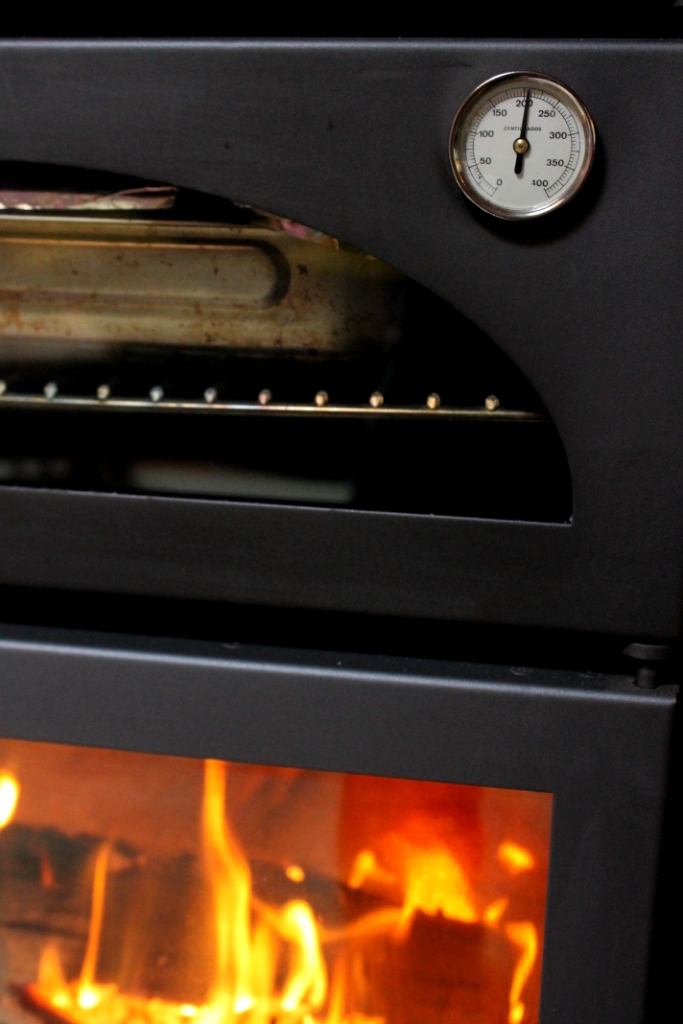
fireplaceNot only does our little fireplace keep us warm throughout winter, but it also furnishes us with an extra oven, which I use constantly in the cold months for pizzas, rice and meat dishes and roast veggies.  Today I cooked a Iaia-style leg of lamb with caramelised onions in it, and it behaved beautifully, staying really hot for the first half an hour or so and then gradually dropping down to about 160ºC by which time the lamb was perfect.
Our Iaia is not a fan of cold roast meat, but I am, so I cook a leg for 2 people to make sure there is plenty left over for salads and sandwiches.  And always use more onions and garlic than seems necessary, because they caramelise down to so little and taste so good that there is never enough!

What you need:lamb in pan
1 leg of lamb
6 onions
a head of garlic
a little white wine
a little olive oil
salt and pepper

What you do:
Heat your oven to about 210ºC. Roughly chop all of the onions into your baking dish. Break up the head of garlic into cloves without peeling them and chuck them in too. This way, the garlic cooks inside its jacket, and you get an amazingly fragrant paste to squish over your meat or mix into the juices for gravy deluxe.

Lay the leg of lamb on its oniony bed and season well with salt and pepper; add any herbs you fancy too.  Pour about ¾ glass of white wine into the tray and drizzle a little olive oil over the lamb – if your joint has been (sadly) deprived of its fat, add extra and massage into the meat.
Cover with foil and pop into the hot oven.  After half an hour, reduce the heat to about 170ºC (the exact temperature will depend on how fiercely your oven burns  – you want the lamb to cook for two hours without frazzling, so adjust as you see fit).

I take the foil off after the first hour and spoon some onion/wine/lamb juice over the meat.  If the onions appear to be either burning or sticking, it means you have not put in enough liquid, so add some quickly.

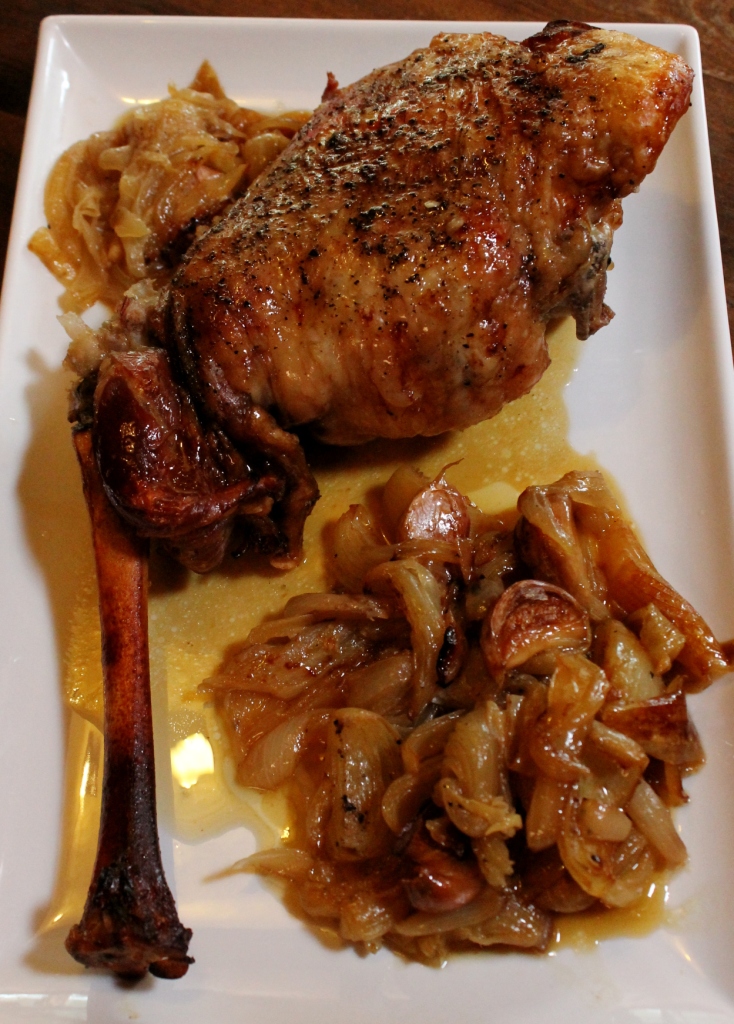
We like our lamb brown right to the bone, and the two-hour roasting time ensures both that and the scrummiest onions ever. They will be gloriously golden, the garlic softly squishy and the meat tender, with a darkened crusty exterior.

Leaving it to rest is always the best, but there are times (like today) when hunger gets the better of me, and it goes straight to the plate.
finished

Serve with: greens and a red

Potage (thick vegetable and chickpea soup)

One of Iaia’s great winter staples, this thick vegetable soup can take just about anything you throw at it. She often puts small pieces of diced Serrano ham, or whichever vegetable looks good at the greengrocers.  You can use vegetable stock for a vegetarian soup, but I happened to have chicken stock in the freezer so this recipe was made with that.

Chickpeas are somewhat contentious in our household. Oscar loves them but I am a little less enamoured and tend to add far fewer than he would like (occasionally omitting them altogether, by accident, of course). However, they really do make this soup properly filling and really satisfying.  We buy dried chickpeas and soak them overnight in a heap of water before adding them to any slow-cooked stew or soup for a full couple of hours at least. If you are using the canned version, pop them in at the same time as the haricot beans to heat through and absorb some of the flavours. As with most stew-like dishes, this one improves after sitting quietly overnight.

ingredients

What you need for four people:
1 large onion
3 cloves of garlic
2 large (3 small) pear tomatoes
2 carrots
1 stick of cardoon if you can find it
4 medium young artichokes
250g chickpeas (pre-soak if dried)
1 small jar of white haricot beans
600ml or so of good stock
2 hard boiled eggs
salt
olive oil

IMG_9694

What you do:
I prefer to do all the washing, chopping and grating before turning any heat on as it saves me the frustration of watching my base veggies burn because I can’t peel or chop something quickly enough (and yes, I learnt this the hard way). So, finely chop your onion and garlic, then chop the carrot and cardoon into smallish pieces and wash your spinach thoroughly. Now grate the tomatoes, discarding the skin, and last of all, peel the tough outer leaves off the artichokes, slice off the base and the leaf tips so that only tender pale artichoke, which you will cut into eighths, remains.
When everything is ready, put a generous tablespoon of good olive oil into a large, heavy-based saucepan and gently fry the onion and garlic. Once they have softened, add the tomato and stir for a couple of minutes so that it gets a bit of a fry, too – this brings out a deeper flavour than just letting it boil along with everything else.  In go the carrots, cardoon and artichoke with a stir. If you are using pre-soaked chickpeas, pop them in now too.
The amount of stock you use will depend on how large your vegetables are. I used about 600ml for this particular potage. The idea is to just cover everything so that you end up with a really thick broth.  Once you have put the liquid in, you can add some salt to taste and then you have to turn everything down to the lowest heat possible and let it simmer very gently for at least 2 hours. Iaia says, “fes-ho poquet a poquet” which means “do it little by little”.
Towards the end of the cooking time, add the spinach, beans and canned chickpeas, which will be happiest (and tastiest) with about 20 minutes of gentle simmering.  Just before serving, roughly chop your two boiled eggs and let them sink into what should be a very good-looking pan of potage.
Serve with: bread and red

Iaia’s braised lamb shanks

I’ve got exams starting next Monday, so this week’s cooking is all about minimum time investment for maximum flavour.  Iaia’s lamb shanks fit the bill perfectly and are what we had for lunch today. It’s true, they do require slow cooking, but you can pop them on the stove and forget about them for a couple of hours while you do something else (like study). Once cooked, they can be left off the heat in the pan to develop their flavour for hours, or even overnight. A quick reheat is all that’s needed before serving.

What you need for two people:
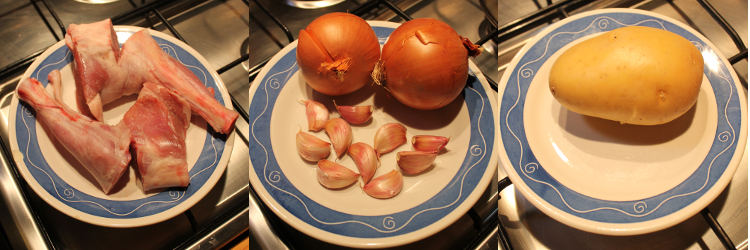
two lamb shanksingredients (get the butcher to nick them like these ones here, so they cook evenly)
a head of garlic
2 well-sized onions
a large potato
salt, pepper and any herbs you fancy
a generous half glass of white wine
the same of water
a couple of tbsp of olive oil
a spoonful or so of flour

What you do:
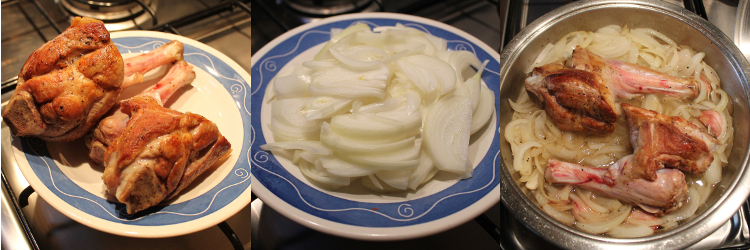
Season your flour generously with salt and pepper, then lightly dust your lamb with the mixture. Heat the oil in a heavy-based (preferably oven-proof) saucepan or casserole dish and brown the lamb well.
While the meat is colouring, take the head of garlic apart but don’t peel the cloves, they will steam into a lovely mild pulp in their pink jackets. Peel the onions and cut them in half, then into slices (not too thinly, or they’ll burn).
When you think the meat is well browned, remove it from the pan and set aside while you toss the onion and garlic in the hot oil to soften without colouring. You will need to stir things about because you don’t want the onion colouring or burning. Adding a little salt to the onion will encourage it to release water and help avoid burning too.browningandbeddingPour the wine and water into the pan, settle the lamb shanks comfortably into their oniony bed, cover tightly, turn the heat down and leave everything to simmer quietly for a couple of hours. You may want to check the liquid levels every now and then, depending on how well your saucepan seals.
After about an hour and a half, peel and cut your potato into smallish pieces, dropping them around the lamb. Cover and simmer again until the totties are cooked through. Then switch everything off until about 20 minutes before you want to eat (or continue straight onto the next step).finishingWhile you are steaming any accompanying vegetables, finish the lamb off by putting it under the grill, making sure it isn’t too close to the heat source. This will brown the potatoes and give your melting meat a nice dark crusty exterior.

IMG_9379

Serve with: steamed greens

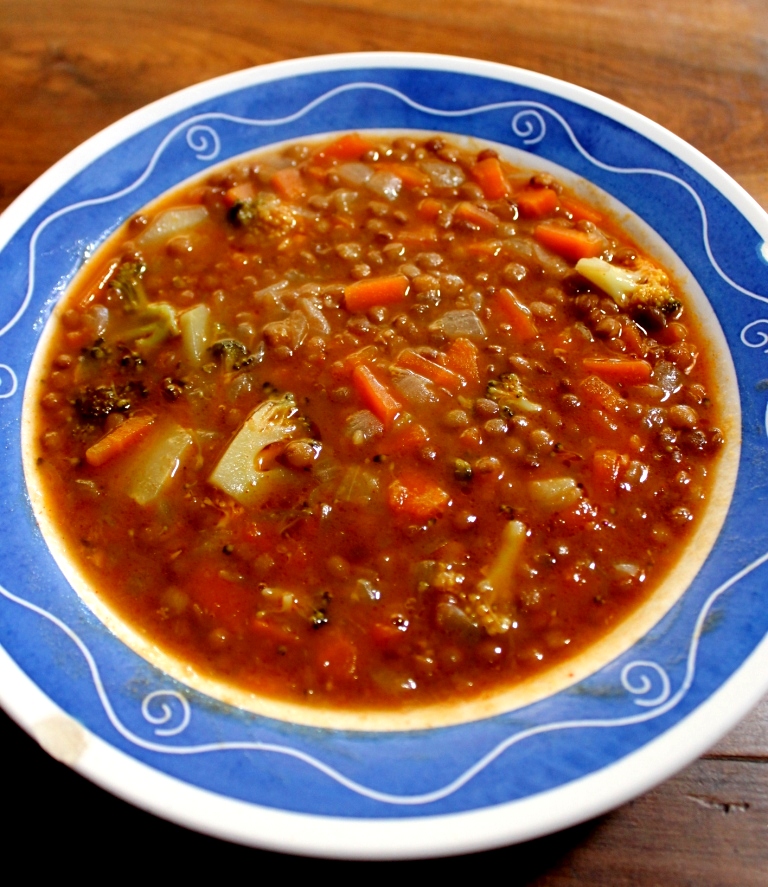
Llentilles de la tia Toni (Auntie Toni’s lentils)

I hated lentils when I was a kid, but that was probably because my experience of them was limited to the goopy, mushy, boarding school variety that came with soggy toast for breakfast.
Years later, here in Valencia, I was served a plate of lentils that had been stewed with chorizo, pork trotter, ribs and root vegetables. It smelt so incredible that I couldn’t resist a taste, and the smoky, porky, gravy-laden little things, which had not (miraculously) turned to sludge, converted me instantly.
This is a far simpler but still absolutely delicious lentil recipe that Iaia’s sister Toni taught me years ago.  It is quick and ridiculously easy – no soaking or sautéing required. Just chuck all the raw ingredients in a saucepan, add water, and simmer for an hour or two.
If you leave out the ham bone, it is perfect for vegans, and of course, you can tweak the spices and/or vegetables to suit your own taste, or to use up anything lurking in your crisper (for us, it was broccoli today). Using vegetable, chicken or beef stock will provide a greater depth of flavour, but water works perfectly well on its own too.

 What you need for two hungry people:ingredients
150g little brown lentils (dry – no need to soak them first)
1 large onion
1 large carrot
1 or 2 cloves of garlic
a piece of Serrano (or other) ham bone
1 pear tomato
sweet paprika
any other spices you’d like to add
salt (remembering that Serrano ham is already pretty salty)
800 ml water (and/or stock if you have some)

What you do:
Finely chop the onion and carrot. Grate the tomato, discard the skins, and microplane or crush the garlic. Put everything into a cold saucepan over medium heat and bring it to a boil, then turn it down and leave it to simmer for a couple of hours. Check the pan from time to time to make sure nothing is sticking to the bottom.

 lentils

Serve with: bread and a red

Arros d’hivern (winter rice)

Winter is never very long or arduous in Valencia but there are some days when the cold gets right into your bones and hot, nourishing soupy rice is the only thing that will warm you up.  This is one of the first things I learnt to cook here and one of my favourite rice dishes. It is also incredibly easy!

The cardet (cardoon in English) is delicious but it may be a bit hard to find. If you can’t manage to get your hands on any, just leave it out – there is no need (and no way) to substitute it.

What you need:

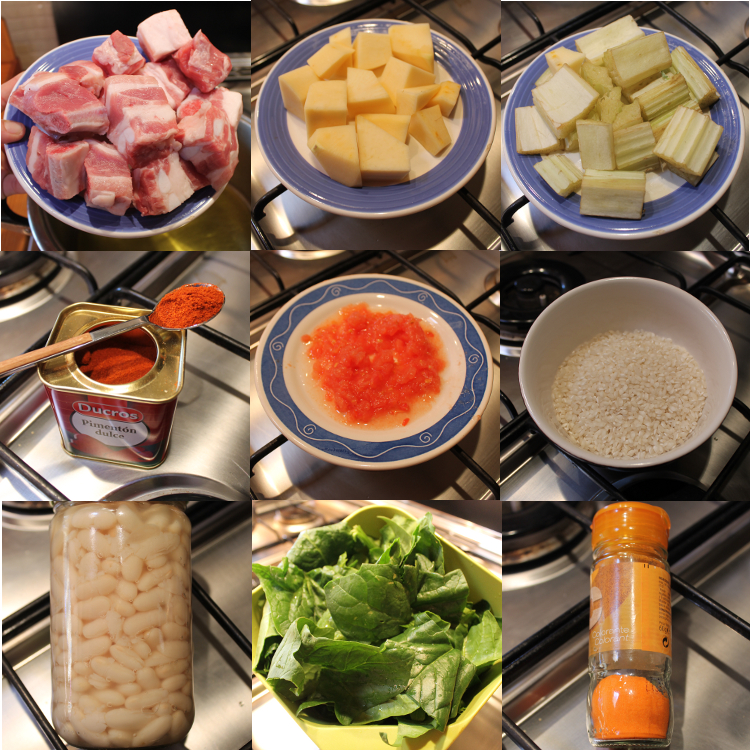
Two meaty pork ribs cut into pieces (650g)
A medium-sized swedeingredients
A stick of cardoon
Sweet paprika
One pear tomato
A jar of white beans
A bunch of spinach.
8 small handfuls of white rice (250g)
Enough water to cook the rice and still be soupy
Saffron or turmeric powder*
Olive oil
Salt (season as you go and to your own taste).

 *People have a strange aversion to white rice here. They love to see it coloured yellow. Saffron is bloody expensive and gets lost in this dish, so I usually use turmeric. Otherwise, just leave it white.

What you do:

Peel and chop the swede into bite-sized chunks.  Strip the cardoon of any leaves and if the stringy fibres are particularly thick, strip some off. Chop into mouth-friendly lengths. Slice the tomato in half and grate it onto a plate, discarding the skin. Wash the spinach thoroughly and chop or tear it a bit, so you don’t get giant leaves on your spoon when it comes to eating.
Pour enough oil into a large saucepan to coat the bottom and heat (if your pork is especially fatty, use less olive oil).
Pop the pork into the pan to brown; the browner it gets, the tastier the rice – but don’t burn it!
Put a generous pinch (or a small teaspoon) of sweet paprika into the pan and stir quickly so that it doesn’t stick and burn. After about 30 seconds, add the grated tomato and stir to deglaze the pan.
Pour in enough water to cover the pork, then add the swede and cardoon and top the water up so that everything is generously covered. Bring to a boil.
Cover the saucepan and turn the heat down. Simmer for at least two hours or until the swede and cardoon are cooked through (there are two factors to take into account here; one is that the bigger the pieces, the longer they will take to cook, and the second – and more important – factor is that the longer it simmers, the better the stock will be so no half-hour skimping!).
When the veggies are cooked** and you are ready to eat, check your seasoning and if you are happy with it, turn the heat back up to get a rolling boil before putting the rice in. Stir it around a bit and cover again, so as little stock as possible evaporates. About 10 minutes before the rice is cooked (read the packet – every rice is different, here it takes about 20 minutes to cook through), add the spinach and white beans and give everything a gentle stir.
Ladle into bowls and let sit for five minutes before eating. If you are lucky, you will get a sort of skin over the top, which is proof of a fantastic arros d’hivern!

finished dish

 Serve with: a full-bodied red to help warm those wintery cockles.

 **I usually make a double quantity and at this point, before putting the rice, spinach and beans, take out half the stock, pork and veggies to freeze for another day. It means you will have this delicious rice in just 20 minutes next time!