
This is one of Iaia’s signature dishes. She tends to cook it for us on birthdays and we all love it, especially the thick sauce, which can be either scooped up with fresh bread or spooned up after mashing it into the potato chunks.
Fresh monkfish flesh is a lovely rosy pink. 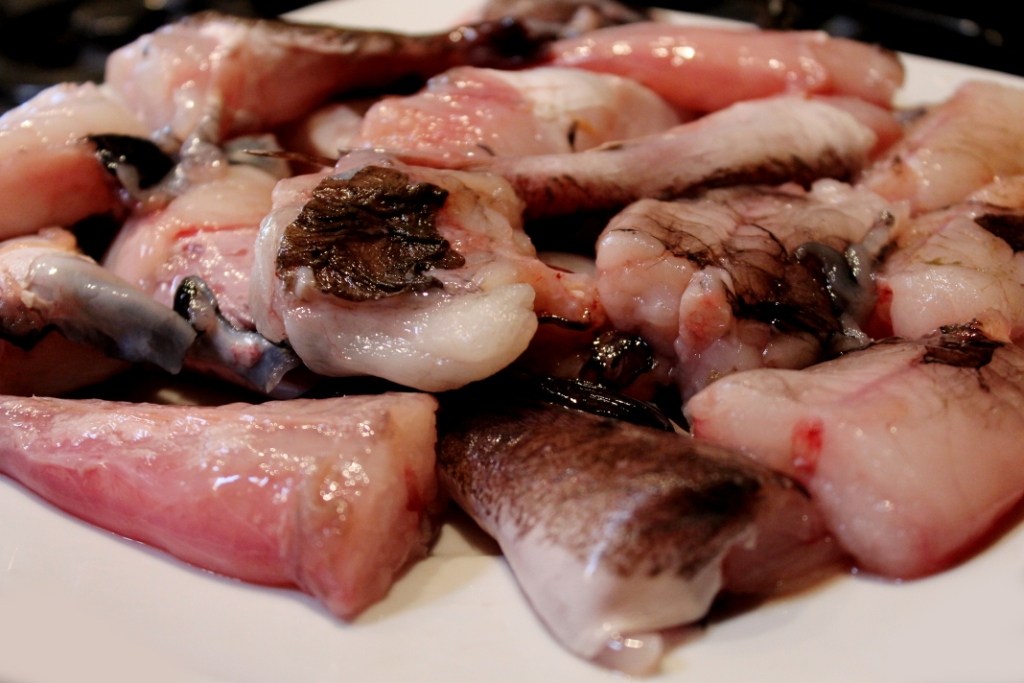 The frozen stuff does not taste the same, and Iaia refuses to use it. Try to buy smaller fish as their muscles are less fibrous and far more pleasant to eat. Leave some of the skin on if you don’t find it irksome, as this will act as a natural thickening agent for the sauce and enhance its sweet, fishy goodness.
Get the fishmonger to clean the fish but bring 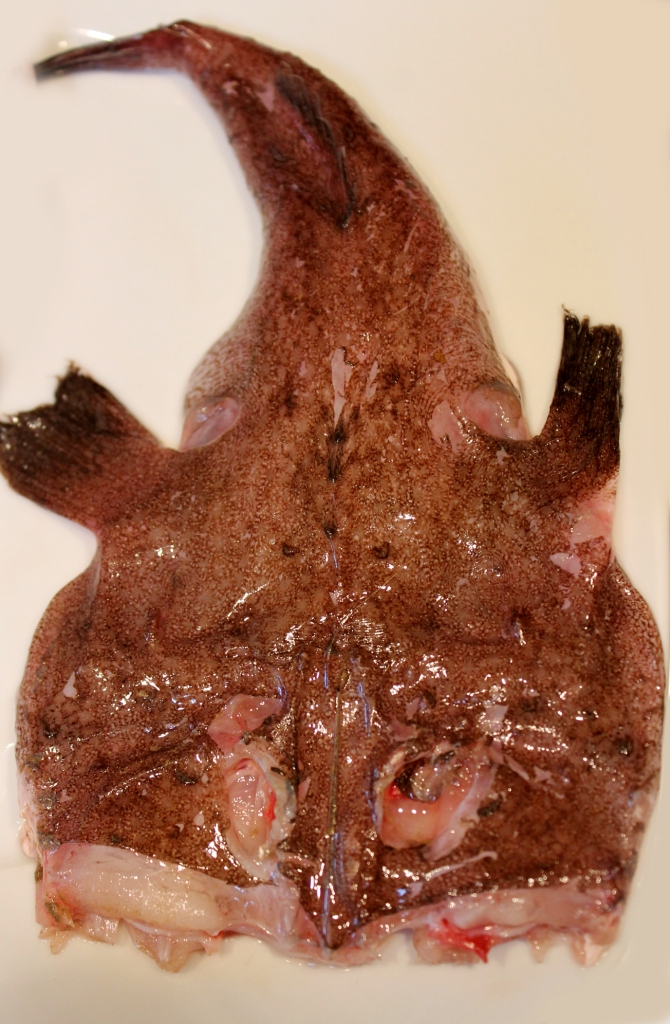 them home with the heads on, which you can then scissor off and freeze for the best fish stock ever. The cuts that go into the stew are the whole tail and the loin, both with the bone in.
Iaia swears by olive oil for just about everything and quite happily pours a good half litre into her pan to fry the potatoes. Once they are done, she siphons off about two-thirds of that oil and saves it for paella on Sundays.
What you need for 6:
About 850g fresh monkfish pieces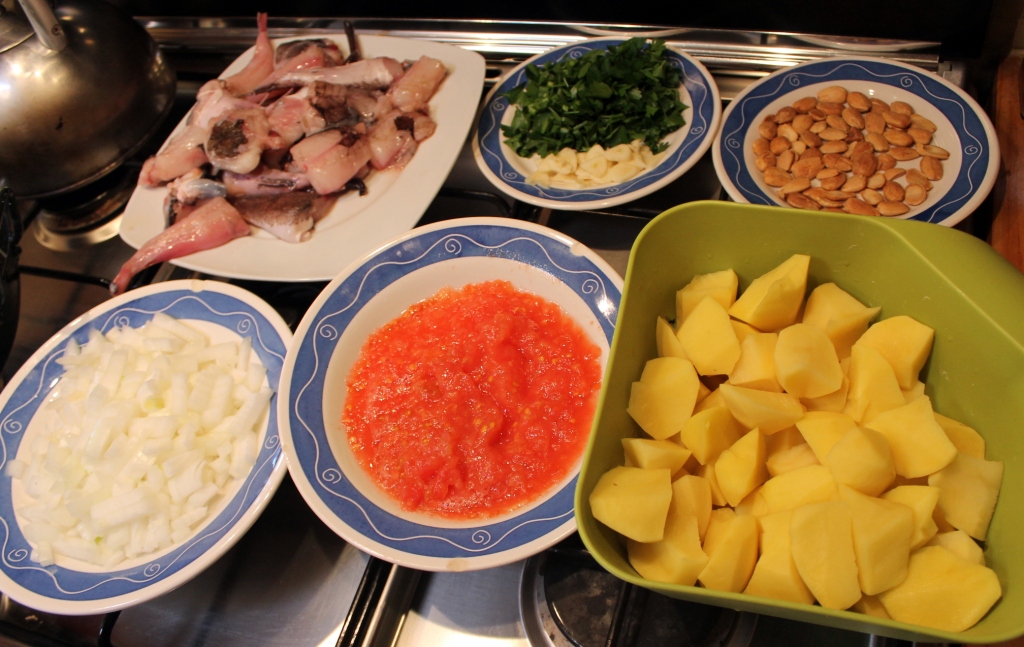
1 kg potatoes
2 pear tomatoes
2 onions
3-5 cloves of garlic
small bunch of parsley
50g toasted almonds
½ litre of oil for frying (Iaia uses olive)
sweet paprika
2 small chillies, whole*
750 ml good fish stock
flour for dusting the fish
salt and pepper to taste
*optional and to be taken out before the whole dish becomes mouth-numbingly hot!
What you do:
Finely dice the onion, slice the garlic, grate the tomato and chop the parsley. All of these ingredients will end up being blended, so don’t be too fussy about perfect knife work.
Cut the potatoes into chunks. Iaia has a special technique – she stops each cut about ¾ of the way through and then breaks the piece off, saying that this will stop the potato chunks from breaking up as they cook. It seems to work!
Heat your olive oil in a deep pan and fry the  potatoes in batches until golden, but not necessarily cooked through. Iaia says she uses so much oil because you have to have enough to cover the potatoes so that there is no chance of them getting crushed and deformed by constant turning and stirring.
Once the potatoes are done, remove two-thirds of the oil and reheat. Season your fish well with salt and pepper and dust with flour before laying it gently into the hot oil to fry. You don’t need to cook the fish through; 2-3 minutes on each side is enough. When you remove the fish, place it directly into a wide, shallow, flameproof casserole dish, which is where you will cook and present the final dish. Distribute the fried potatoes evenly over the fish pieces.
In the same oil, lightly fry the sliced garlic and then add  the parsley and onion, cooking until the onion is softened. Pour in your grated tomato and fry until you notice the mix thickening slightly as the water from the tomatoes evaporates. If you are using chillies, settle them into the mix now, but take them out before you blend! Just before you take off the heat, pop the teaspoon of sweet paprika in and give it all a quick stir.
Pour the tomato and onion mixture into a blender along with the whole toasted almonds and pulse to a thick paste. You can also do this with a stick blender, but avoid over-blending; texture is important here.
 Pour this picadillo, or flavour base, over the fish and then add just enough stock to cover everything. Check for salt – fish can be tricky and very easy to over-salt, so it’s best to add small amounts throughout the process than try to rectify with a great handful at the end.
Bring to a boil, turn down the heat and simmer gently for 20-30 minutes, adding stock if you see that it gets too dry, aim for a thick gravy-like consistency.
Like most stews, this one is even better the day after it’s cooked, but it will also benefit from standing for half an hour or so before serving.
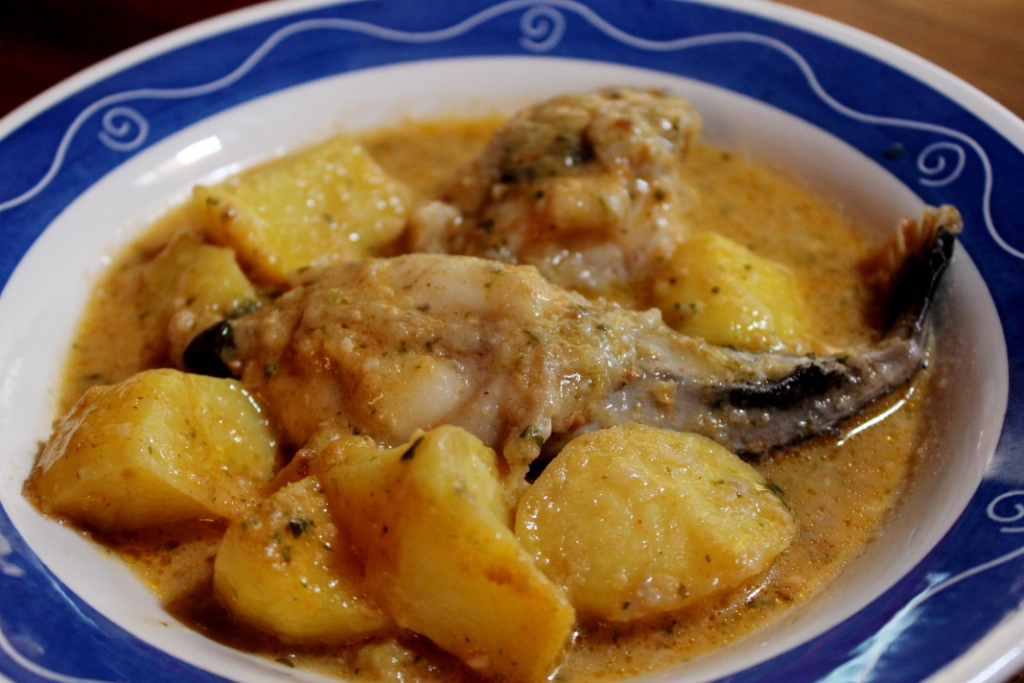
Serve with: fresh bread and your best bubbly.
 Iaia's kitchen