Pastissets de moniato (traditional Christmas sweet potato pastries)

The humble sweet potato is transformed into a lusciously dense filling and baked in semi-circles of short aniseed pastry to make these traditional Christmas treats. I love them.  The quantity of sweet potato here makes enough filling for about 60 pastissets, which sounds like a lot, but you don’t need to make them all at once as the mixture will keep perfectly well in the fridge for weeks. Iaia tends to make batches of 20-25 pastissets every few days over the Christmas period (which lasts until the 6th of January here in Spain), so the pastry recipe here is for about that quantity. Repeat as necessary!

What you need for the filling:filling ingredients
2 kg peeled, cooked white sweet potato
1.125 kg sugar
a long stick of cinnamon
the peel of a large lemon

Making the filling:
Traditionally this recipe calls for 2 hours of stirring a large pot of hot, sugary potato without stopping at all. The risk of it catching and burning is enough to root you to the spot and make you sweat. However, Iaia has discovered that it can be cooked in the oven with only a minimum of stirring and fuss. Which is a jolly good thing. So…oven on to 170ºC.
Your sweet potato should be boiledmash
and then smooshed with a fork while it’s still piping hot so that you get a good, smooth mash. Weigh it mashed to make sure you have 2 kg, then set it aside while you deal with the sugar.
In Spain, we often cook in large, cheap, shallow terracotta bowls which can be set over a flame and in the oven. If you can get your hands on one, do! Otherwise, any shallow, flame and oven-proof dish will do.stirring
Place the sugar in the dish over a gentle flame. Break your cinnamon stick/s into the sugar along with the pieces of lemon peel. Start moving the sugar around with a wooden spoon gently and continuously. The idea is to get the sugar to the point where it is starting to melt without letting it burn at all. You will notice it becomes slightly moist IMG_6727after 10 or 15 minutes of low heat; if you think you need it, sprinkle a few drops of water in to help it along.
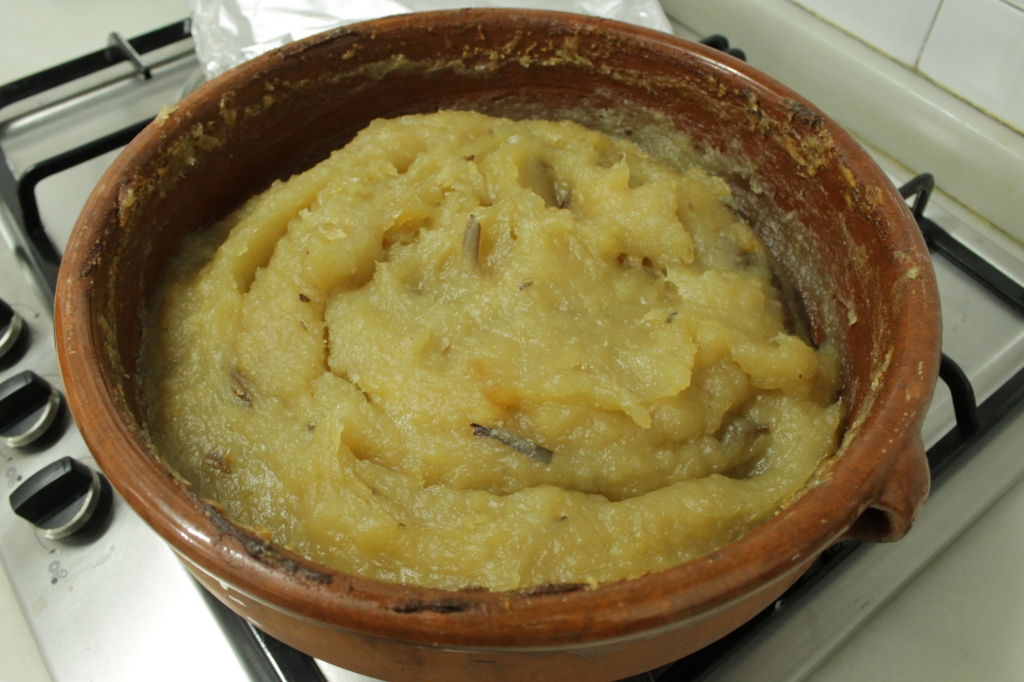
At this point, you can take the dish off the heat and start to stir in your mashed sweet potato until you get a smooth, homogenous mixture. This is what you will put in the oven for almost 2 hours or until it has turned a deep golden colour. Check every 20-30 minutes and stir if you see the top becoming a little toasted.
Remove and set aside until you are ready to make the pastry.totty
What you need for the pastry:
1 glass of sugar
1 glass of casalla (dry aniseed liqueur)
1½ glasses of sunflower oil
plain flour (as much as you need to make a short pastry)
Making the pastry and pastissets: IMG_6790
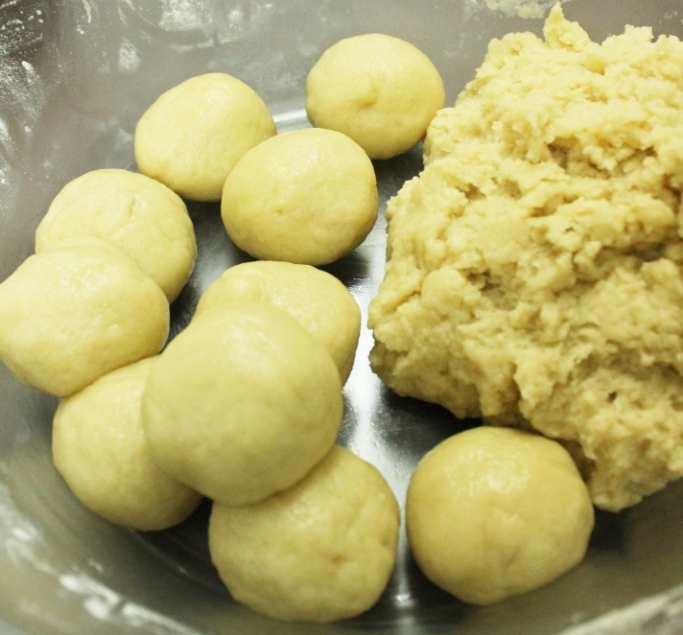
Mix the liquids together and then add flour bit by bit, mixing by hand until you get a nice dough, which is still quite damp, but not sticky. You ought to be able to make lovely smooth little balls of the stuff – roughly 50g of dough per ball. Once you’ve done that, let it sit for a good half an hour before proceeding with the rolling and folding…

Roll each ball out into a circle and place a good spoonful of sweet potato filling onto one side. Fold the dough over the filling to make a semicircle, then use a pastry cutter to tidy the edges. Lay on a baking tray and continue until you have used up all the dough. pastissetsBake for 15-20 minutes at 180ºC or until golden. Take out of the oven and allow to cool completely before scoffing most gloriously. Merry Christmas!IMG_6814

Bunyols (pumpkin doughnuts)

Easter weekend almost always includes buñuelos, or pumpkin doughnuts, for us. Oscar’s auntie Herminia is the resident expert, and it is her hands that you can see doing all the hard work in this recipe.
I am not a huge fan of the little orange balls; without sugar, they are a bit bland and biting into granulated sugar sets my teeth on edge. However, they are a very popular treat here and most certainly part of Iaia’s year in the kitchen!
This recipe made about 90 little doughnuts, which sounds like a barbaric amount, but isn’t, especially when served to a table full of Valencians. Short work was made of these little blobs of pumpkiny, sugary sweetness on Easter Monday.

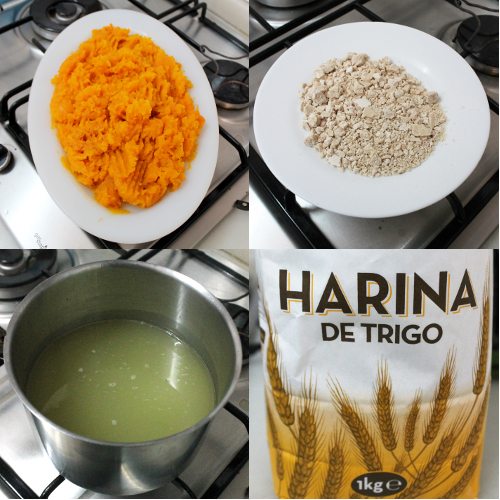
What you need:ingredients
800g boiled and drained (or roast) pumpkin flesh
about 80g fresh yeast
1 egg
about 750g plain flour
the cooking liquid from the pumpkin (or warm water if you use roast pumpkin)
1½ litres sunflower oil for frying (most of which can be reused later)

What you do:
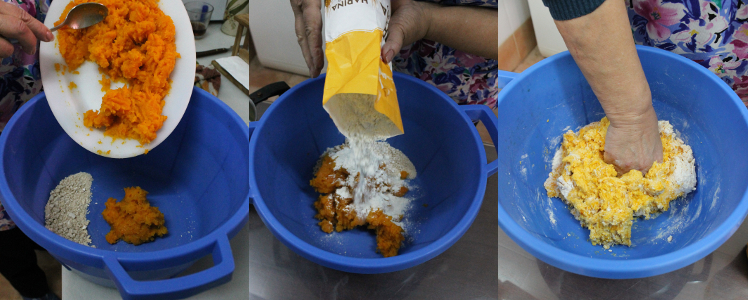
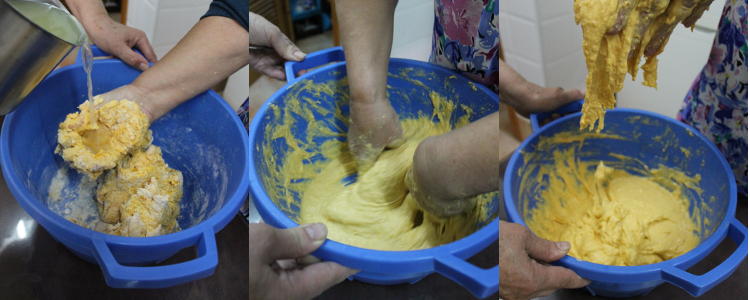
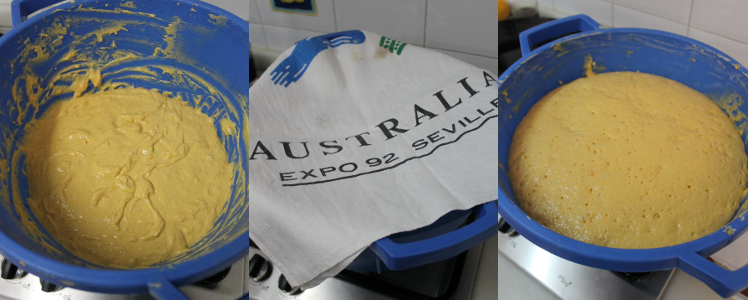
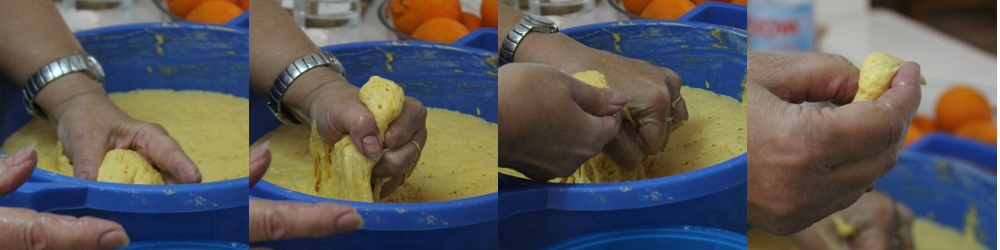
In a large (really large) bowl or bucket, hand mix the crumbled fresh yeast, pumpkin and beaten egg. Add about 300g of flour and start working it into the orange pulp with energy.  Once the first addition of flour is mixed in, keep adding bit by bit, alternating with small splashes of the cooking liquid until you have used about 750g of flour.mixing1The finished dough is really very soft, so you will end up adding quite a bit of liquid. There is no specific measurement, but the texture before the dough rises is similar to thick mud – the kind that squelches most beautifully between your toes. mixing2 Cover the bowl with a tea towel (Iaia has asked me to point out that hers is from the Australia pavilion at the 1992 Expo Seville, before Oscar had met me) and set it aside for a couple of hours. You will be amazed at how much the mixture rises, all bubbly and spongy with the yeast!leudar

And now comes the complicated bit…

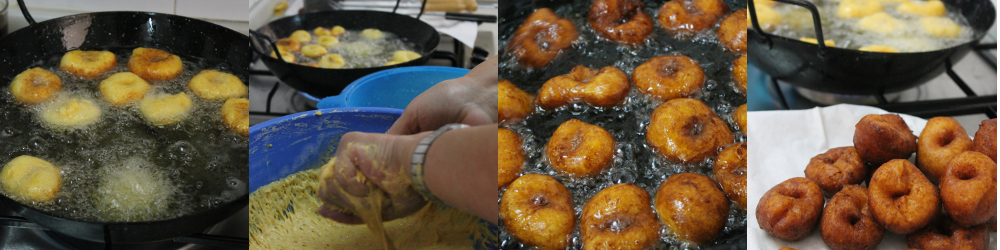
Heat the oil in a large, deep pan. It can’t be too hot, or the doughnuts will burn on the outside and be gluggy in the middle, but it has to be hot enough to fry them quickly, so they don’t come out disgustingly oily. Herminia says that when you drop the test blob in, it should rise immediately to the surface and bubble satisfyingly without spitting. Easy to say – you’ll have to practice a bit to get it right!

To form the doughnuts, grab a fistful of lovely, squishy mix and squeeze it so that a walnut-sized blob spouts from between your thumb and forefinger.  With the two first fingers of your other hand, which you should wet slightly with the leftover cooking water (or any warm water) to avoid sticking, scoop the blob off and immediately plunge the thumb of the scooping hand into the middle of the ball to form the hole.forming nuts As you twist your wrist around, the mixture will threaten to drop off your fingers, but before it does, you will have deftly, and gently, spread your index and ring fingers and drop it into the hot oil. Repeat until the surface of your pan is full of bobbing buñuelos. You will get quicker as you practice.dropping in

Let the doughnuts brown for about 30 seconds before flipping them over. When they are evenly golden, they are ready to be removed from the oil with a slotted spoon and drained on kitchen paper. When draining, make sure you don’t pile them up on top of each other because they will stick and squish.frying

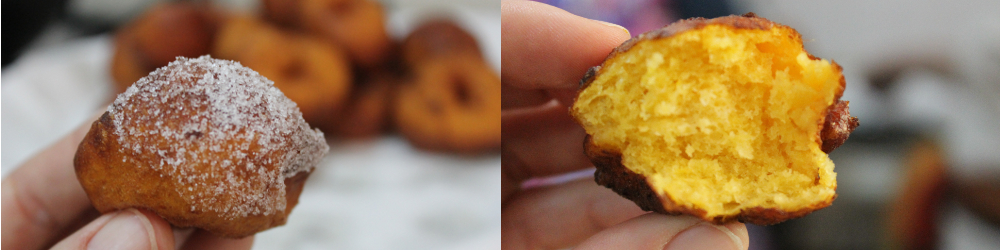
Once you’ve finished cooking (Herminia took about 20 minutes to do the whole batch), serve warm or cooled with a bowl of sugar for everyone to dip into. The cooked doughnuts can also be frozen in single layers and defrosted when needed. Microwave reheating is also possible if, unlike me, you have the technology.eating

Serve with: coffee

Iaia’s yoghurt cake

A simple sponge based on the yoghurt pot measure, which in Spain is 125ml. If you have bigger pots, you might need to add another egg and a bit more baking powder. I cooked this one last night, and it has already been quaffed by three teenage girls.  I might also have had a piece or two myself.

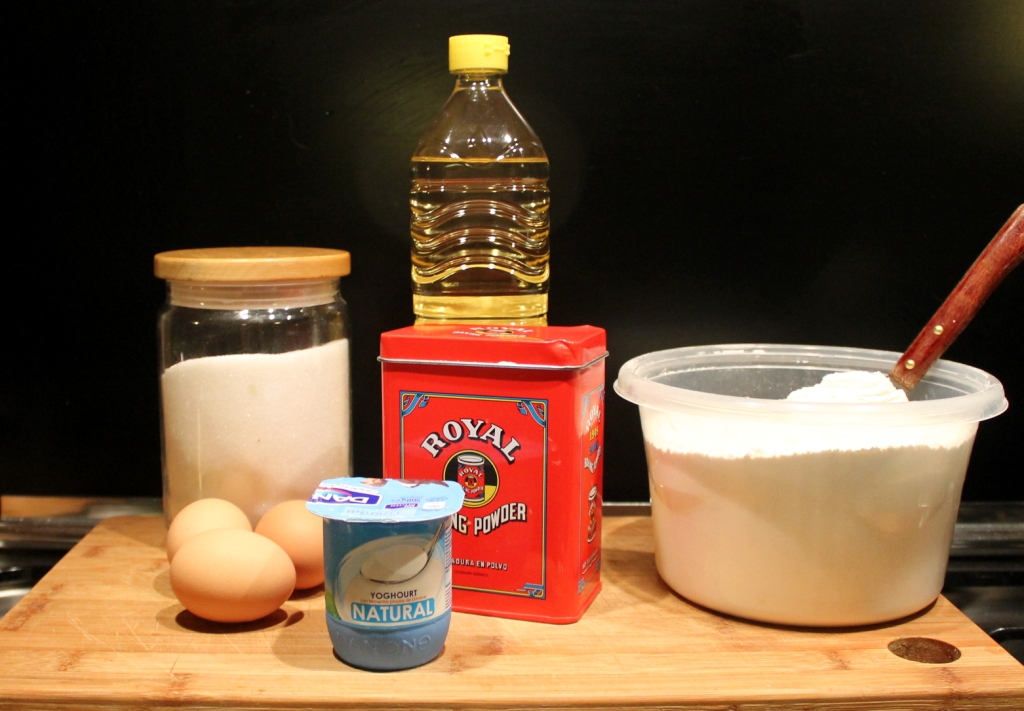
What you need:ingredients
1 pot of natural yoghurt
1 yoghurt pot of sunflower seed oil
2 yoghurt pots of sugar
3 yoghurt pots of plain flour
1 sachet of baking powder (16g)
3 eggs
the zest of a lemon or an orange

What you do:
Heat your oven to 180ºC and line a 23cm round cake tin (spring-form makes it easier to get the cake out later). Pour the yoghurt into a small bowl and set aside so you can use the pot to measure the other ingredients. potsMix the sugar and egg yolks together in a large mixing bowl, then add the yoghurt and oil, stirring until smooth and glossy.  Sieve the flour and baking powder into the bowl pot by pot, stirring well but not over-beating.  Add the zest and then whip up your egg whites and fold gently into the mix. Bake for 30-40 minutes (every oven is different) and then allow to cool completely before the slicing and gobbling.

finished cake

Serve with: tea

Iaia’s apple cake

I have always preferred to bake cakes with butter, very much in the English way. Yet it is not very common to see butter in Iaia’s fridge at all and she prefers to fatten her batter with sunflower seed oil, claiming that it has a lighter flavour and therefore does not interfere with the other ingredients so much. It certainly gives cakes a lighter texture, and all of the cake recipes here are really very good, even to my butter-loving taste buds. But, if you think butter is better, by all means, substitute.

Iaia always gives me measurements in glass or yoghurt-pot fulls, which is fine as long as you use the same size glass or pot for everything to maintain the right proportions. For this recipe, I have included her words plus a translation into ml and g.

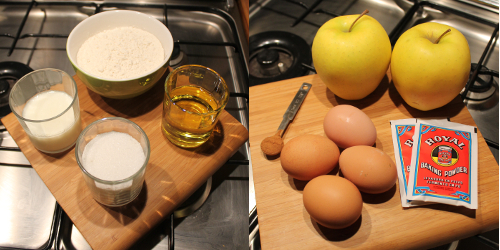
What you need:ingredients
a generous half glass (150ml) of sunflower seed oil and the same amount of milk
a glass minus a finger (160g) of sugar
a glass and ¾ (250g) plain flour
4 eggs, separated
a sachet and a half (25g) of baking powder
a bit (half a tsp) of cinnamon
one large, or two small golden delicious apples

What you do:
Pop the oven on to 180ºC and line a 27cm spring-form cake pan.  Beat your egg yolks and sugar together, then mix in the cinnamon. Add the milk and oil and beat well. Sift in the flour and baking powder, adding a little at a time and stirring until well mixed.  Whisk the egg chopped applewhites into soft peaks and fold carefully into the cake batter.  Peel and quarter your apples and slice thinly so that the pieces will cook well.  Pour the batter into your tin and arrange the apple slices on top. Iaia always does this in artful circles, but I was feeling slightly abstract this evening. You could also chop little apple dice and mix them into the batter for more appley-ness.
Sprinkle a little extra sugar over the apple and cook the cake for around 45-50 minutes (NB: Iaia uses a much wider, shallower tin and cooks her cake for just 30 minutes, but I don’t have one, so it takes longer). When you notice that the top is golden and you start to smell an appley, cakey, cinnamony yumminess wafting about the place, check with a skewer to ensure it is cooked all the way through.

As this cake is better when fully cooled, leave it in the tin for a good while, then carefully un-spring the base and dig in.IMG_9677

Coca de carabassa de La Borrassa (pumpkin sponge)

Pumpkin is not considered a savoury ingredient here and is never served as such. More often than not, the sweet round fruit is cut in half and roasted in a moderate oven for a couple of hours until caramelly and soft.  Slices are then taken as if from a pie and eaten with a spoon for dessert. The cooked flesh is also incorporated into many typical sweets such as buñuelos (fried doughnut-style balls), or sponge cake.
This recipe comes from a neighbour of Iaia’s who is commonly referred to as La Borrassa. The intricate system of hereditary nicknaming that is an integral part of the small rural township here in Valencia never ceases to amaze (and amuse) me. This particular woman’s moniker comes from the fact that her surname is Borras. The “a” at the end denotes the fact that she is a female Borras.  But it is not always that simple. I have heard conversations that (loosely translated) run something like this:

“Did you hear what happened to Rosa?”
“Which Rosa?”
“Um, you know Carmen the Duck (daughter of Pedro the Drake), whose sister married Joe the Monkey (son of John the Monkey)?”
“Do you mean the Duck who used to live next door to Harry Bread and Oil’s mum?”
“Yes, that’s her. Well, The Duck’s cousin, Rita the Crying Woman, is Rosa’s older sister.”
“Ah. So Rosa is the younger Crying Woman! Now I know who you mean. Her husband is Man’s Head the plumber!”…

 Yes, well, in any case, here is the recipe for La Borrassa’s Pumpkin Sponge. Quantities are for a 37 x 25 cm baking tray, so fiddle them to suit your tin.

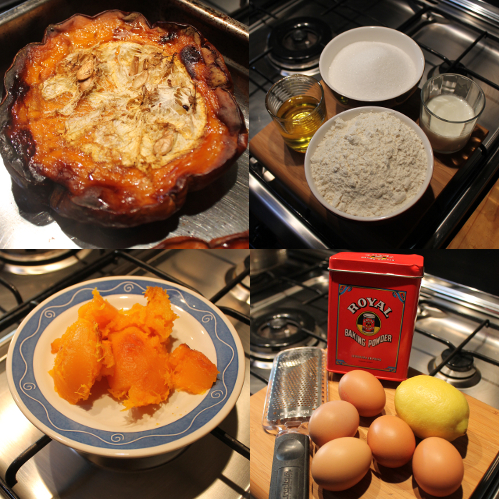
What you need:ingredients
250g roast pumpkin flesh
500g sugar
5 eggs, separated
400g plain flour
100ml sunflower oil
100ml milk
zest of 1 lemon
2 sachets (32g) baking powder

What you do:
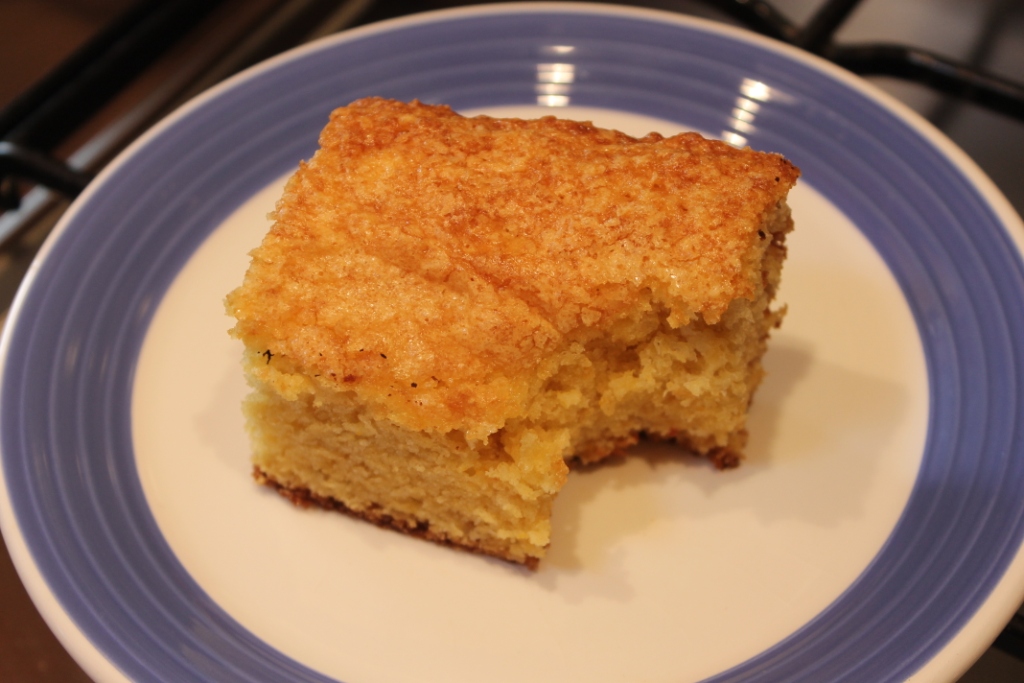
Pre-heat your oven to 180ºC and line your baking tray/cake tin with parchment.  Mix the egg yolks and sugar together, then mash in the pumpkin. I use a fork and stop when I see the sugar starting to liquefy. Whisk in the oil and milk, then gradually sift in the flour and baking powder, mixing thoroughly between each addition. Stir in your lemon zest, then whip up your egg whites until soft peaks form before folding them into the mix too. Don’t over-mix at this stage, or you will squash all the air out, and your cake will not be as springy and spongy as it should.

Pour the batter into your prepared tin and cook for at least half an hour, testing with a skewer once this time is up. Don’t be tempted to open the oven before the 30-minute mark or your sponge will collapse. Allow to cool in the tin…if you can bear the wait.

IMG_9417