Gazpachos Manchegos

IMG_6797Gazpachos Manchegos is a delicious, wintery stew cooked with game (usually quail and rabbit) and bread-like tortas. It is the pride of Castilla La Mancha and a traditional dish for shepherds, hunters and farmers. Although the original recipe calls for two large flatbreads, one to be crumbled into the stew and the other to be used to spoon it out of the pan and into one’s mouth, our family does a Valencian version which uses little biscuits that require bowls and conventional cutlery. We also use organic chicken instead of quail and a little less rabbit than a real hunter would.
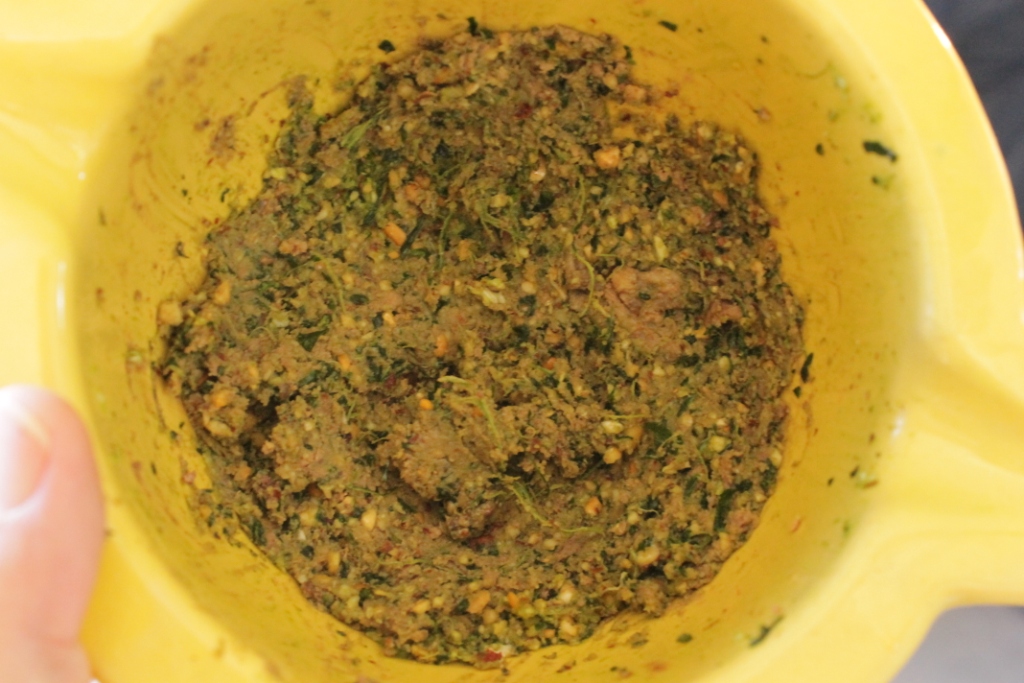
One of the most important parts of this dish is the picadillo – a mortar and pestle mash of cooked chicken liver, garlic, almonds, peanuts and parsley. Be brave!

What you need:ingredients
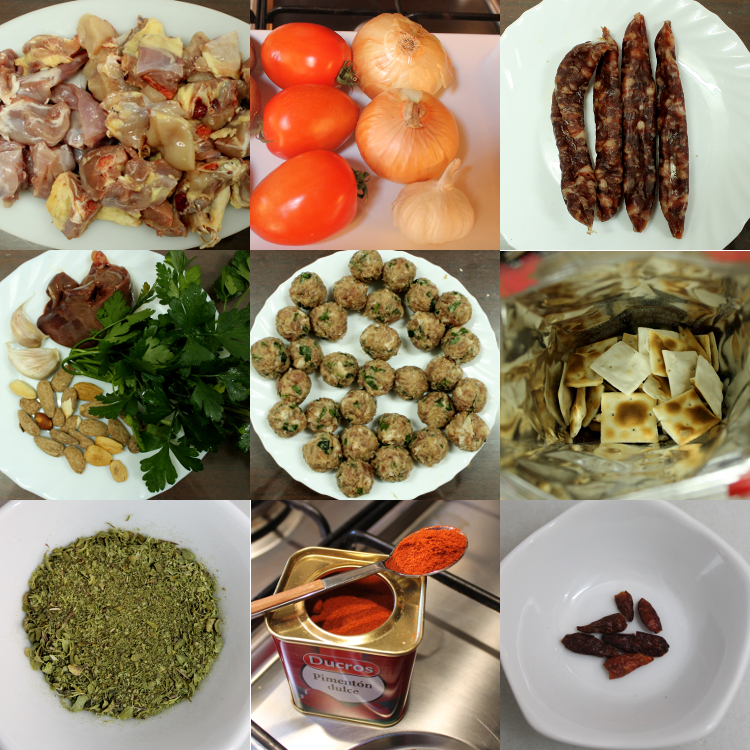
2kg organic chicken on the bone
Half a rabbit (approx. 1/2 kg)
3-4 ripe pear tomatoes
2-3 onions, finely chopped
1 head of garlic
3-4 dried sausages
1/2 kg meatballs (see putxero for mix)
4 packets of tortas (180g/packet)
pebrella (thymus piperella)
sweet paprika
2-3 small dried chillies
2-3 bay leaves
olive oil
water
salt
for the picadillo:
the organic chicken liver, fried
a handful of almonds and roast peanuts
2 cloves of garlic
a bunch of parsley

What you do:
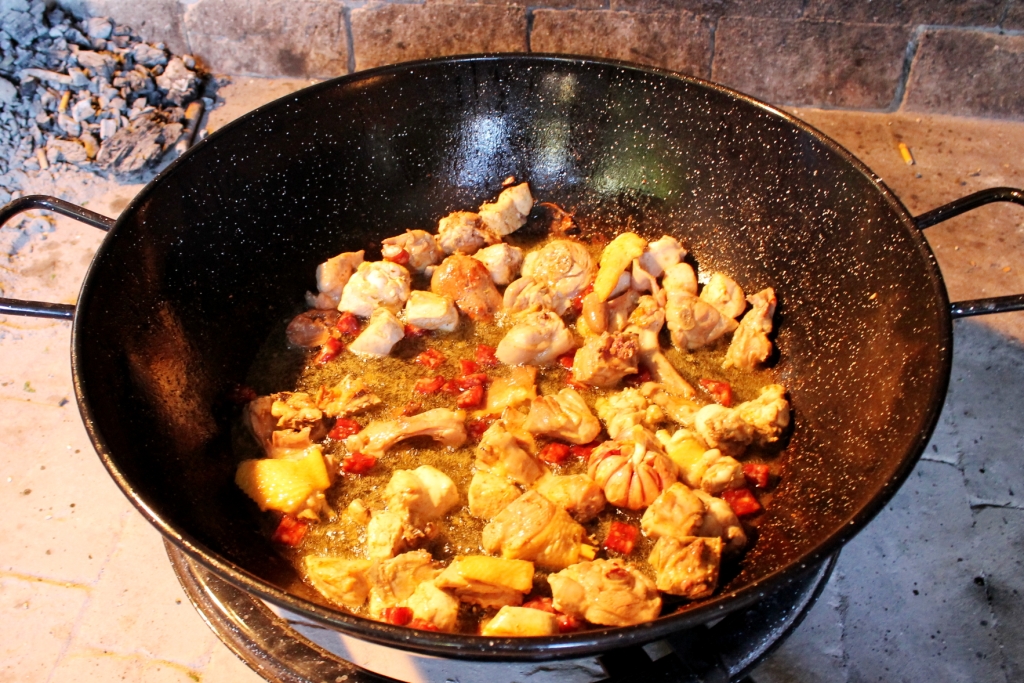
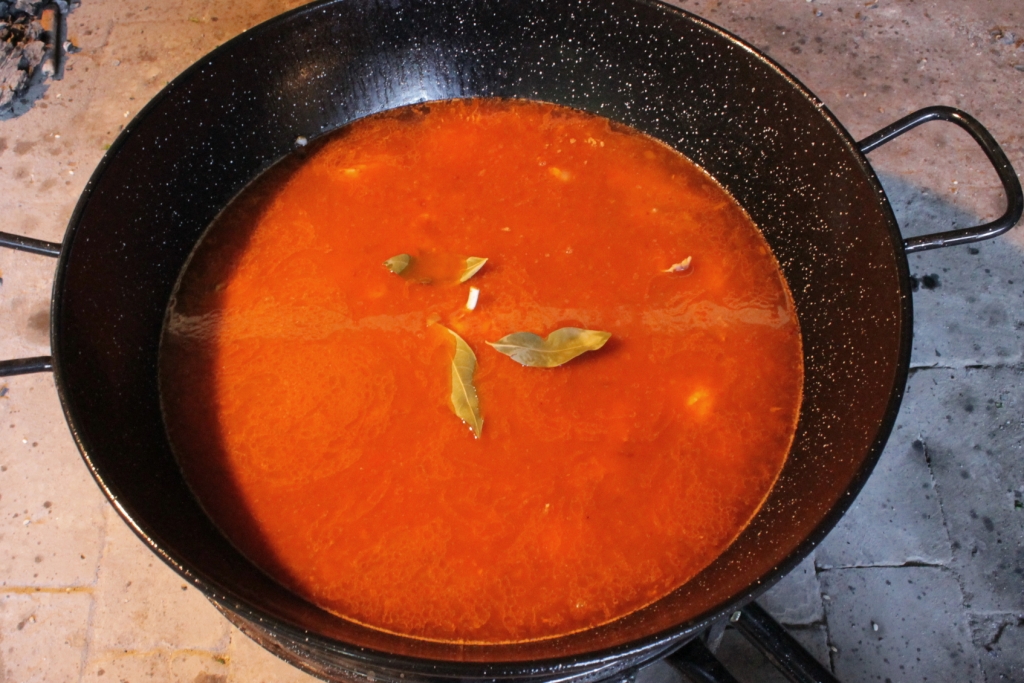
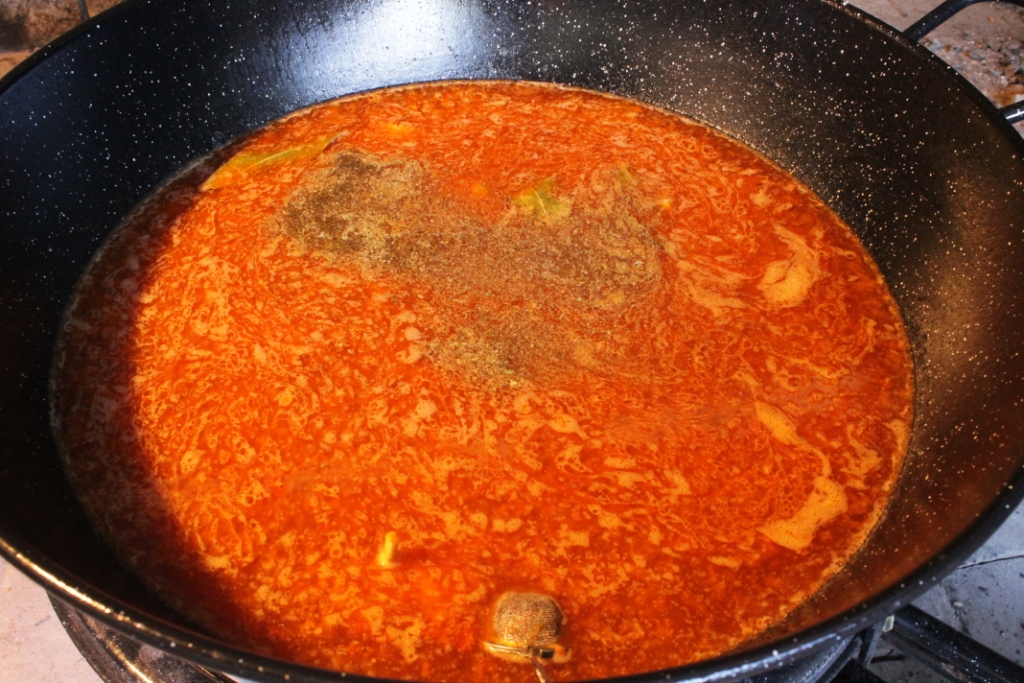
The meat should be on the bone and cut into smallish pieces, as you can see in the photo. Grate the tomatoes, finely chop the onions and chop the sausages into small pieces.  Pour a generous amount of olive oil into a large, deep pan and start by frying the meat, together with the full head of garlic, until the meat is beautifully browned and well on the way to being cooked. Season lightly.IMG_6492Remove the fried liver and set aside for the picadillo, then chuck in the onion to soften. After about 5 minutes, add the tomato and fry gently, stirring everything around from time to time.  You should have your water handy at this point because the next step is to add the paprika, and you must never let it cook for too long as it will go bitter. So, put a good heaped teaspoon of paprika in, stir it for 30 seconds and then pour in your water. How much? Nobody can answer me. They say, “judge with your eyes,” so here is a photo:IMG_6515Throw in the bay leaves and a little more salt, and bring slowly to a boil. Organic chicken takes a lot longer to cook than the mushy-fleshed variety but is worth every minute, so let things boil comfortably for 20-30 minutes, adding hot water if it seems to be evaporating too quickly. Once the cauldron is bubbling, add the pebrella and pop the chillies in a tea strainer so that you can lift them out before things get too hot.IMG_6523Meanwhile, you need to get on with the picadillo, by smooshing up the ingredients in a mortar and pestle until it resembles a sort of rough paté:IMG_6534This is then spooned into the boiling mixture at the same time as the meatballs are plopped in. Stir everything gently and test the stock for flavour, seasoning as you see fit.
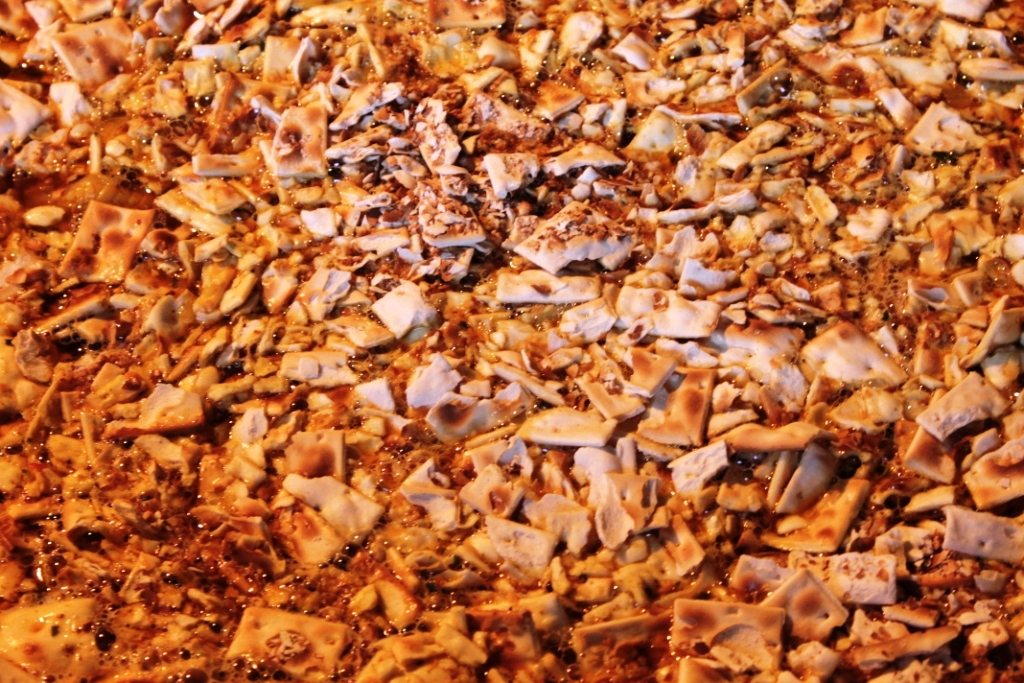
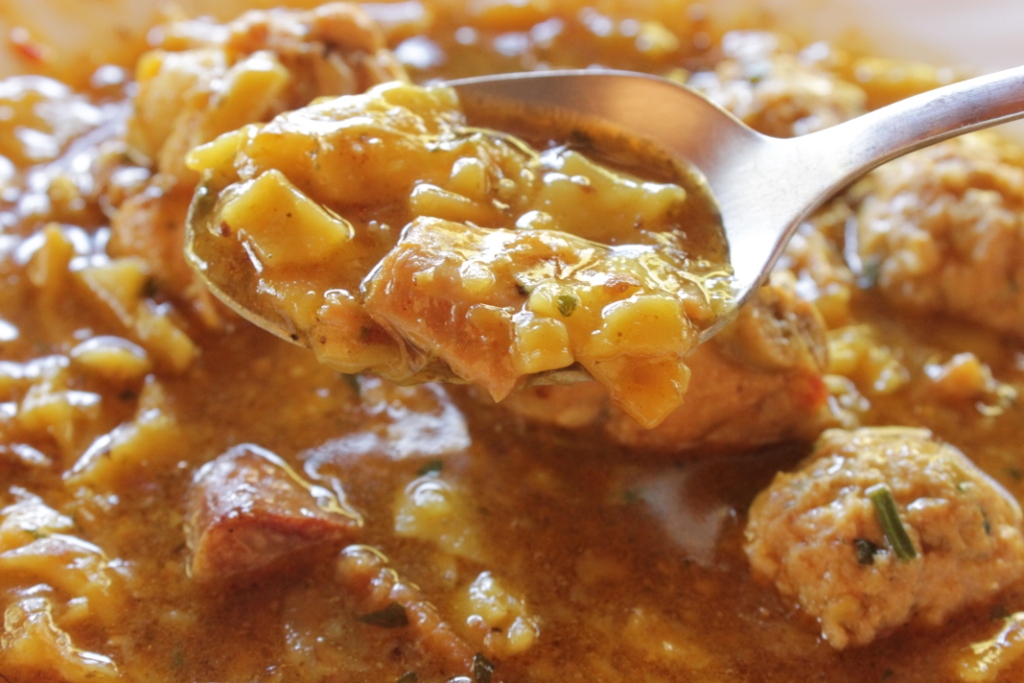
Then it’s time to add the “pasta”. Crush lightly with your hands as you pour the packets in. Then allow to boil for another 15 minutes or so.IMG_6551As the biscuits absorb the liquid, your gazpachos will thicken into a fabulously flavoursome, gravy-laden stew which ought to be spooned into bowls and eaten after it has been allowed to cool slightly. The second bowl is always the best!IMG_6566Serve with: a full-bodied red.
Arros al forn d’estiu (summer baked rice)

The story goes that when my husband Oscar was a boy, the family would pack a carload of towels, sun shades, chairs, cousins, food and drink and head off to the beach for the whole day. Iaia would always take along a whole, tea-towel-wrapped, ceramic dish of Summer Baked Rice, especially for her eldest son, and he would come rushing out of the sea to demolish the whole lot by himself, washing it down with chocolate milk. It is still one of his favourite lunches!

The amounts here feed between three and four people. If you don’t have a ceramic dish, use a metal baking tray, but increase the amount of water slightly so that it is exactly double the amount of rice.

The black pudding sausage is optional!

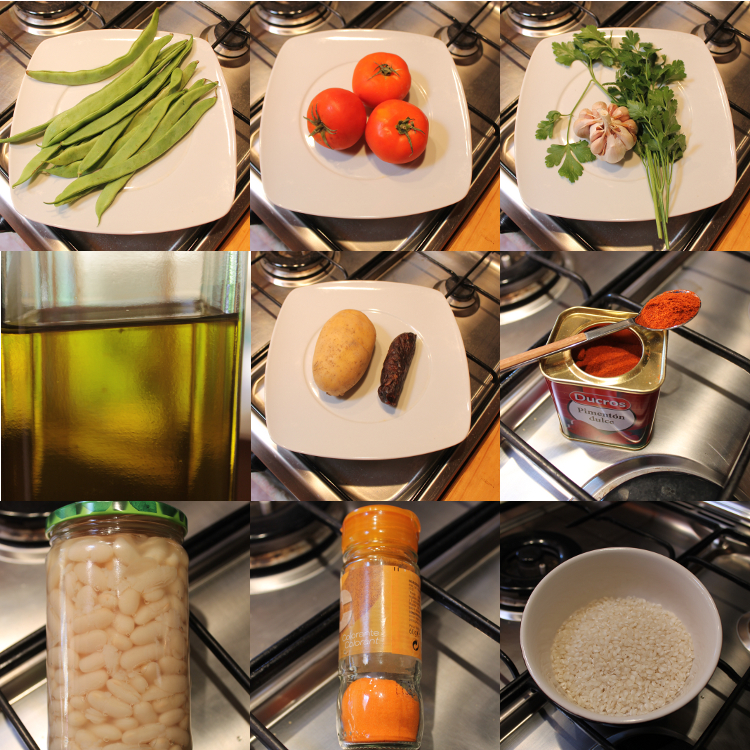
What you need:ingredients
2 glasses (roughly 400g) Spanish rice
1/2 glass of olive oil
a whole head of garlic
three or four ripe tomatoes
a handful of flat green beans
a good-sized potato
150g white beans
a black-pudding sausage (botifarra)
parsley
1 tsp sweet paprika
saffron/orange food colouring
water

What you do:
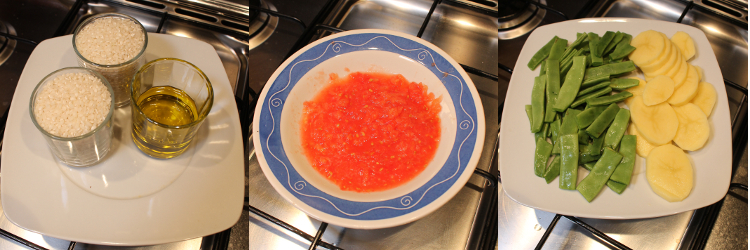
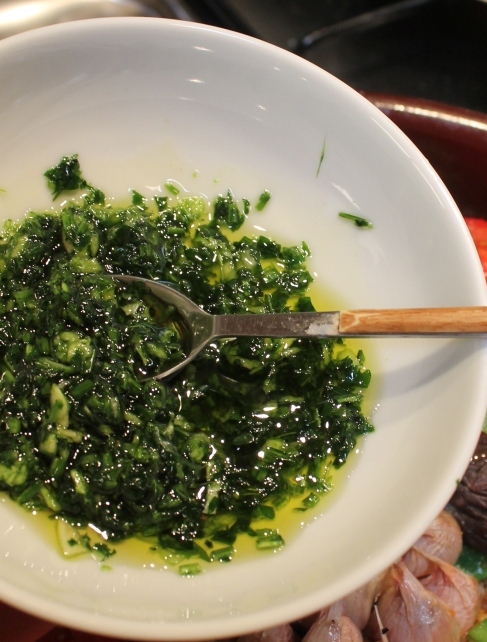
Pop the oven on at 200ºC and prep by measuring out your rice and oil, grating one of your tomatoes, slicing the potatoes, breaking the beans into pieces and putting your water on to boil. The amount of water is directly dependent on the amount of rice you use and the type of dish you cook in. If using a metal tray, use two glasses of water for every glass of rice. For ceramic dishes, hold back half a glass or so of liquid. For this particular recipe, I used 750ml of water for 400g of rice.prepped stuffPICADILLOYou will also need to make what we call a “picadillo”, which is a bashed-up clove of garlic with a small bunch of parsley and a bit of oil added. I use a mortar and pestle, but finely chopping is good too. Set this aside for a moment while you get on with the frying and assembling.

Place the rice into the bottom of your ceramic (or metal) dish and gently shake it so it settles evenly over the base.

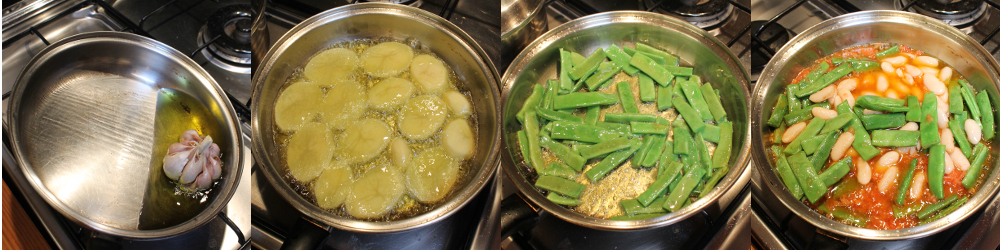
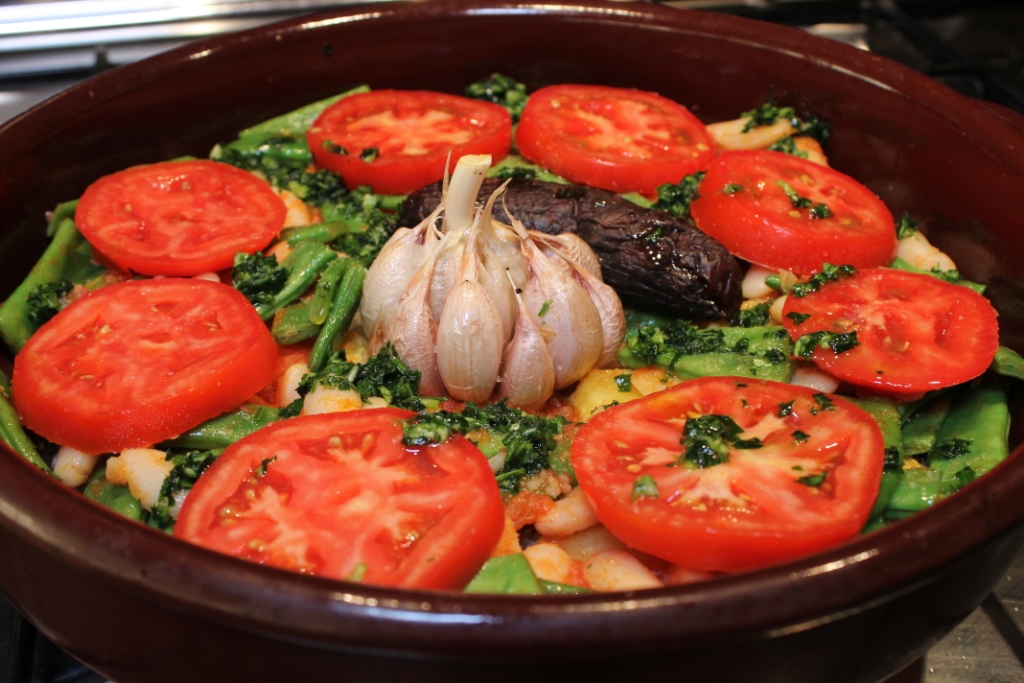
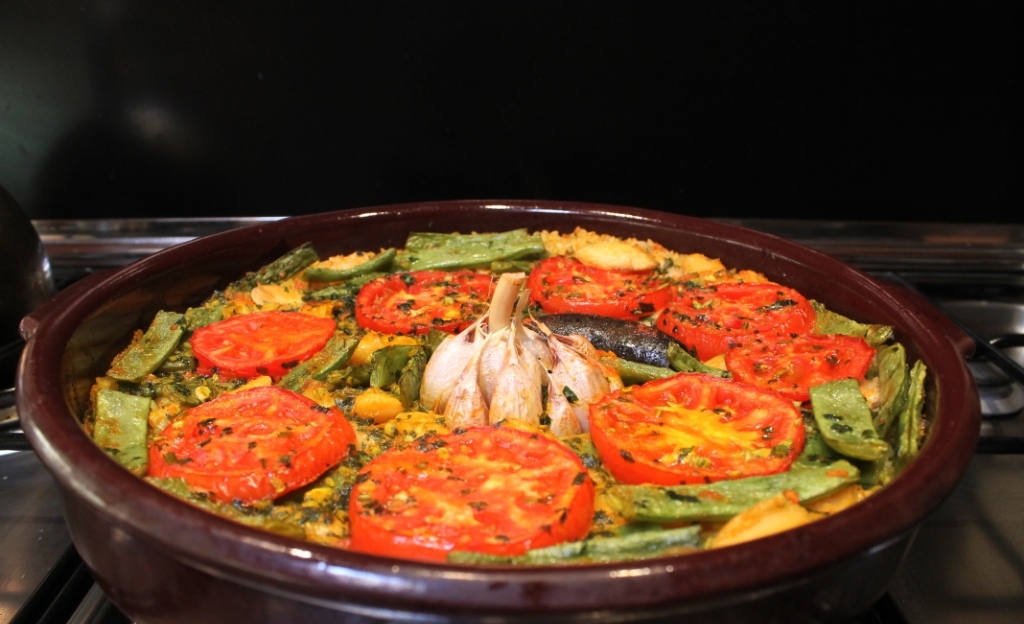
Now pour the half-glass of oil into a frying pan and get the heat on. Place the whole garlic head in the oil for a quick, oil-flavouring fry. Once it has been on for a few minutes, drop it into the saucepan with your water and let it simmer gently while you prepare everything else, this will help ensure that the cloves are all cooked through by the time you come to eat them.FRYINGIn the same oil, lightly fry your sliced potatoes. Remove and place over the rice, distributing the pieces evenly. Gently fry your green beans and when they look bright green and slick, add the grated tomato and white beans. Fry for a minute or two longer, then in goes the paprika for a quick swirl. Remove from the heat and pour over the potatoes and rice, spreading things evenly over the whole dish. Slice the remaining tomatoes thickly and place them on top of the other ingredients. Nestle the head of garlic in the middle and (optionally) place the sausage right next to it. Spoon your “picadillo” over everything. Sprinkle a bit of food colouring on top to get the Spanish yellow that people here prefer to white when it comes to rice.ASSEMBLEDNow, hopefully, you will still have the right amount of water in your saucepan, and it will be boiling hot. If it looks as though some of it has evaporated, add a little. It’s important that the water be boiling when you add it to the dish so that the rice starts cooking immediately; otherwise, you might get a gluggy mess. So, carefully pour the hot water over your rice and slip it straight into your oven. Bake until the water has all been absorbed; depending on how hot your oven really is, this should take between 25 – 40 minutes.COOKEDLet the rice cool for a few minutes before tucking in, or I promise you will burn the bejesus out of your mouth.

PLATEDServe with: sweet raw onion slices go beautifully on top, cold chocolate milk is a must for beach-goers, while at-homers could try a fresh young red.

Tomato jam

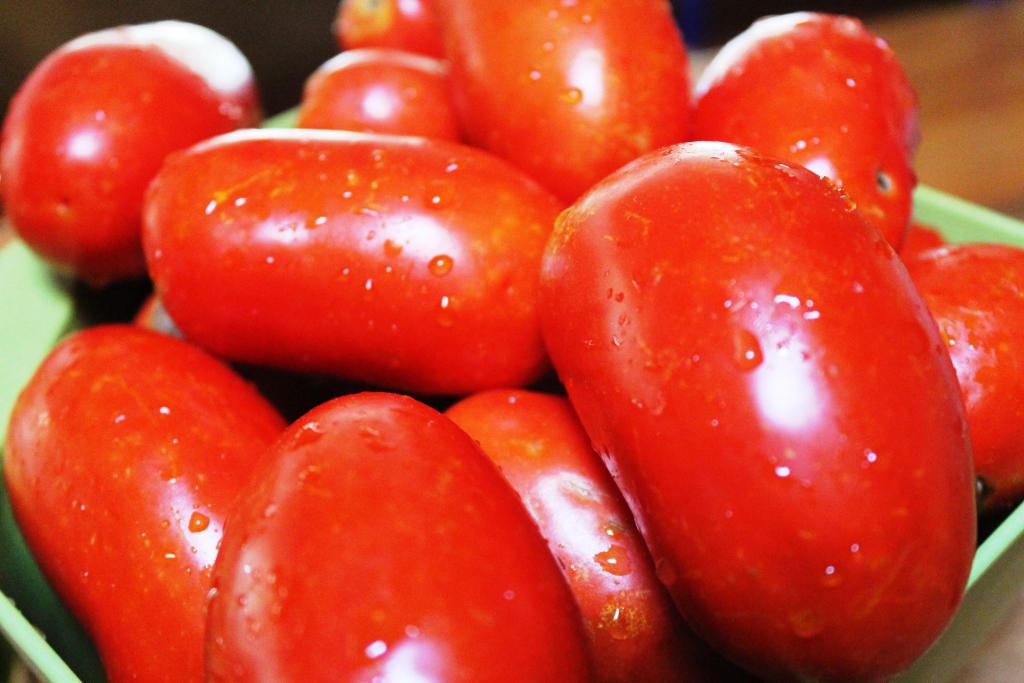
Our tomato plants are giving us a bumper crop this year –raw the gorgeous plummy fruit is coming thick and fast.  What better way to conserve it than in this luscious, sweet jam.  Iaia makes pots every year, but I have pipped her at the post with a small batch for you!
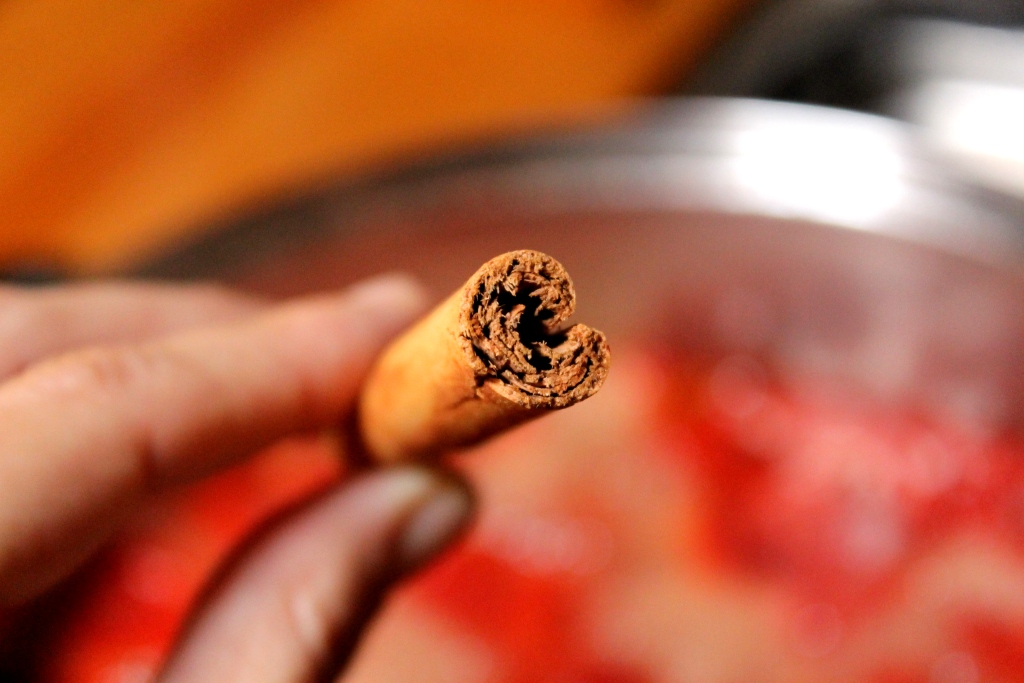
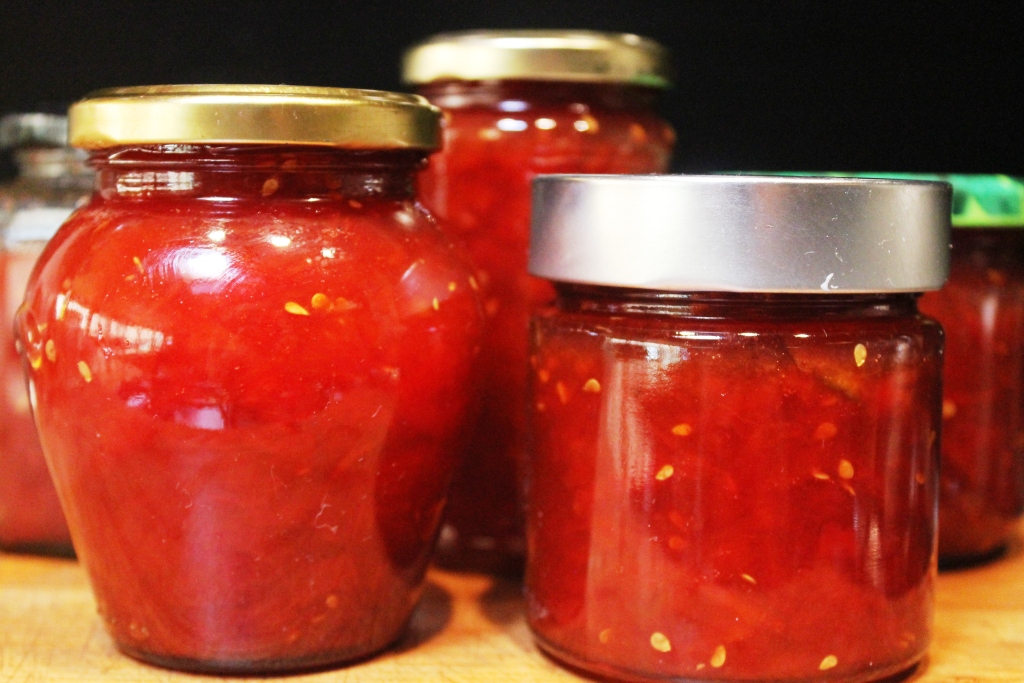
A kilo and a half of toms made almost 5 jam jars full of ruby peeledred yumminess. The cinnamon and lemon are optional. Iaia leaves her cinnamon in and pots shards of it up with the jam, but I hate finding little barky bits on my toast or between my teeth, so I pull it out at the last minute. The lemon gives you a lovely tangy surprise from time to time, and I really recommend including it!lemon zest

What you need:
At least a couple of kilos of plum tomatoes
A kilo or so of sugar
Zest of one lemoncinnamon
A cinnamon stick

What you do:
Scald and peel all of the tomatoes. Weigh the lot and put them into a large, heavy-based, non-reactive pan. Run a knife IMG_3277through them to break them up a bit before weighing your sugar and adding it to the tomatoes.   Traditionally the recipe calls for equal weights of tomato and sugar, but both Iaia and I find that far too sweet. For this batch, I used a kilo of sugar for 1600g of tomatoes, and the jam set well and is sufficiently sweet without cloying.
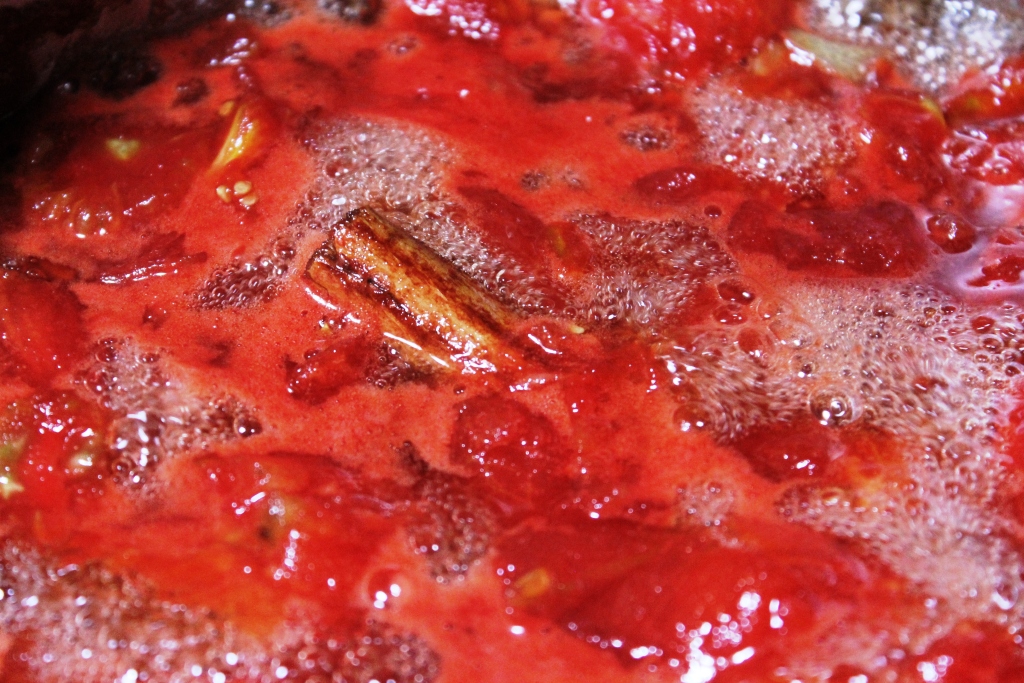
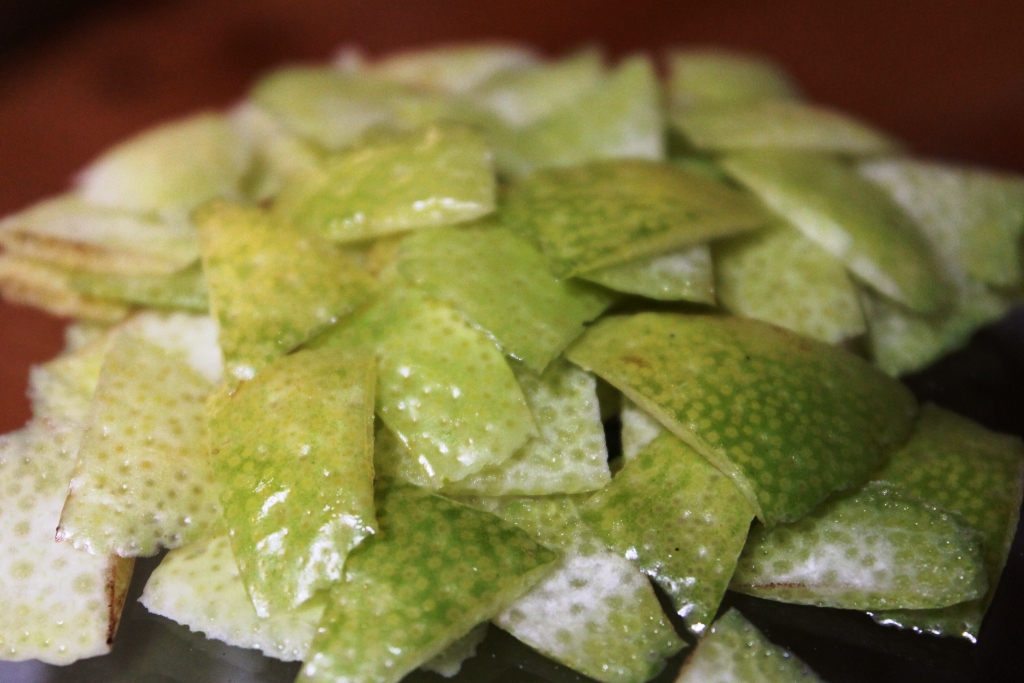
The sugar will immediately start to draw the liquid out of the tomatoes, so you can turn on the heat and stir things gently without fear of boilingburning.  While the tomatoes are heating and the sugar is melting, use a potato peeler to zest the lemon and cut the strips into smallish pieces. Add to the pan along with the cinnamon stick and bring everything to a jolly boil.  I allowed this lot to boil hard until it was reduced by about half, then poured it into sterilised jarsjars.

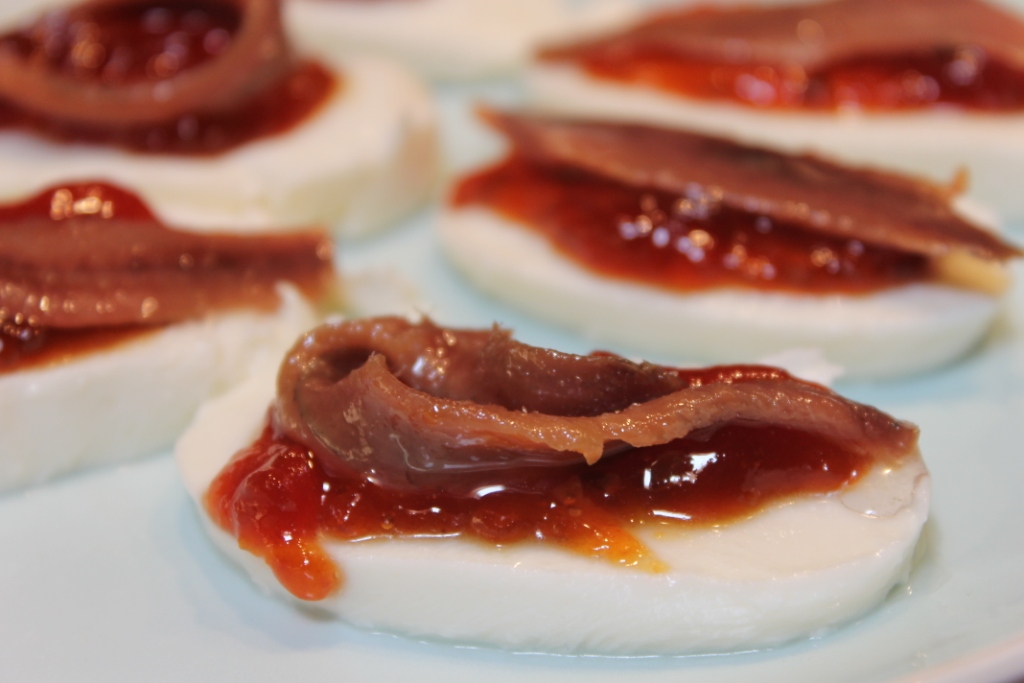
Serve with: breakfast toast and a cuppa or as part of one of our favourite summer canapés: a slice of tangy goat’s cheese with a dollop of jam and an anchovy sat on top.erving suggestion

Gazpacho andaluz

Summer gluts of tomato mean two things around here – cold Andalusian gazpacho and pots of thick tomato jam.  Today I am making the first of these for our supper.  This is very much a Iaia version rather than a faithful reproduction of the traditional soup – I would love to hear your own recipes, especially if you are reading from down south!
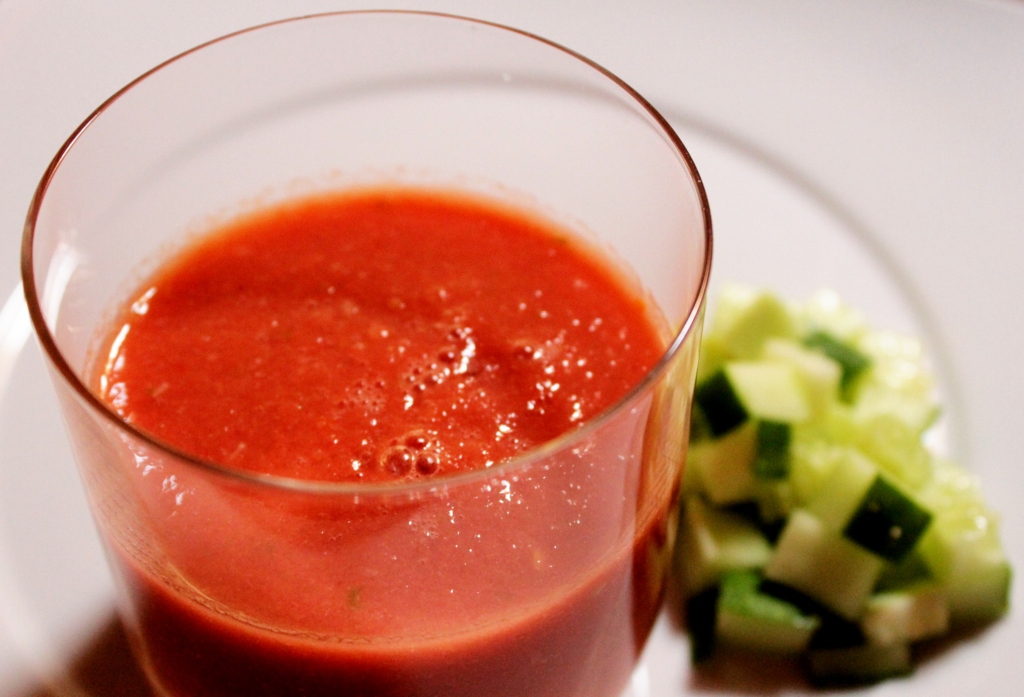
We like to drink our gazpacho from glasses and so add some ice-cold water to get the consistency just right. If, on the other hand, you eat yours from a bowl, it’s usual to add a handful of finely chopped pepper, onion, tomato and/or croutons.  The recipe here gives you about a litre of soup.

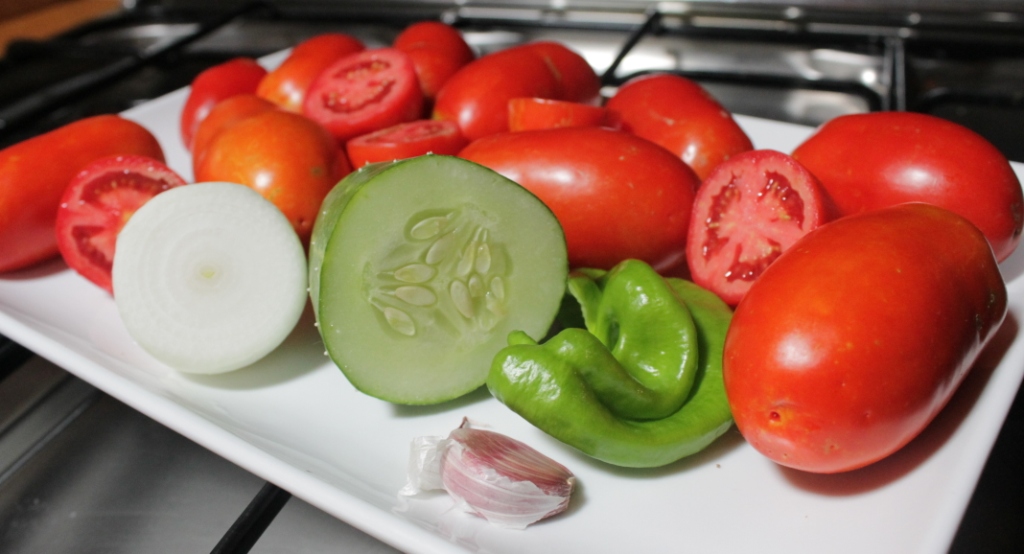
What you need:ingredients
1½ kg ripe plum tomatoes
a chunk of cucumber
a small green or red pepper
half an onion
a clove or two of garlic
olive oil
your favourite vinegar
a pinch of salt
water (optional)

What you do:
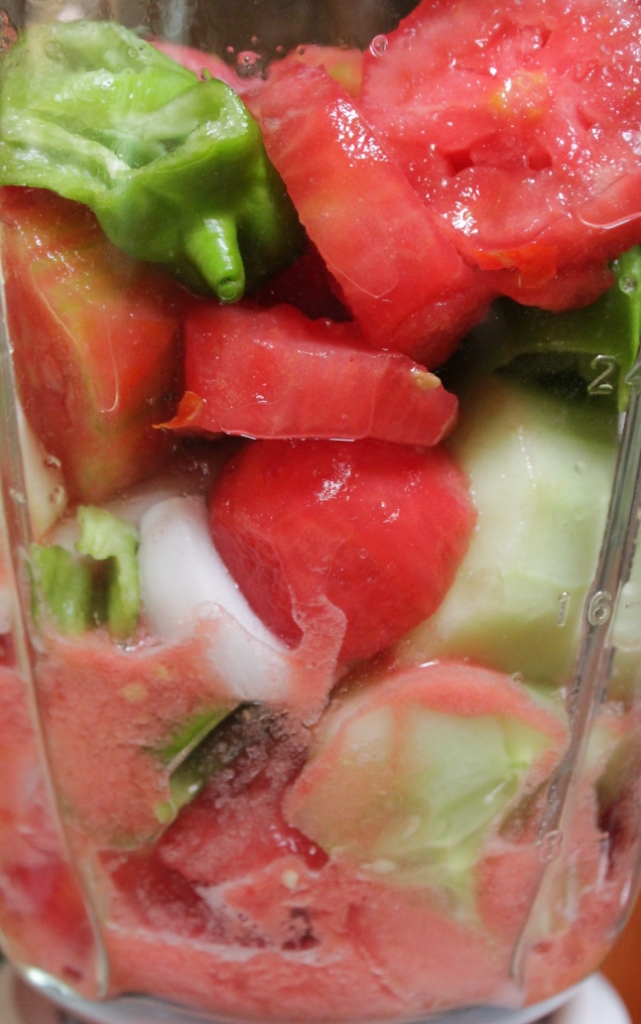
blenderPeel the tomatoes using whichever method you prefer – I use a sharp knife and do away with the whole boiling water palaver. Chop into chunks along with all the other ingredients and toss into a blender. (Note: we also peel the cucumber to save sensitive tummies from indigestion).
Once all the veg is in the blender, pour in a happy glug of olive oil, a generous splash of vinegar and a perfect pinch of salt (all of which you can tweak to taste as you blend), and press the “on” button.  Add water if it seems too thick, more salt if it seems too bland and more oil or vinegar if you think you need either – this is not rocket science.
Refrigerate until ready to serve. Easy? Delicious!

finished

Serve with: croutons, bits of chopped ingredients, and a summer table full of nibbles…

Llescat – another summer table dish to share

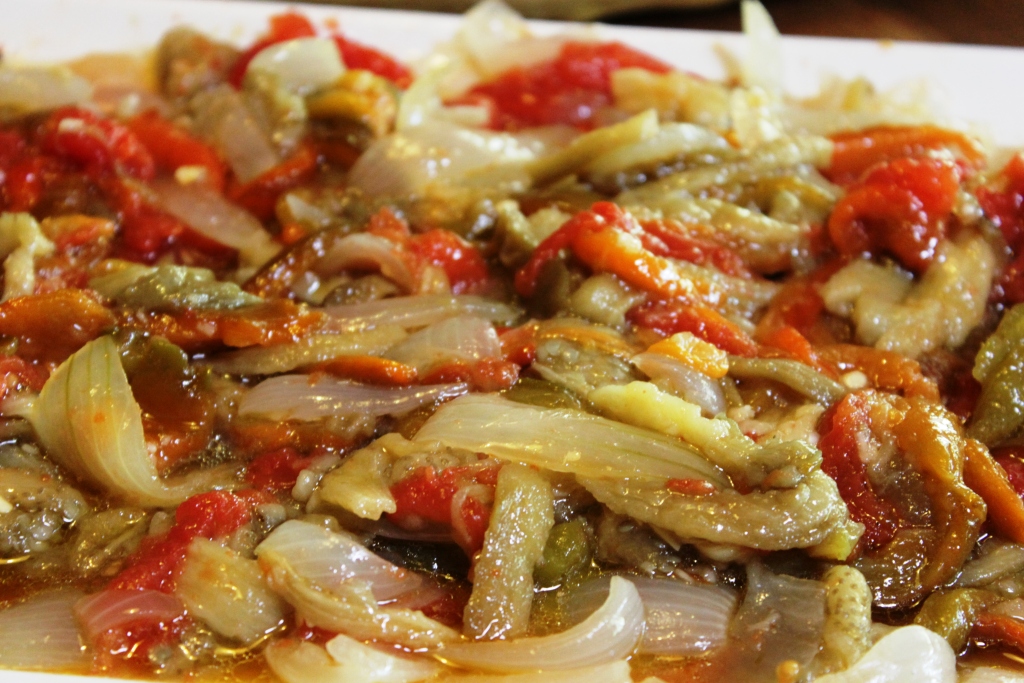
Llescat, which means “in pieces” is also known as esgarraet, which means “torn” and that is because you literally tear oven-roasted aubergine, peppers, onion and tomato into pieces to make this fruity, garlicky summer supper dish.  It’s may seem a bit fiddly to get the skin off everything, but as long as your oven is hot enough, it shouldn’t be a problem. Careful when you open up the peppers – the steam inside burns!

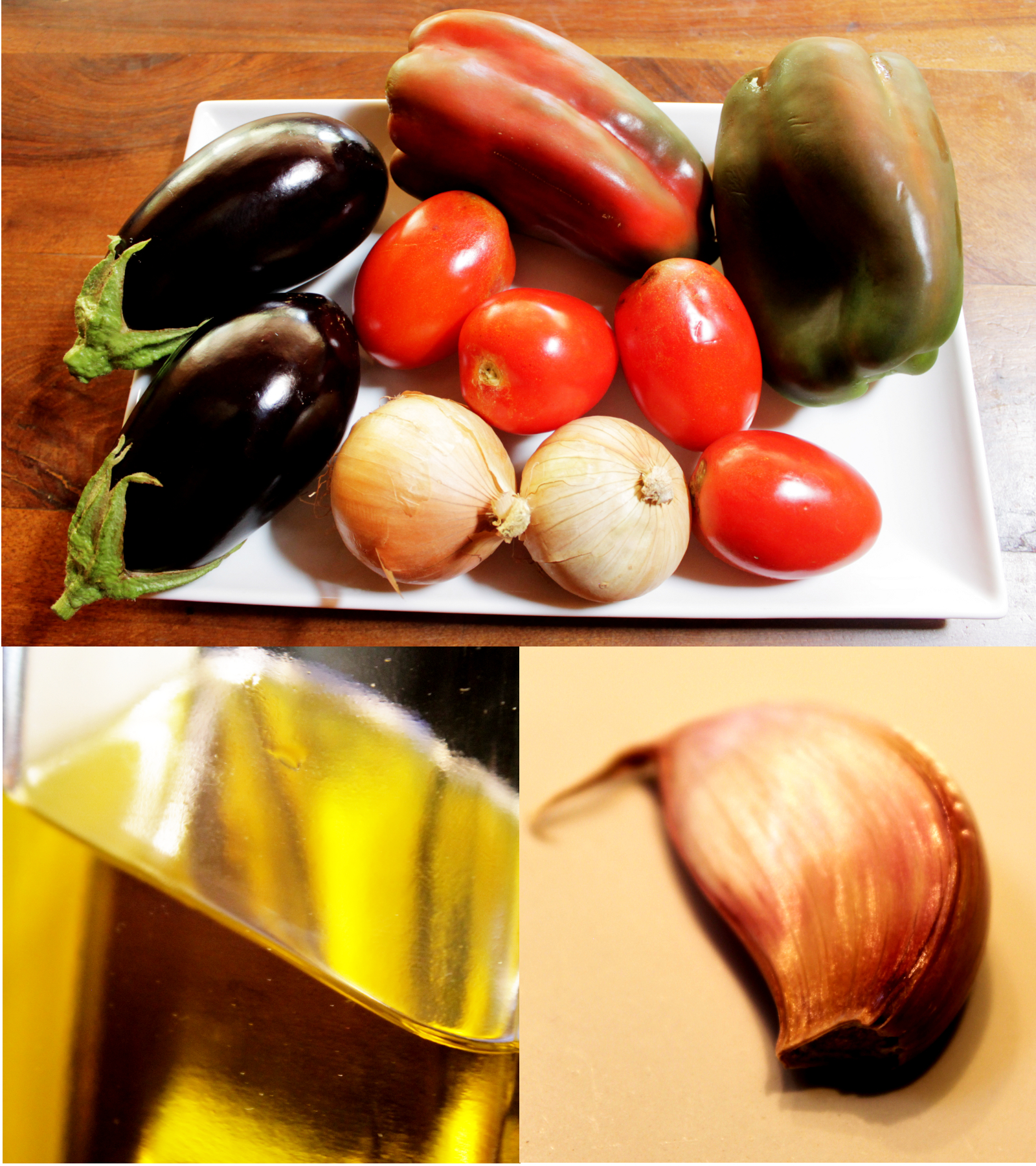
What you need:ingredientsall
2 aubergines (eggplants)
2 greenish-red peppers
2 onions
4 prune tomatoes
1 or 2 cloves of garlic
best quality, fruity olive oil
salt

What you do:
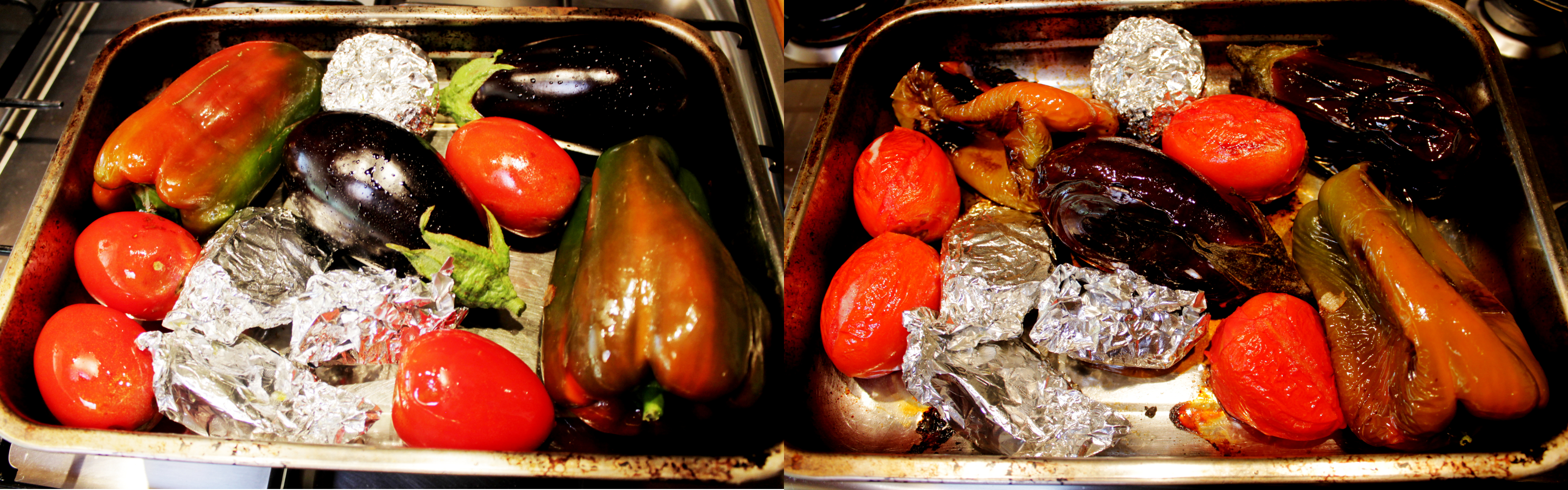
First of all, put your oven at about 220ºC and give it time to heat up. While it is doing so, wash and dry the aubergines, peppers and tomatoes. Peel the onions and chop them in half. They take longer to cook than the other veggies, so you will also need to wrap the halves in a bit of foil. That way, the steam they create is trapped and helps them cook through in time. Put the other veggies in a baking tray and use your hands to rub olive oil over them until they glisten. Add the foil-wrapped onions to the tray and pop them into the hot oven for about 45 minutes, turning everything over about halfway through. Charring is good for flavour, but you don’t want anything to burn dry.oven before afterOnce cooked, place the aubergines, peppers and tomatoes into a deep bowl and cover with plastic film to cool for a bit. Leave the onions as they are to keep steaming in their foil.  After about a quarter of an hour, gingerly pull the veg out and peel the skin off – it should come away very easily. Drain any excess liquid off, and then use your fingers to tear the flesh into thin strips. Unwrap your onions and tear them up as well.  whole and llescatSeason with salt and very finely chopped (or crushed) raw garlic to taste. Pour a generous dressing of olive oil over everything and then mix gently with tongs or a fork.  It’s best to let the flavours soak into each other, so we usually prepare this the day before it’s to be eaten. It’s fine to store it in the fridge, but worth taking it out and letting it come to room temperature before forking it onto thick chunks of crusty baguette and devouring.finishedServe with: a summer spread of ensaladilla, beer-battered aubergines, sardines…and heaps of excellent bread

Pork, tomato and green peppers for dunking bread into

With the weather warming up, we are slowly moving out of stews and soups, and into the realm of the Valencian mullate, which is Iaia-speak for a dunker. These are hearty, chunky dips that require forks, knives and hunks of fresh bread to dunk in and soak up the flavoursome oils and sauces left on your plate after you’ve scoffed the solids.

The first one I made this season was a typical Iaia mix of pork, tomato and green peppers. Delicious.

What you need:ingredints
about 600g of pork fillet
400g tin of tomato
3-4 green Italian peppers
several cloves of garlic
olive oil
salt

What you do:
Separate your garlic cloves but don’t peel them. Cut your fillet into finger-thick slices. Remove the stalk and seeds from your peppers and tear (or cut) them into bite-sized pieces.
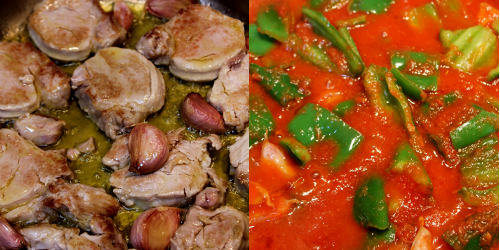
Pour a generous tablespoon or two of olive oil into a deep frying pan and heat to moderate, non-screaming warmth; pop your garlic cloves in and let them fry gently in their jackets for a few minutes before adding the pieces of the fillet to brown on both sides. Remove the meat, but leave the garlic and as much of the oil as possible in the pan. Add the peppers and give them a five-minute swirl to soften slightly before pouring in the tomato to fry and reduce. cookingOnce the tomatoey mixture is bubbling gently, turn the heat down and put the meat back in the pan. Season to taste, cover, and finish cooking over very low heat for about 20 minutes.
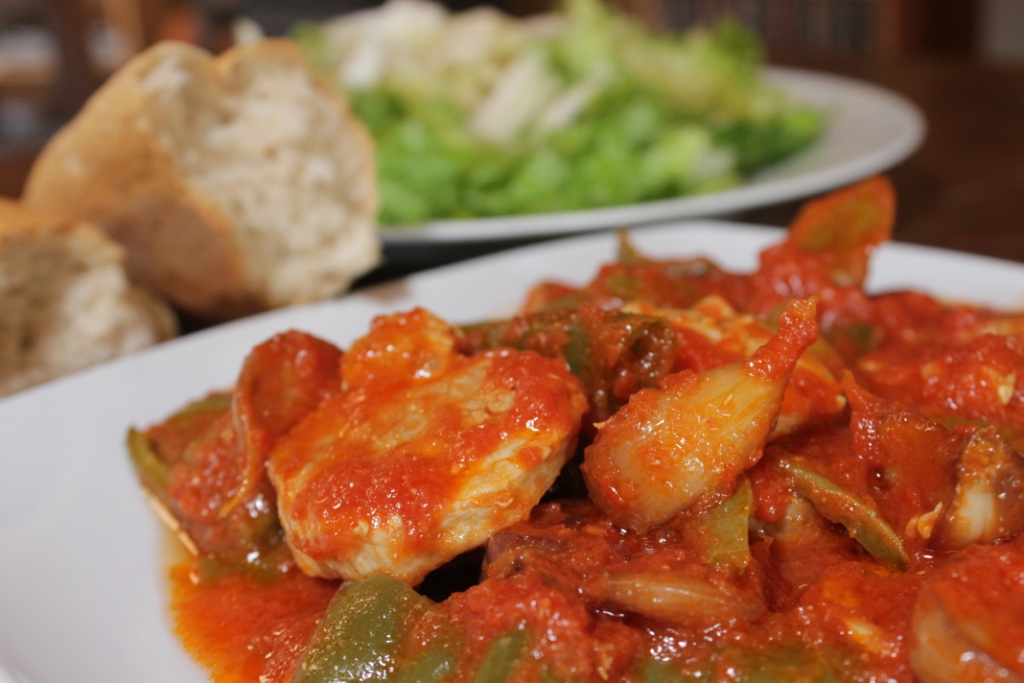
This dip is not meant to be eaten hot, so you will need to let it stand for at least an hour or two before serving. Of course, like all meaty mixes, it is even better the following day. We particularly like it inside a baguette for brunch!finished1

Serve with: bread, fennel and green-leaf salad, and summer beers.