Sardinà: salt cured fish with peppers, onions and egg

Every year our town has its local “fiesta” at the beginning of September. One of the traditional events is a big sardinà brunch served to whoever turns up by a gang of well-dressed, starboard-leaning ladies.  We prefer to eschew the multitude and have our own small-scale celebration with a few friends instead. This year was a beautiful autumn morning, and Oscar was the most excellent chef.
What you need:ingredients1 salt-cured sardine per person
a few dried “capellà” (trisopterus minutus, or “poor cod”)
1 egg per person
3-4 onions
10-12 Italian peppers (green)
1-2 heads of garlic
oil
grapes and bread to serve

What you do:
First of all, get a fire going and let it reduce it to glowing coals. This is for the poor cod, which needs to be lightly charred just before you serve it.  Prep your veg by cutting the peppers into halves or large chunks, separate the individual cloves of garlic but don’t peel them and roughly chop the onions.
Put a generous slug of oil into a large frying pan (we used a paella pan) and heat. Fry the peppers and garlic until softened and beautifully coloured – this will take a little while, so be patient and keep the beer coming for the cook.cookingTransfer the peppers and garlic to a large serving plate. In the same oil, you are now going to soften the onion. Again, patience and lots of pushing about with the tongs to avoid bitter burning. Once that’s done, you have to lay the sardines in the pan and give them a few minutes on each side.  Put the sardines and onions onto another serving plate and let your oil heat up to egg-frying pitch. I’m pretty sure you will know how to fry an egg, but I will say that here they like to sort of flick the hot oil over the top of the egg instead of flipping it; the white bubbles and gets slightly crusty, and the flavours that have infused the oil do wonders for the humble huevo.
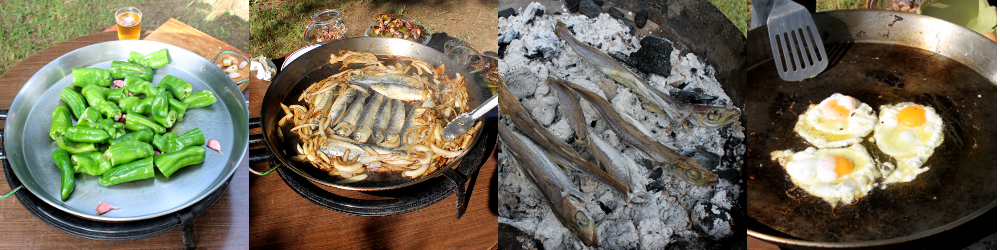
The poor cod should be put on the coals at about the same time as you fry the eggs – it only needs a minute or two on either side. You might need an extra pair of hands to deal with simultaneous frying and charring.servedNow all you need to do is fill a plate with a bit of everything and pour some cold beer!
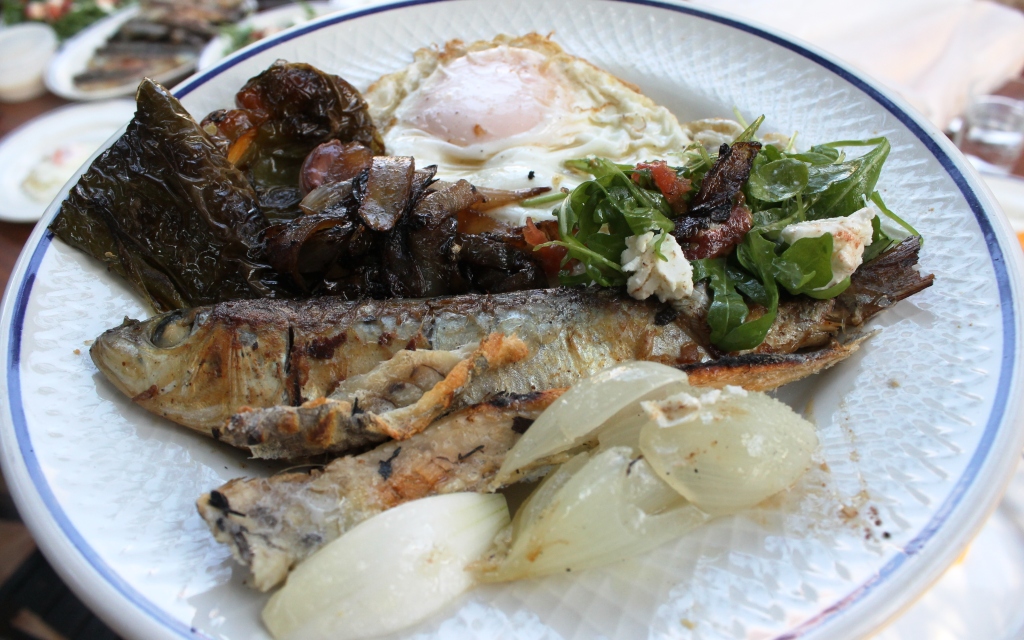
Serve with: grapes (which are at their best in September), bread and beer
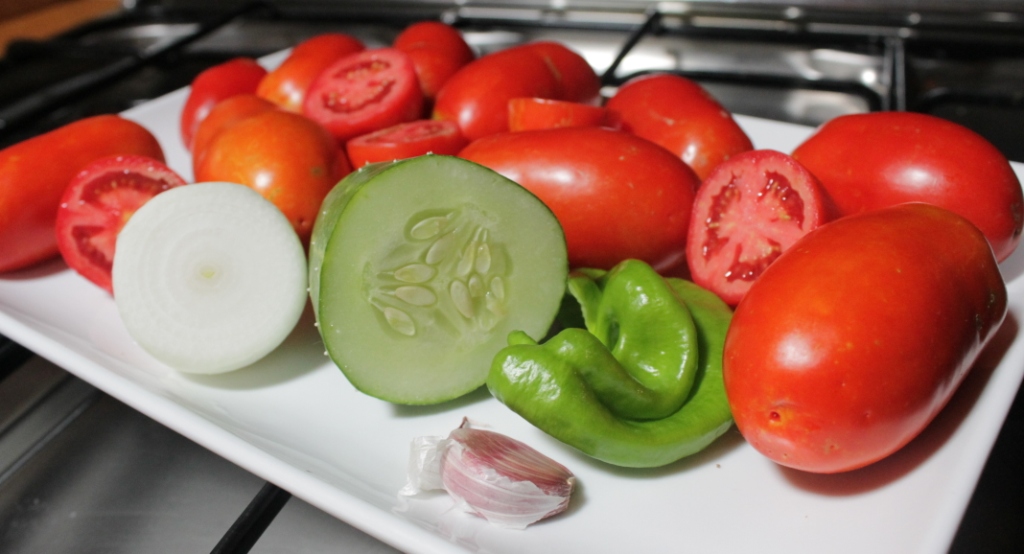
Gazpacho andaluz

Summer gluts of tomato mean two things around here – cold Andalusian gazpacho and pots of thick tomato jam.  Today I am making the first of these for our supper.  This is very much a Iaia version rather than a faithful reproduction of the traditional soup – I would love to hear your own recipes, especially if you are reading from down south!
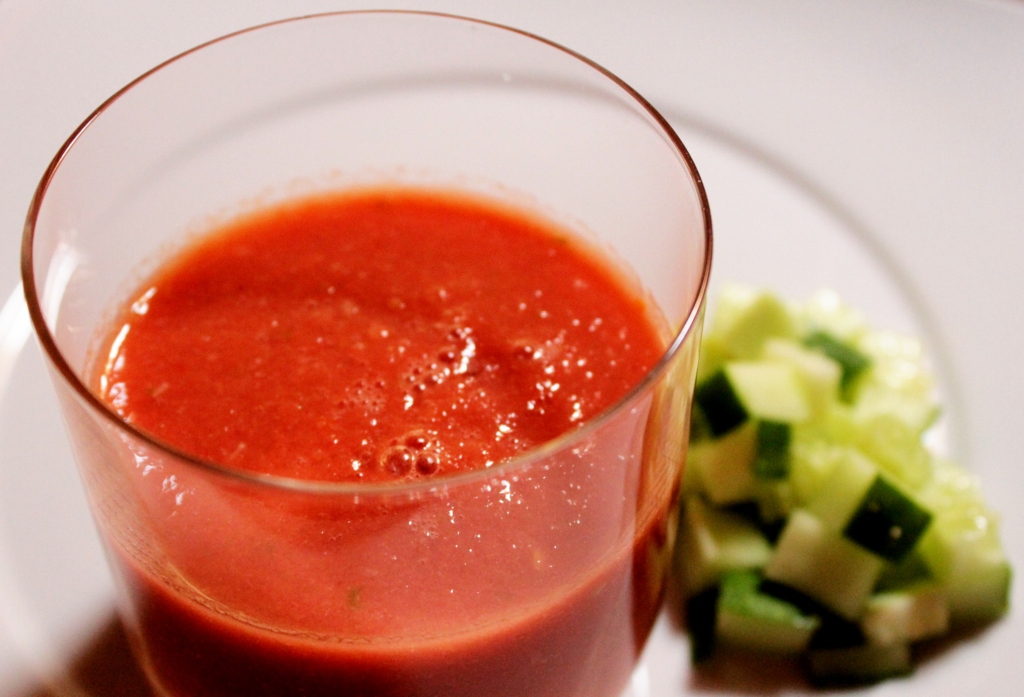
We like to drink our gazpacho from glasses and so add some ice-cold water to get the consistency just right. If, on the other hand, you eat yours from a bowl, it’s usual to add a handful of finely chopped pepper, onion, tomato and/or croutons.  The recipe here gives you about a litre of soup.

What you need:ingredients
1½ kg ripe plum tomatoes
a chunk of cucumber
a small green or red pepper
half an onion
a clove or two of garlic
olive oil
your favourite vinegar
a pinch of salt
water (optional)

What you do:
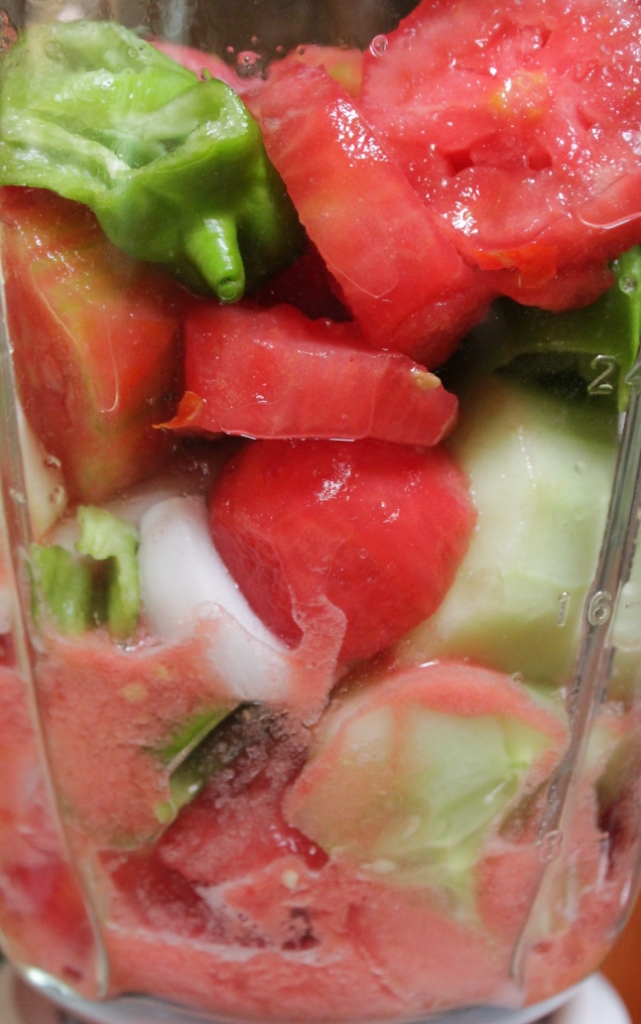
blenderPeel the tomatoes using whichever method you prefer – I use a sharp knife and do away with the whole boiling water palaver. Chop into chunks along with all the other ingredients and toss into a blender. (Note: we also peel the cucumber to save sensitive tummies from indigestion).
Once all the veg is in the blender, pour in a happy glug of olive oil, a generous splash of vinegar and a perfect pinch of salt (all of which you can tweak to taste as you blend), and press the “on” button.  Add water if it seems too thick, more salt if it seems too bland and more oil or vinegar if you think you need either – this is not rocket science.
Refrigerate until ready to serve. Easy? Delicious!

finished

Serve with: croutons, bits of chopped ingredients, and a summer table full of nibbles…

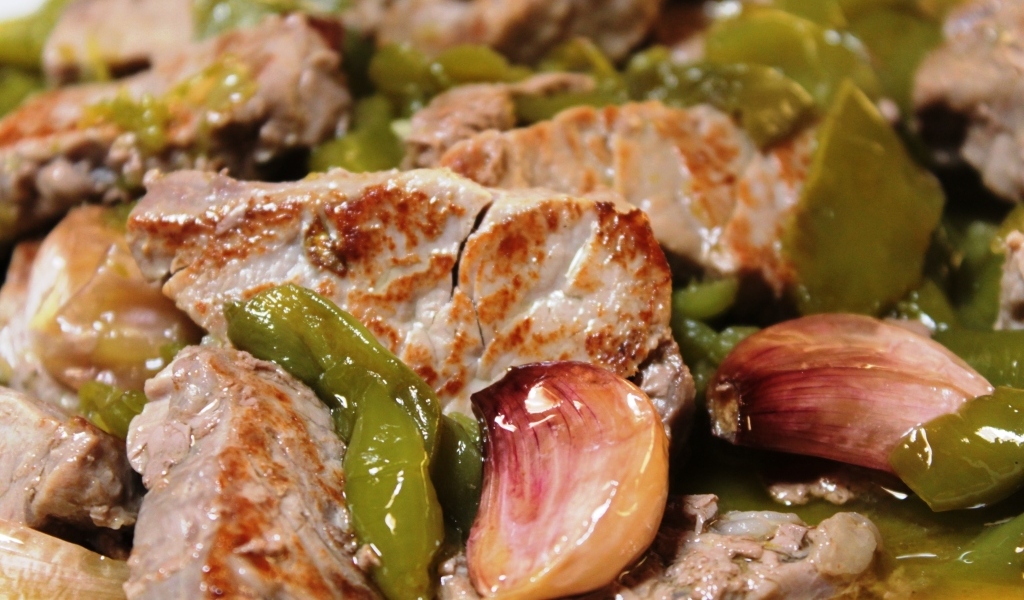
Green peppers and tender beef fillet

We grow these “Italian” peppers in the garden. They are longer, more interestingly shaped, and less fleshy than bell peppers. When cooked slowly like this, their flavour leeches into the oil and wraps itself around the meat most aromatically.  At first glance, it seems as though you are using a ridiculous amount of peppers, but they cook down to almost nothing, so fear not!

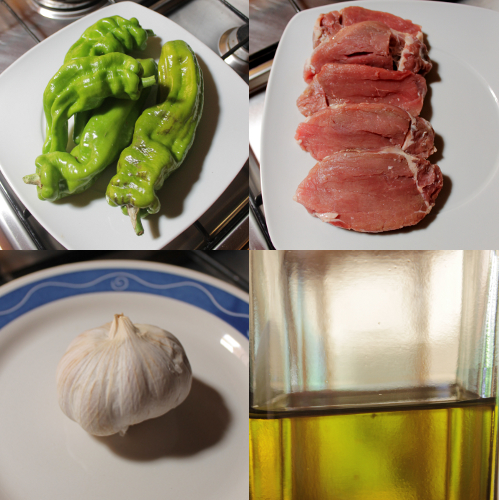
What you need:ingredients
7 or 8 Italian (bullhorn) peppers
4 or 5 slices of beef fillet
a whole head of garlic
olive oil

What you do:
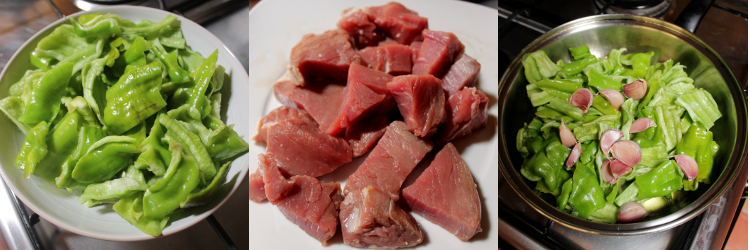
Remove the seeds from the peppers and tear the fruit up into pieces.  Cut the fillet slices into comfortable bites and separate the garlic cloves without peeling them.

processHeat a generous amount of olive oil in a large pan and tip the peppers, the whole garlic cloves, and a good pinch of salt in. Stir everything around to coat with oil and fry gently for about 5 minutes, making sure nothing burns. Cover, turn the heat down and let things steam and fry for another 10-15 minutes.
Once the peppers and garlic are softened right down, remove them from the pan and set aside while you deal with the meat, which needs to be browned and cooked to your taste in the same pan.  As it is such a tender cut, there really isn’t much need to cook it for very long. High heat will give you a lovely colour and flavour in just a few minutes.
Put the peppers and garlic back in with the meat and mix everything up.  You can either continue to cook gently on low heat for a few minutes more if you are not sure about the “done-ness” of the meat, or turn the hob off and let everything sit until it cools to room temperature.

finished

Serve with: a tomato salad, some bread and a red

Llescat de pimentons i bacallà (peppers and salt cod)

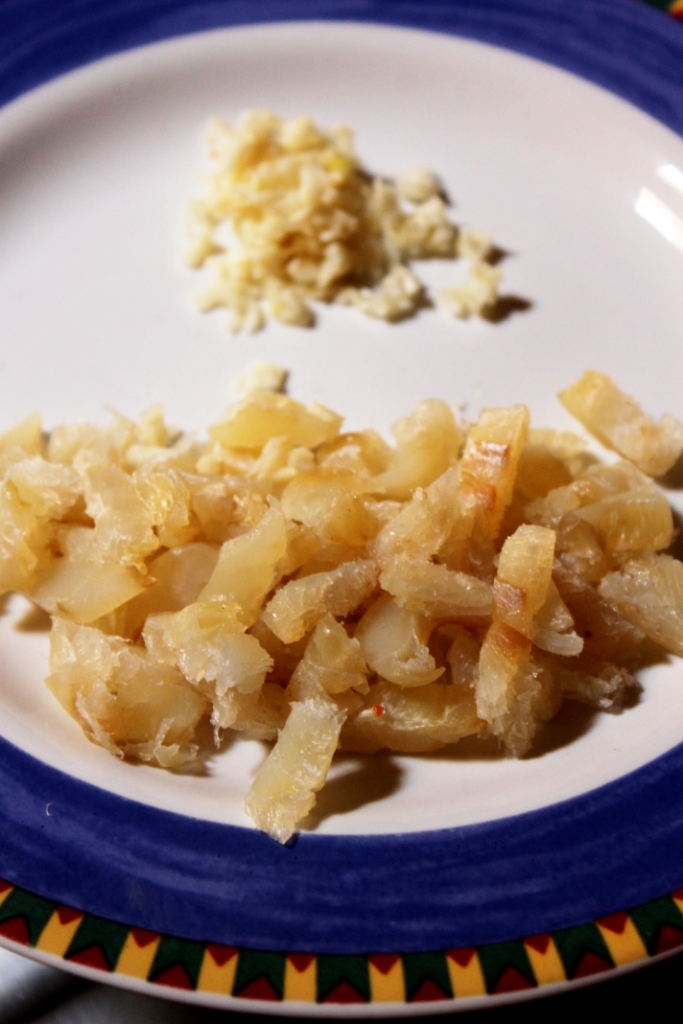
Summer gardens are full of bell peppers, and there are plenty of dishes to make the most of the glut. This one has semi-dried (or pre-soaked) salt cod in it. If you can’t find any, try it with a tin of tuna instead and add a small pinch of salt (which you absolutely mustn’t add with the cod!)

What you need:ingredients
1 large red pepper
1 large green pepper
a few strips of salt cod
(or a tin of tuna in oil)
a clove or two of garlic
olive oil

What you do:
Get your oven screaming hot (230-240ºC), lightly coat your peppers with olive oil and roast them for about 20 minutes or so until they blister, turning every now and then so they cook evenly.  Take them out and let them cool a bit before peeling the skin off and tearing them into strips.IMG_2848

Chop your garlic up very finely and slice the cod into small pieces. Mix into the peppers. IMG_2849

Pour a generous glug of excellent olive oil over everything and set aside for an hour to infuse before dolloping spoonfuls onto pretty plates for a lovely starter.

FINISHED

Serve with: crusty bread and cold beverages of any colour

Llescat – another summer table dish to share

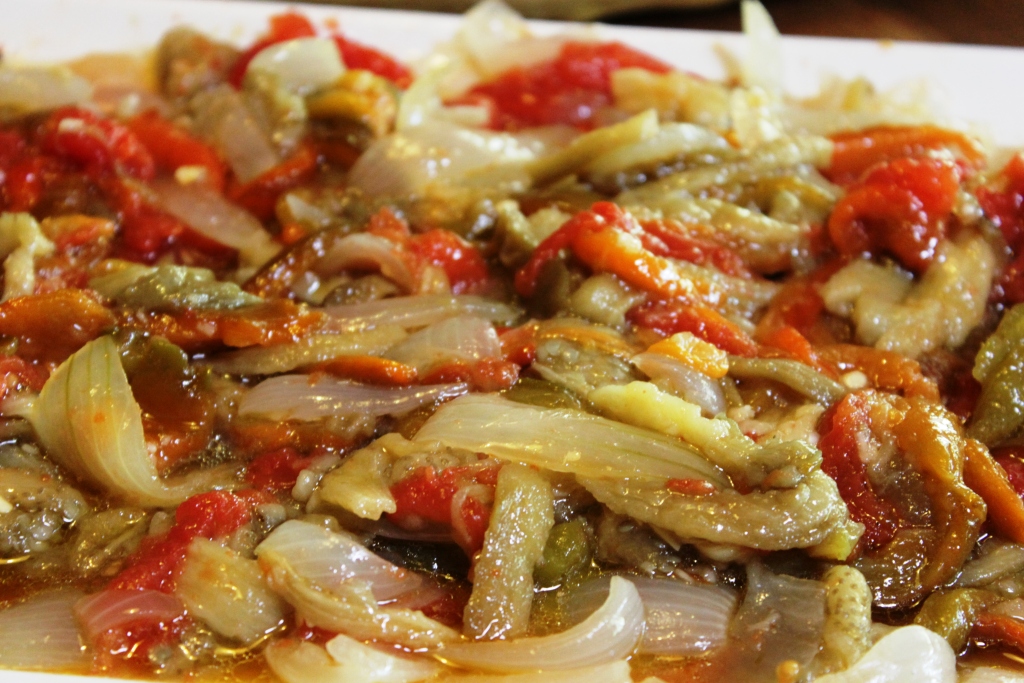
Llescat, which means “in pieces” is also known as esgarraet, which means “torn” and that is because you literally tear oven-roasted aubergine, peppers, onion and tomato into pieces to make this fruity, garlicky summer supper dish.  It’s may seem a bit fiddly to get the skin off everything, but as long as your oven is hot enough, it shouldn’t be a problem. Careful when you open up the peppers – the steam inside burns!

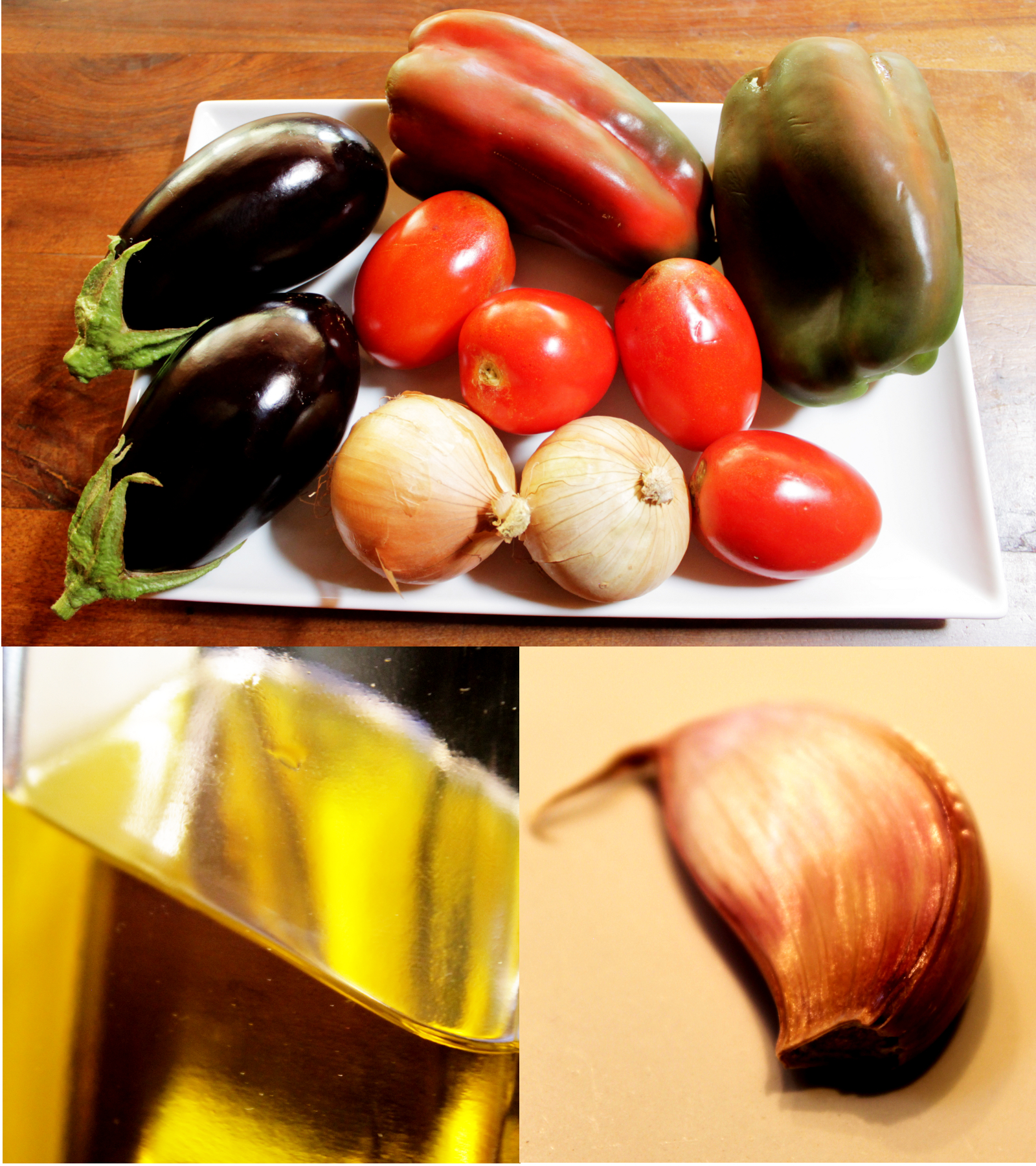
What you need:ingredientsall
2 aubergines (eggplants)
2 greenish-red peppers
2 onions
4 prune tomatoes
1 or 2 cloves of garlic
best quality, fruity olive oil
salt

What you do:
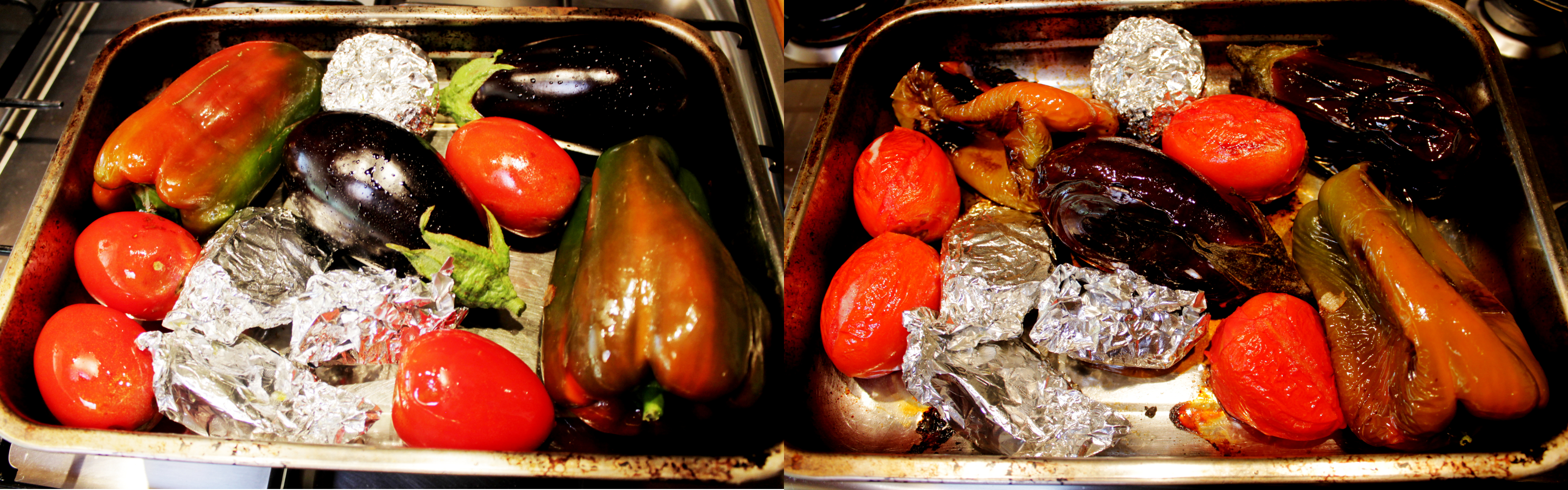
First of all, put your oven at about 220ºC and give it time to heat up. While it is doing so, wash and dry the aubergines, peppers and tomatoes. Peel the onions and chop them in half. They take longer to cook than the other veggies, so you will also need to wrap the halves in a bit of foil. That way, the steam they create is trapped and helps them cook through in time. Put the other veggies in a baking tray and use your hands to rub olive oil over them until they glisten. Add the foil-wrapped onions to the tray and pop them into the hot oven for about 45 minutes, turning everything over about halfway through. Charring is good for flavour, but you don’t want anything to burn dry.oven before afterOnce cooked, place the aubergines, peppers and tomatoes into a deep bowl and cover with plastic film to cool for a bit. Leave the onions as they are to keep steaming in their foil.  After about a quarter of an hour, gingerly pull the veg out and peel the skin off – it should come away very easily. Drain any excess liquid off, and then use your fingers to tear the flesh into thin strips. Unwrap your onions and tear them up as well.  whole and llescatSeason with salt and very finely chopped (or crushed) raw garlic to taste. Pour a generous dressing of olive oil over everything and then mix gently with tongs or a fork.  It’s best to let the flavours soak into each other, so we usually prepare this the day before it’s to be eaten. It’s fine to store it in the fridge, but worth taking it out and letting it come to room temperature before forking it onto thick chunks of crusty baguette and devouring.finishedServe with: a summer spread of ensaladilla, beer-battered aubergines, sardines…and heaps of excellent bread

Pork, tomato and green peppers for dunking bread into

With the weather warming up, we are slowly moving out of stews and soups, and into the realm of the Valencian mullate, which is Iaia-speak for a dunker. These are hearty, chunky dips that require forks, knives and hunks of fresh bread to dunk in and soak up the flavoursome oils and sauces left on your plate after you’ve scoffed the solids.

The first one I made this season was a typical Iaia mix of pork, tomato and green peppers. Delicious.

What you need:ingredints
about 600g of pork fillet
400g tin of tomato
3-4 green Italian peppers
several cloves of garlic
olive oil
salt

What you do:
Separate your garlic cloves but don’t peel them. Cut your fillet into finger-thick slices. Remove the stalk and seeds from your peppers and tear (or cut) them into bite-sized pieces.
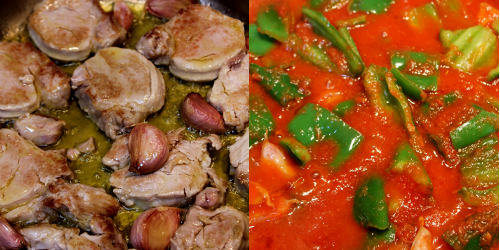
Pour a generous tablespoon or two of olive oil into a deep frying pan and heat to moderate, non-screaming warmth; pop your garlic cloves in and let them fry gently in their jackets for a few minutes before adding the pieces of the fillet to brown on both sides. Remove the meat, but leave the garlic and as much of the oil as possible in the pan. Add the peppers and give them a five-minute swirl to soften slightly before pouring in the tomato to fry and reduce. cookingOnce the tomatoey mixture is bubbling gently, turn the heat down and put the meat back in the pan. Season to taste, cover, and finish cooking over very low heat for about 20 minutes.
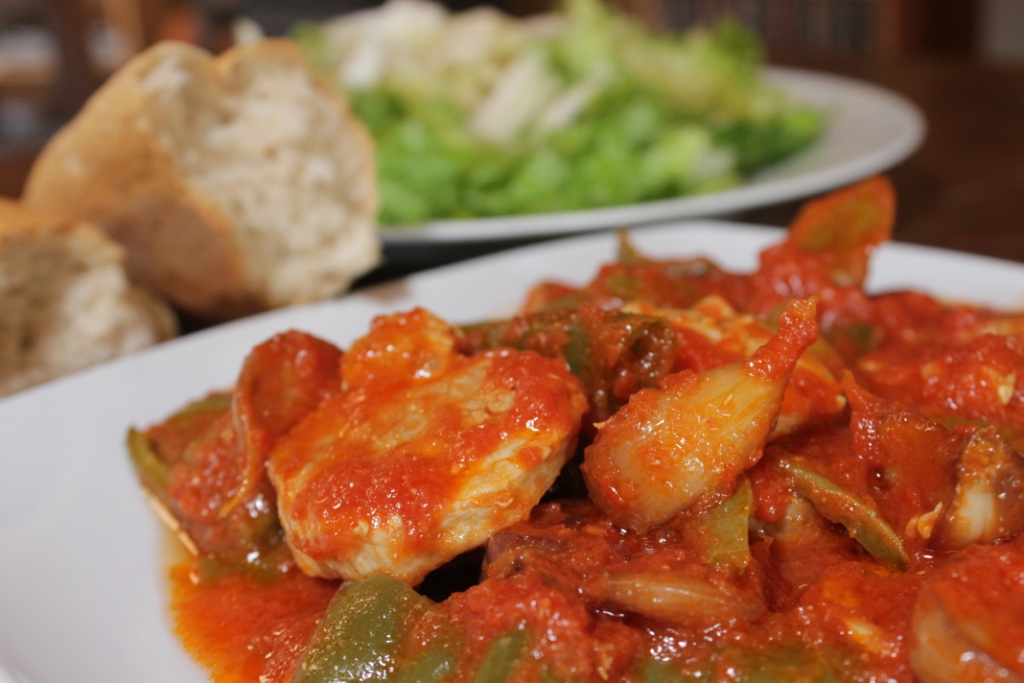
This dip is not meant to be eaten hot, so you will need to let it stand for at least an hour or two before serving. Of course, like all meaty mixes, it is even better the following day. We particularly like it inside a baguette for brunch!finished1

Serve with: bread, fennel and green-leaf salad, and summer beers.