
 Gazpachos Manchegos is a delicious, wintery stew cooked with game (usually quail and rabbit) and bread-like tortas. It is the pride of Castilla La Mancha and a traditional dish for shepherds, hunters and farmers. Although the original recipe calls for two large flatbreads, one to be crumbled into the stew and the other to be used to spoon it out of the pan and into one’s mouth, our family does a Valencian version which uses little biscuits that require bowls and conventional cutlery. We also use organic chicken instead of quail and a little less rabbit than a real hunter would.
One of the most important parts of this dish is the picadillo – a mortar and pestle mash of cooked chicken liver, garlic, almonds, peanuts and parsley. Be brave!
What you need: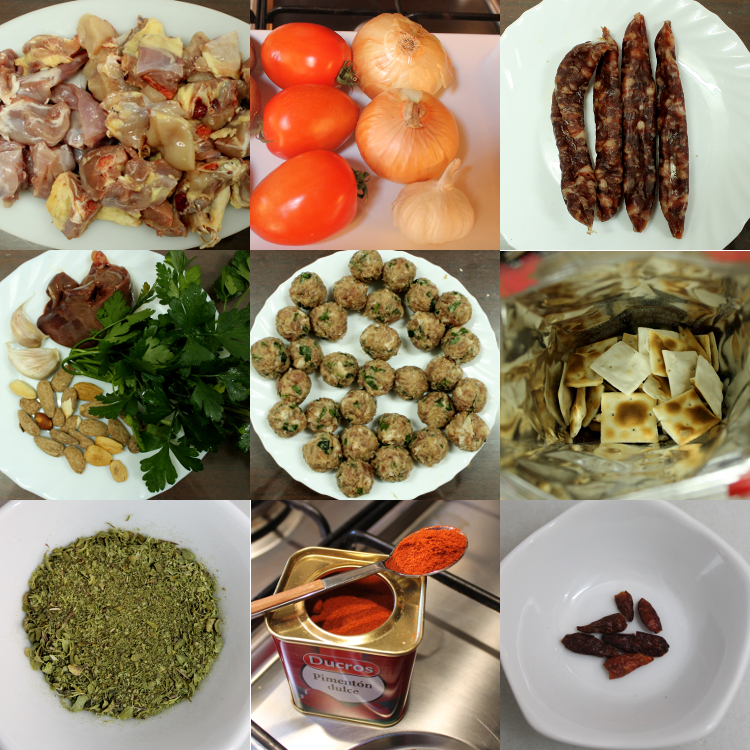
2kg organic chicken on the bone
Half a rabbit (approx. 1/2 kg)
3-4 ripe pear tomatoes
2-3 onions, finely chopped
1 head of garlic
3-4 dried sausages
1/2 kg meatballs (see putxero for mix)
4 packets of tortas (180g/packet)
pebrella (thymus piperella)
sweet paprika
2-3 small dried chillies
2-3 bay leaves
olive oil
water
salt
for the picadillo:
the organic chicken liver, fried
a handful of almonds and roast peanuts
2 cloves of garlic
a bunch of parsley
What you do:
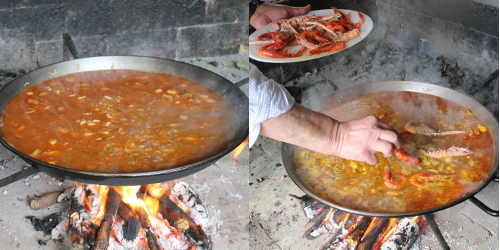
The meat should be on the bone and cut into smallish pieces, as you can see in the photo. Grate the tomatoes, finely chop the onions and chop the sausages into small pieces. Pour a generous amount of olive oil into a large, deep pan and start by frying the meat, together with the full head of garlic, until the meat is beautifully browned and well on the way to being cooked. Season lightly.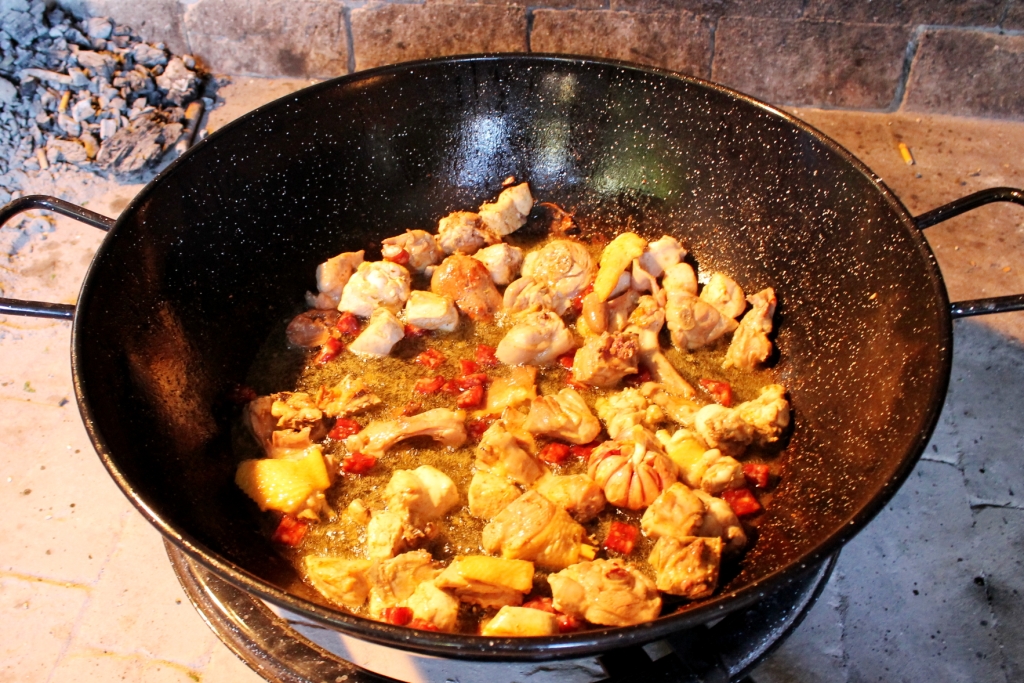 Remove the fried liver and set aside for the picadillo, then chuck in the onion to soften. After about 5 minutes, add the tomato and fry gently, stirring everything around from time to time. You should have your water handy at this point because the next step is to add the paprika, and you must never let it cook for too long as it will go bitter. So, put a good heaped teaspoon of paprika in, stir it for 30 seconds and then pour in your water. How much? Nobody can answer me. They say, “judge with your eyes,” so here is a photo:
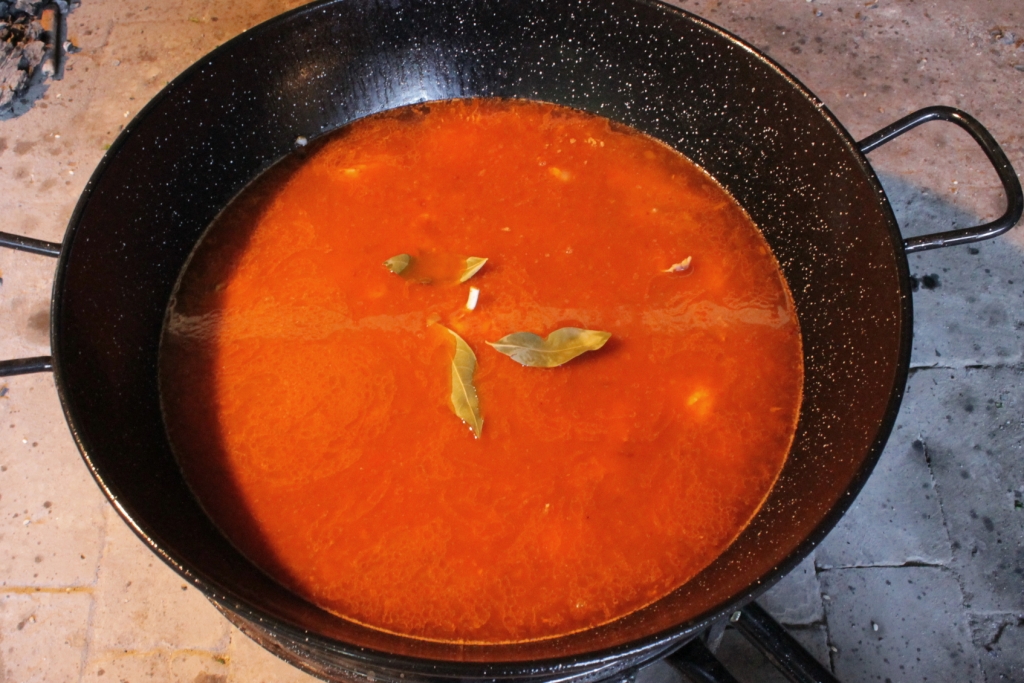 Throw in the bay leaves and a little more salt, and bring slowly to a boil. Organic chicken takes a lot longer to cook than the mushy-fleshed variety but is worth every minute, so let things boil comfortably for 20-30 minutes, adding hot water if it seems to be evaporating too quickly. Once the cauldron is bubbling, add the pebrella and pop the chillies in a tea strainer so that you can lift them out before things get too hot.
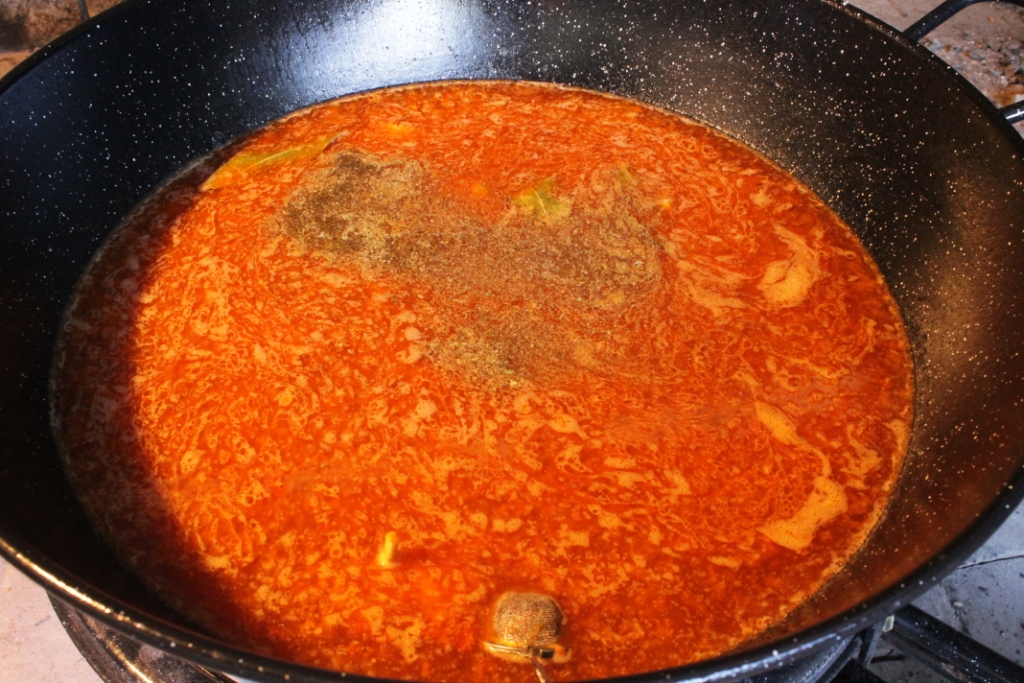 Meanwhile, you need to get on with the picadillo, by smooshing up the ingredients in a mortar and pestle until it resembles a sort of rough paté:
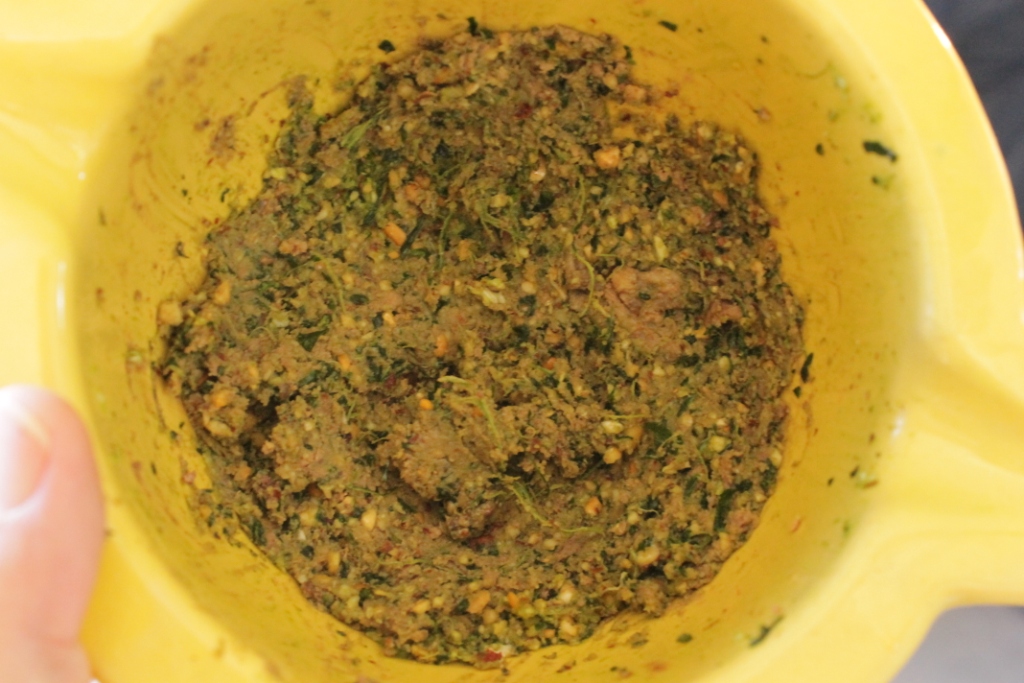 This is then spooned into the boiling mixture at the same time as the meatballs are plopped in. Stir everything gently and test the stock for flavour, seasoning as you see fit.
Then it’s time to add the “pasta”. Crush lightly with your hands as you pour the packets in. Then allow to boil for another 15 minutes or so.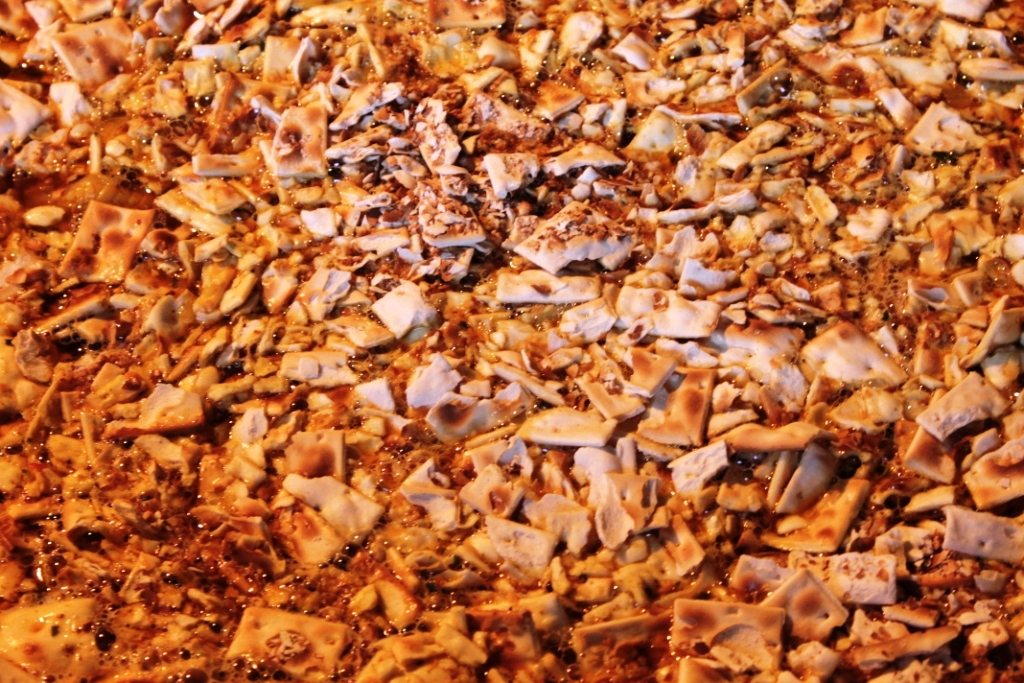 As the biscuits absorb the liquid, your gazpachos will thicken into a fabulously flavoursome, gravy-laden stew which ought to be spooned into bowls and eaten after it has been allowed to cool slightly. The second bowl is always the best!
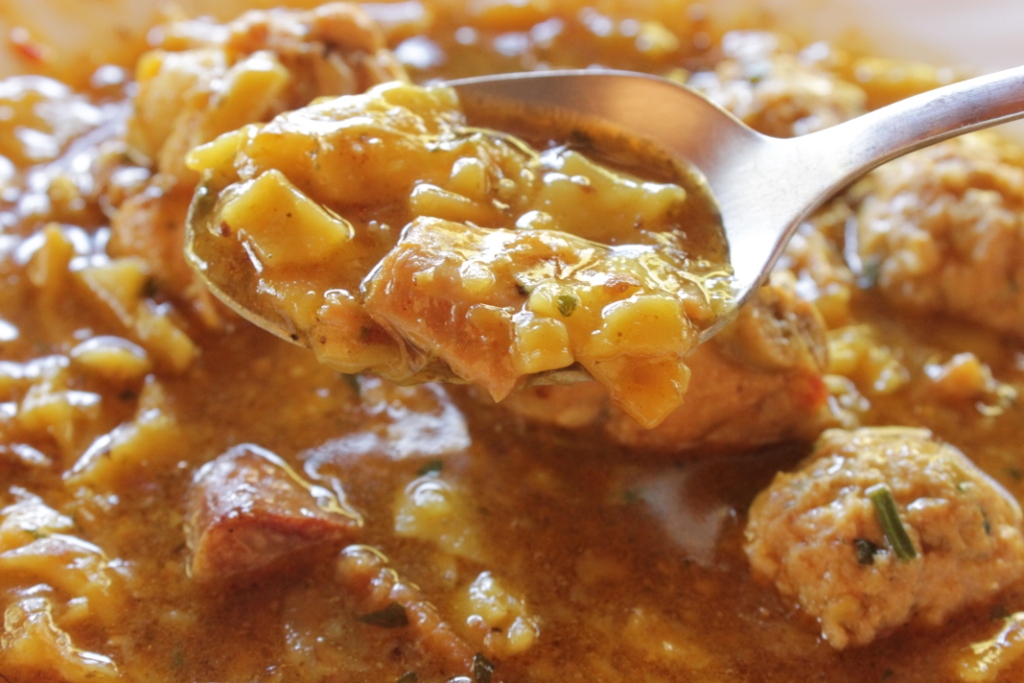 Serve with: a full-bodied red.



 Iaia's kitchen