
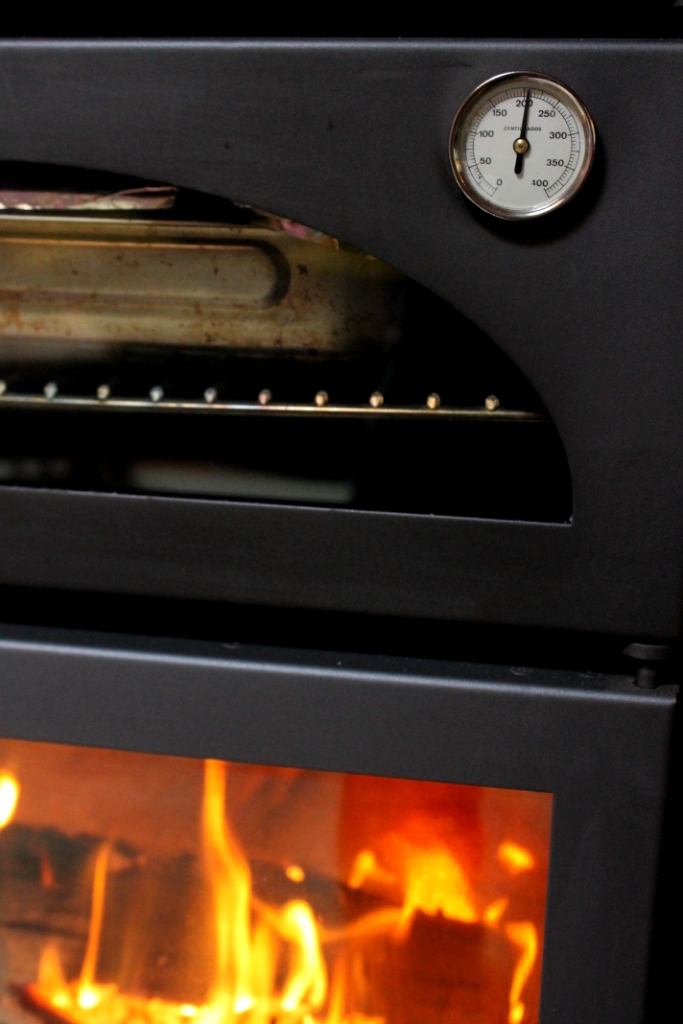
 Not only does our little fireplace keep us warm throughout winter, but it also furnishes us with an extra oven, which I use constantly in the cold months for pizzas, rice and meat dishes and roast veggies. Today I cooked a Iaia-style leg of lamb with caramelised onions in it, and it behaved beautifully, staying really hot for the first half an hour or so and then gradually dropping down to about 160ºC by which time the lamb was perfect.
Our Iaia is not a fan of cold roast meat, but I am, so I cook a leg for 2 people to make sure there is plenty left over for salads and sandwiches. And always use more onions and garlic than seems necessary, because they caramelise down to so little and taste so good that there is never enough!
What you need:
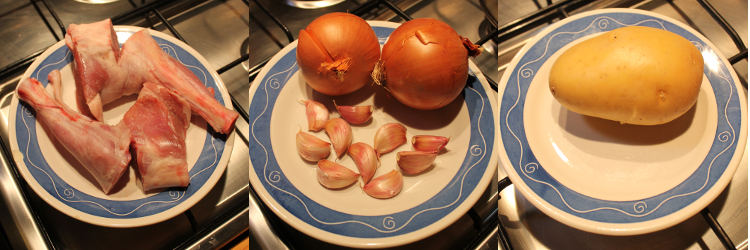
1 leg of lamb
6 onions
a head of garlic
a little white wine
a little olive oil
salt and pepper
What you do:
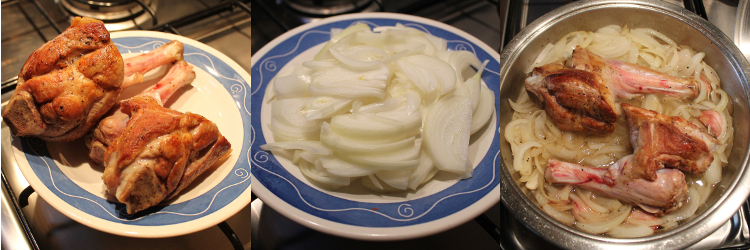
Heat your oven to about 210ºC. Roughly chop all of the onions into your baking dish. Break up the head of garlic into cloves without peeling them and chuck them in too. This way, the garlic cooks inside its jacket, and you get an amazingly fragrant paste to squish over your meat or mix into the juices for gravy deluxe.
Lay the leg of lamb on its oniony bed and season well with salt and pepper; add any herbs you fancy too. Pour about ¾ glass of white wine into the tray and drizzle a little olive oil over the lamb – if your joint has been (sadly) deprived of its fat, add extra and massage into the meat.
Cover with foil and pop into the hot oven. After half an hour, reduce the heat to about 170ºC (the exact temperature will depend on how fiercely your oven burns – you want the lamb to cook for two hours without frazzling, so adjust as you see fit).
I take the foil off after the first hour and spoon some onion/wine/lamb juice over the meat. If the onions appear to be either burning or sticking, it means you have not put in enough liquid, so add some quickly.
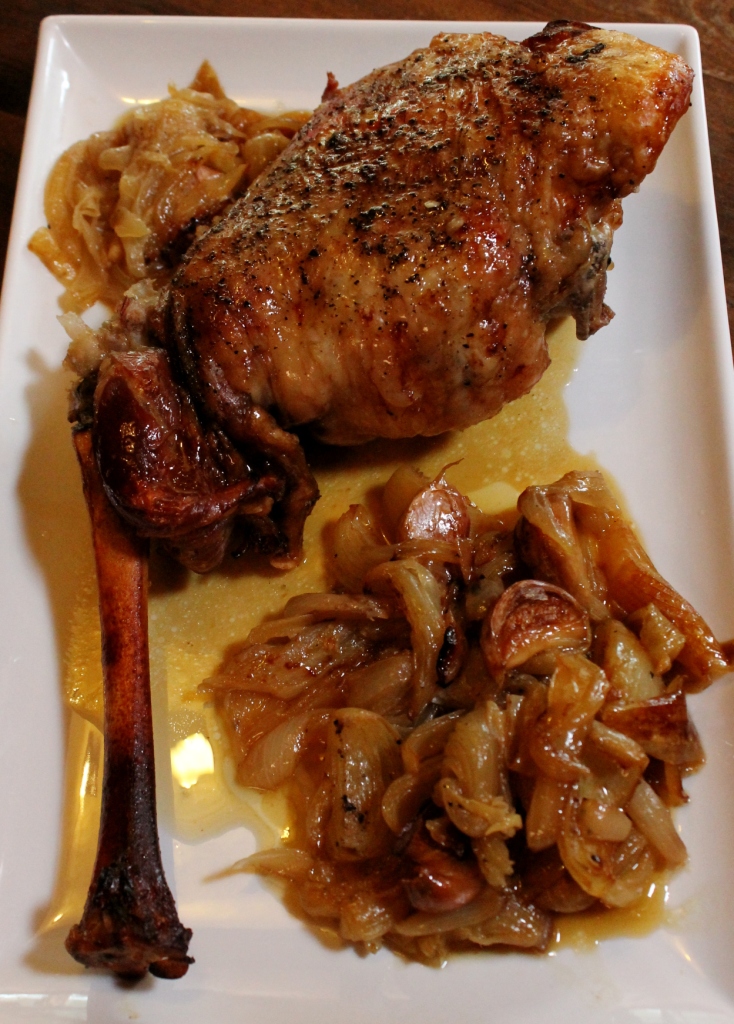
We like our lamb brown right to the bone, and the two-hour roasting time ensures both that and the scrummiest onions ever. They will be gloriously golden, the garlic softly squishy and the meat tender, with a darkened crusty exterior.
Leaving it to rest is always the best, but there are times (like today) when hunger gets the better of me, and it goes straight to the plate.
Serve with: greens and a red


 Iaia's kitchen