Easter weekend almost always includes buñuelos, or pumpkin doughnuts, for us. Oscar’s auntie Herminia is the resident expert, and it is her hands that you can see doing all the hard work in this recipe.
I am not a huge fan of the little orange balls; without sugar, they are a bit bland and biting into granulated sugar sets my teeth on edge. However, they are a very popular treat here and most certainly part of Iaia’s year in the kitchen!
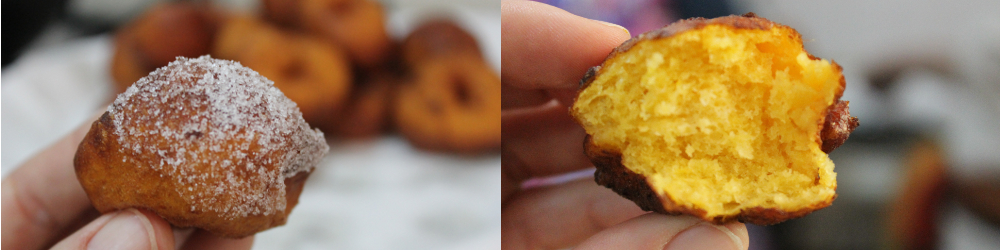
This recipe made about 90 little doughnuts, which sounds like a barbaric amount, but isn’t, especially when served to a table full of Valencians. Short work was made of these little blobs of pumpkiny, sugary sweetness on Easter Monday.
What you need: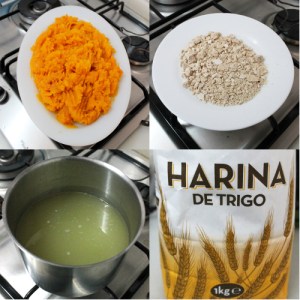
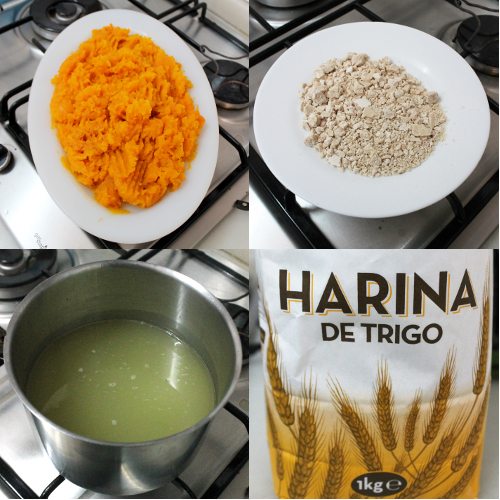
800g boiled and drained (or roast) pumpkin flesh
about 80g fresh yeast
1 egg
about 750g plain flour
the cooking liquid from the pumpkin (or warm water if you use roast pumpkin)
1½ litres sunflower oil for frying (most of which can be reused later)
What you do:
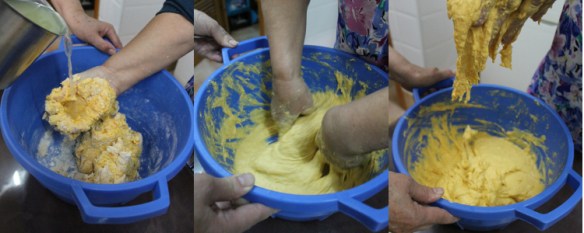
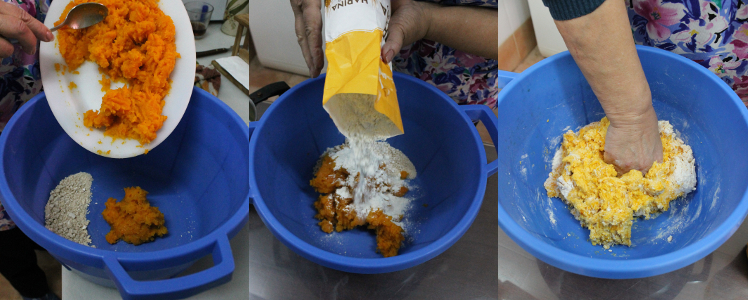
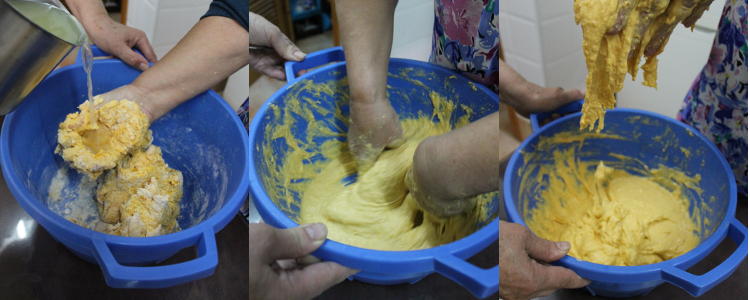
In a large (really large) bowl or bucket, hand mix the crumbled fresh yeast, pumpkin and beaten egg. Add about 300g of flour and start working it into the orange pulp with energy. Once the first addition of flour is mixed in, keep adding bit by bit, alternating with small splashes of the cooking liquid until you have used about 750g of flour.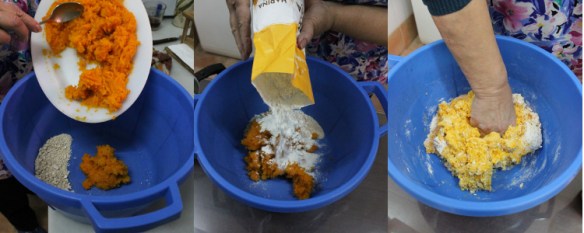 The finished dough is really very soft, so you will end up adding quite a bit of liquid. There is no specific measurement, but the texture before the dough rises is similar to thick mud – the kind that squelches most beautifully between your toes.
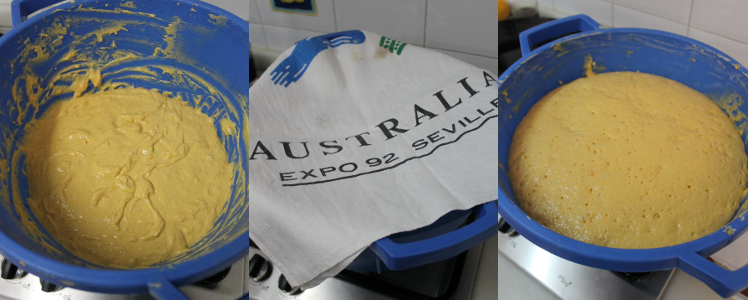
  Cover the bowl with a tea towel (Iaia has asked me to point out that hers is from the Australia pavilion at the 1992 Expo Seville, before Oscar had met me) and set it aside for a couple of hours. You will be amazed at how much the mixture rises, all bubbly and spongy with the yeast!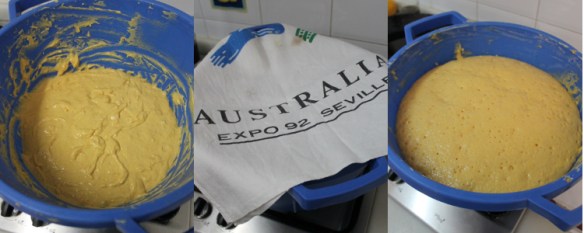
And now comes the complicated bit…
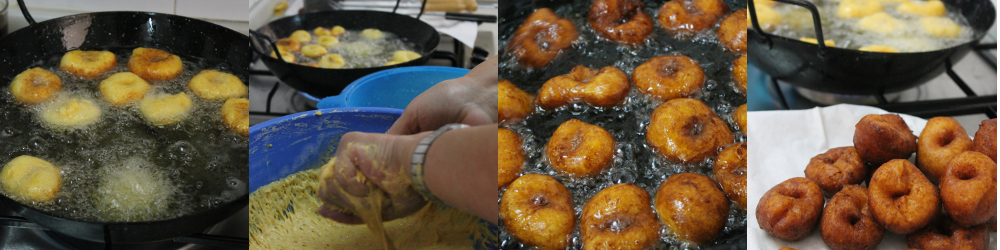
Heat the oil in a large, deep pan. It can’t be too hot, or the doughnuts will burn on the outside and be gluggy in the middle, but it has to be hot enough to fry them quickly, so they don’t come out disgustingly oily. Herminia says that when you drop the test blob in, it should rise immediately to the surface and bubble satisfyingly without spitting. Easy to say – you’ll have to practice a bit to get it right!
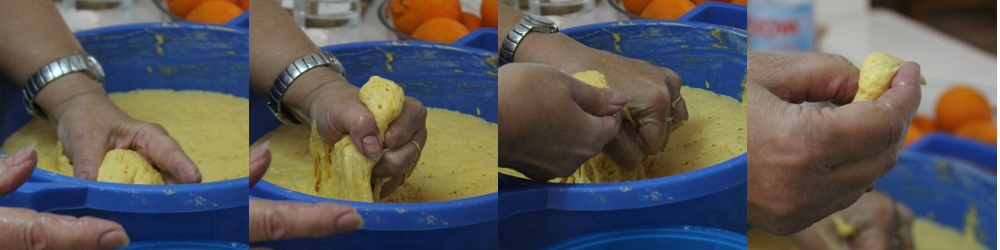
To form the doughnuts, grab a fistful of lovely, squishy mix and squeeze it so that a walnut-sized blob spouts from between your thumb and forefinger. With the two first fingers of your other hand, which you should wet slightly with the leftover cooking water (or any warm water) to avoid sticking, scoop the blob off and immediately plunge the thumb of the scooping hand into the middle of the ball to form the hole. As you twist your wrist around, the mixture will threaten to drop off your fingers, but before it does, you will have deftly, and gently, spread your index and ring fingers and drop it into the hot oil. Repeat until the surface of your pan is full of bobbing buñuelos. You will get quicker as you practice.
Let the doughnuts brown for about 30 seconds before flipping them over. When they are evenly golden, they are ready to be removed from the oil with a slotted spoon and drained on kitchen paper. When draining, make sure you don’t pile them up on top of each other because they will stick and squish.
Once you’ve finished cooking (Herminia took about 20 minutes to do the whole batch), serve warm or cooled with a bowl of sugar for everyone to dip into. The cooked doughnuts can also be frozen in single layers and defrosted when needed. Microwave reheating is also possible if, unlike me, you have the technology.
Serve with: coffee


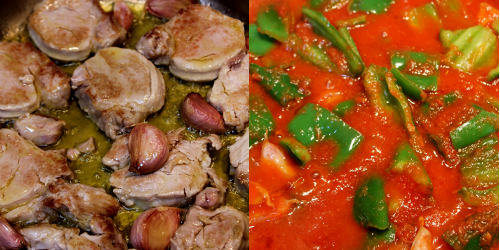 Once the tomatoey mixture is bubbling gently, turn the heat down and put the meat back in the pan. Season to taste, cover, and finish cooking over very low heat for about 20 minutes.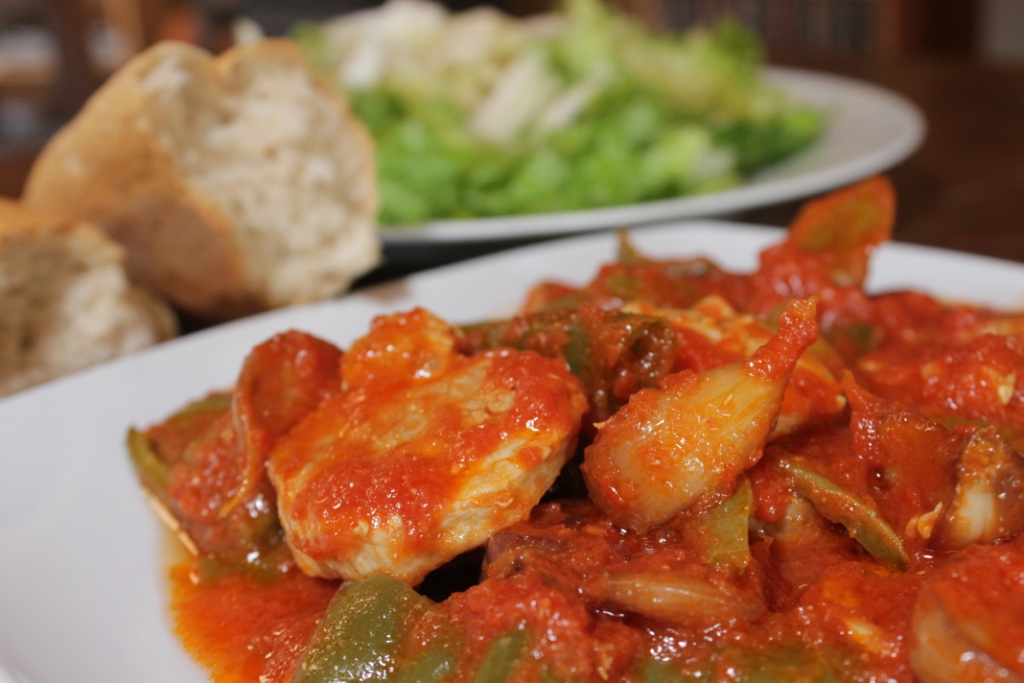

 Iaia's kitchen