
The humble sweet potato is transformed into a lusciously dense filling and baked in semi-circles of short aniseed pastry to make these traditional Christmas treats. I love them. The quantity of sweet potato here makes enough filling for about 60 pastissets, which sounds like a lot, but you don’t need to make them all at once as the mixture will keep perfectly well in the fridge for weeks. Iaia tends to make batches of 20-25 pastissets every few days over the Christmas period (which lasts until the 6th of January here in Spain), so the pastry recipe here is for about that quantity. Repeat as necessary!
What you need for the filling:
2 kg peeled, cooked white sweet potato
1.125 kg sugar
a long stick of cinnamon
the peel of a large lemon
Making the filling:
Traditionally this recipe calls for 2 hours of stirring a large pot of hot, sugary potato without stopping at all. The risk of it catching and burning is enough to root you to the spot and make you sweat. However, Iaia has discovered that it can be cooked in the oven with only a minimum of stirring and fuss. Which is a jolly good thing. So…oven on to 170ºC.
Your sweet potato should be boiled
and then smooshed with a fork while it’s still piping hot so that you get a good, smooth mash. Weigh it mashed to make sure you have 2 kg, then set it aside while you deal with the sugar.
In Spain, we often cook in large, cheap, shallow terracotta bowls which can be set over a flame and in the oven. If you can get your hands on one, do! Otherwise, any shallow, flame and oven-proof dish will do.
Place the sugar in the dish over a gentle flame. Break your cinnamon stick/s into the sugar along with the pieces of lemon peel. Start moving the sugar around with a wooden spoon gently and continuously. The idea is to get the sugar to the point where it is starting to melt without letting it burn at all. You will notice it becomes slightly moist  after 10 or 15 minutes of low heat; if you think you need it, sprinkle a few drops of water in to help it along.
At this point, you can take the dish off the heat and start to stir in your mashed sweet potato until you get a smooth, homogenous mixture. This is what you will put in the oven for almost 2 hours or until it has turned a deep golden colour. Check every 20-30 minutes and stir if you see the top becoming a little toasted.
Remove and set aside until you are ready to make the pastry.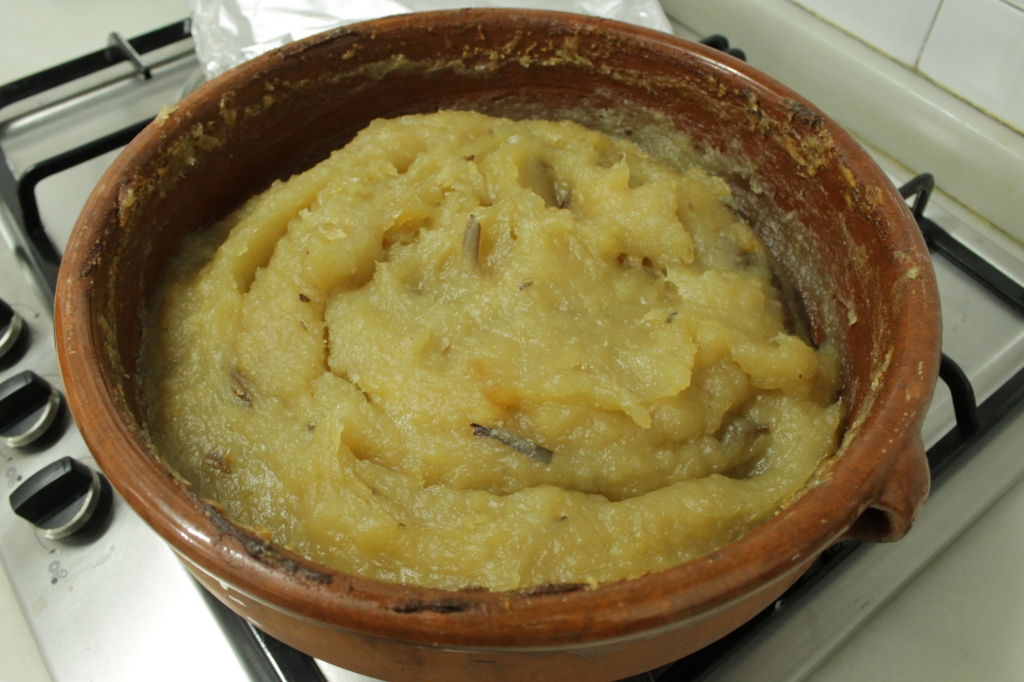
What you need for the pastry:
1 glass of sugar
1 glass of casalla (dry aniseed liqueur)
1½ glasses of sunflower oil
plain flour (as much as you need to make a short pastry)
Making the pastry and pastissets: 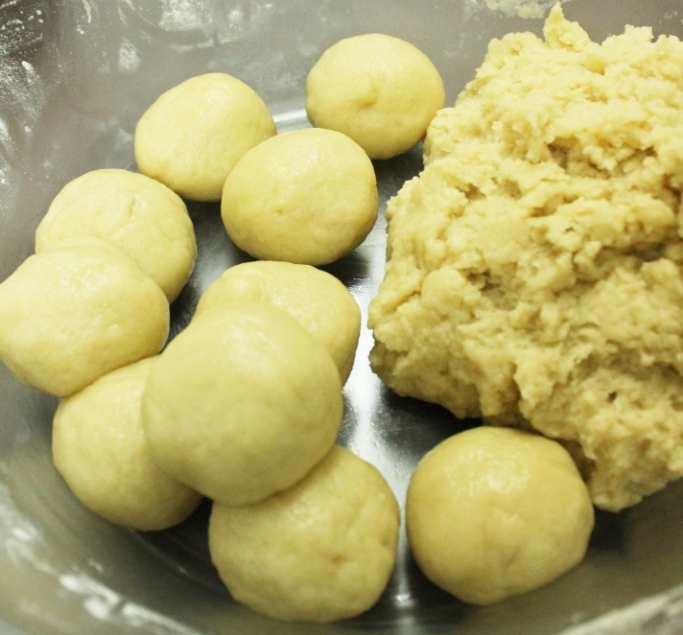
Mix the liquids together and then add flour bit by bit, mixing by hand until you get a nice dough, which is still quite damp, but not sticky. You ought to be able to make lovely smooth little balls of the stuff – roughly 50g of dough per ball. Once you’ve done that, let it sit for a good half an hour before proceeding with the rolling and folding…
Roll each ball out into a circle and place a good spoonful of sweet potato filling onto one side. Fold the dough over the filling to make a semicircle, then use a pastry cutter to tidy the edges. Lay on a baking tray and continue until you have used up all the dough.  Bake for 15-20 minutes at 180ºC or until golden. Take out of the oven and allow to cool completely before scoffing most gloriously. Merry Christmas!

 Iaia's kitchen