Ensaladilla Rusa (a not-altogether-Russian potato salad)

About 10 years ago, a Russian girl called Lana came to stay with someone in the family as part of an exchange programme. My mother-in-law proudly served up a huge batch of Russian Salad to make sure Lana felt at home and was amazed when told that it was about as un-Russian as a salad could get! It seems that our Lana had never eaten at the Hermitage in Moscow circa 1860, where apparently this style of salad was first created by head chef Lucien Olivier. Now Ensaladilla Rusa is a canon of Valencian culinary tradition and another one of those staple nibbles that are plonked on the table before, or during a large family gathering.
It is best eaten the day after prepping and should be served quite cold. Nothing beats homemade mayonnaise, so I am including the (very easy) recipe here. The quantities make enough for 8-10 people to have a good serving-spoon full each, with leftovers.
What you need for the salad:ingredients
1 kg old potatoes (old means less water content)
1/4 kg carrots
1/4 kg French beans
4 hard-boiled eggs
2-3 tins of tuna, drained
50-100g of little gherkins
What you need for the mayonnaise:
1 egg
a pinch of salt
sunflower seed oil
a splash of white wine vinegar

What you do:
Peel and chop your potato into large chunks. All the vegetables need to be boiled but not to total softness – Iaia insists that they need to be al dente so that the whole finished salad doesn’t degenerate into mash.  I put the potatoes into cold water, and once it came to a boil, put the egg timer on for 10 minutes with good results.  As soon as the totties are cooked, drain them and spread them out in a wide, shallow dish to cool completely. Now boil your carrots and beans, refreshing the latter with cold water once cooked so that they stay a nice bright green instead of going a grisly grey. Let all the veg cool right down before continuing.
A lot of people chop their potatoes and carrots into pretty dice, but Iaia says it’s easier to roughly mash, so that is what I do.  You do need to chop the beans, gherkins and eggs into little bits. Mix all of the ingredients together, adding salt to taste and then you are ready to make mayonnaise.
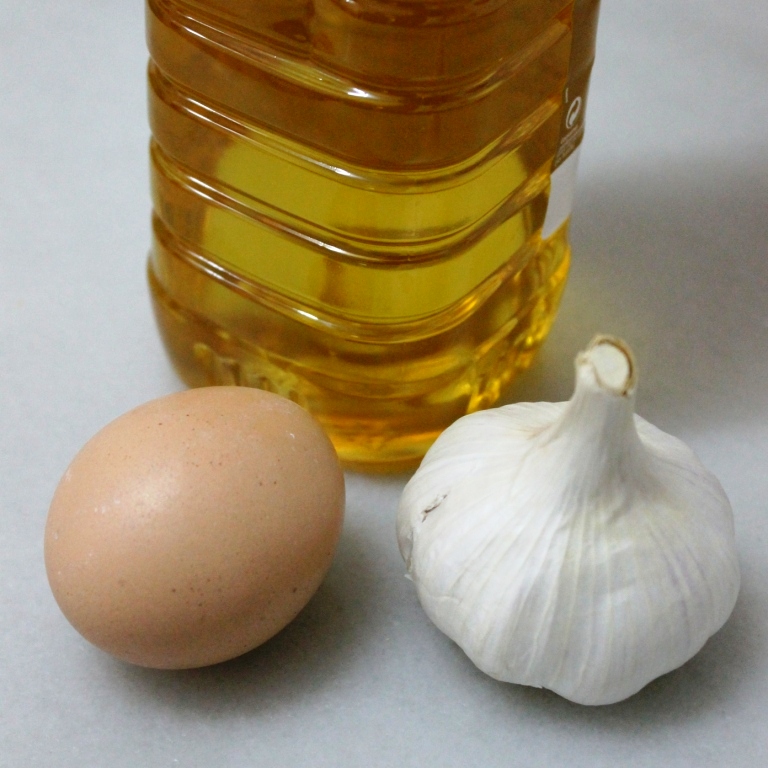
There isn’t any real mystery – you just need a stick blender and a steady hand. Crack the egg into a deep cup, add a pinch of salt and about 1/2 glass of sunflower seed oil (olive is possible, but it makes a very strong-tasting mayo). Start blending, and as soon as you see the mix turning creamy white and thickening, pour a thin, steady stream of oil in as you mix, until you have enough mayonnaise. Add a splash of vinegar to taste at the end, and there it is!mayo
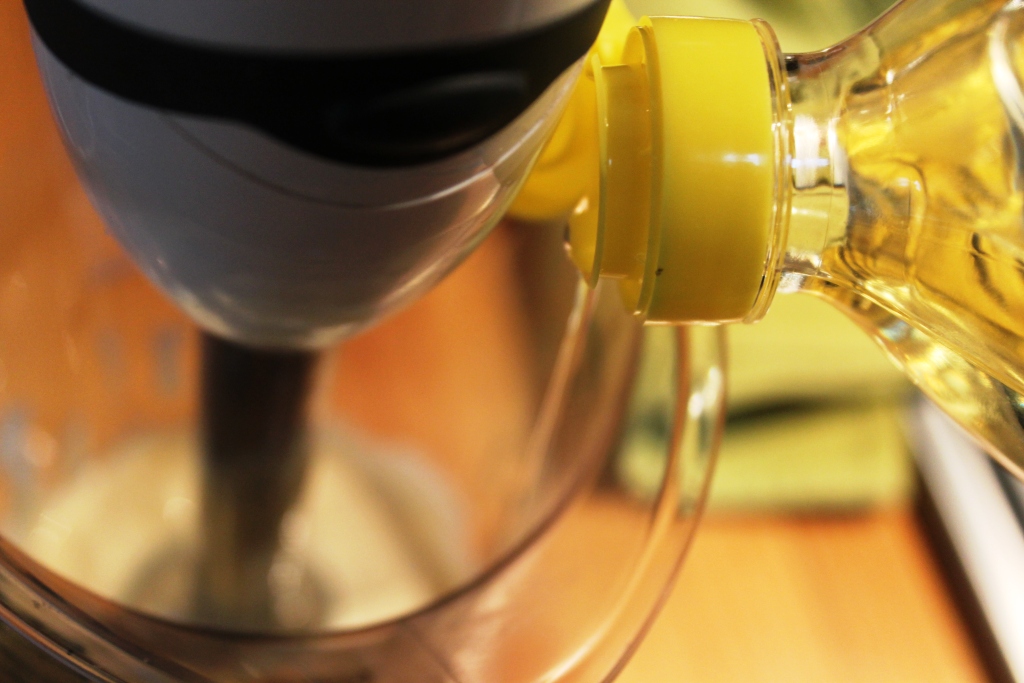
Now you need to spoon your mayonnaise over the salad and mix well until it is evenly gluggy. Iaia uses quite a lot more than I do because I tend to get mayonnaise headaches. Nobody believes me, but it’s true. Pile the salad up into an Uluru shape and spread a thin layer of mayonnaise over the top as if you were icing a cake. Iaia grates a boiled egg yolk over the top to decorate, but I ran out of eggs and so couldn’t. Leave the salad in the fridge until you are ready to eat it. Yum.serving

Serve with: breadsticks
Arròs a banda (fisherman’s rice)

Another rice-based dish for feeding a crowd, this Arròs a banda is my father-in-law’s specialty and he cooked a beauty for us yesterday for the Good Friday family get-together.  There were 16 of us plus Luka, our dog, and not a grain was left over from 2 kilos of rice.

Traditionally this rice was cooked by fishermen who sold off their good stuff but kept some stock-worthy bits for themselves, to be boiled up with rice and scoffed with gusto.

The stock used here was made with about a kilo of morralla which is bits of crab, tiddly little fish, fish heads (the monkfish heads left over from the Caldereta de Rap are particularly prized) and so on. We used just over 5 litres of it for the 2 kg of rice.

Funnily enough, although this rice is cooked in the same type of pan as the Paella, it is never eaten directly from the dish. Apparently, this is because if you leave seafood rice in the caldero it quickly takes on the metallic taste of the pan itself. So once cooked, everything gets piled up in the middle to keep it warm and served onto plates.

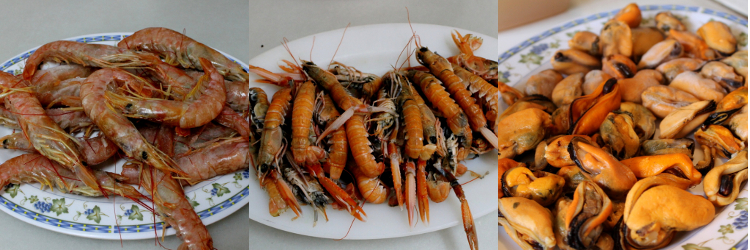
I am not putting quantities of prawns and mussels because you can put as many or as few as you like. I suggest that to avoid arguments, use at least one of everything per person!

What you need:fish
2 kg of (Spanish) rice
5-6 litres of good fish stock
Raw prawns and langoustines
3 cleaned cuttlefish, chopped into small piecesgarliconiontom
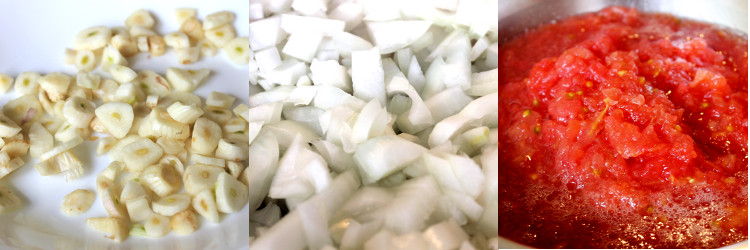
4 onions, finely chopped
1 whole head of garlic, finely sliced
8 pear tomatoes, grated
Mussels (optional)morestuff
Olive oil
Salt
Sweet paprika
Black pepper
Orange food colouring (or saffron)

What you do:cuttlefishandonion
This recipe is very similar to the Fideuà, so if you have cooked that, you will have no trouble with this!  Oreto decided to gently fry 2 of the onions with the cuttlefish before putting it into the main dish – this is unusual, but it does save the crazy, violent, oil-flinging spit that cuttlefish always has as it gets dumped into a hot, open pan.

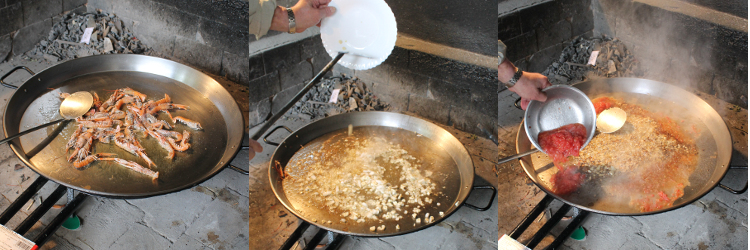
Once that is done, heat your pan and pour a good half litre of oil in to heat up. Eduardo always fries the prawns and langoustines first to flavour the oil. They only need five minutes or so, then you should take them out of the pan and reserve them for later.
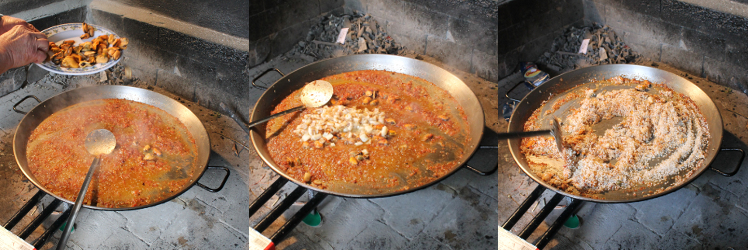
123Onions and garlic get fried next, moving everything about so there is no burning. Once they have softened slightly, pour in the tomato and cook until some of the liquid has evaporated. 456When it looks nicely done, stir in the mussels and the cuttlefish. Then it is time to fry the uncooked rice a little. This coats it with oil and helps stop any clumping. Give it about 5-6 minutes, moving it around constantly, so it doesn’t catch.789Just before you put the stock in, remember to add a good spoonful of sweet paprika to the pan. It is really important not to burn this spice – 30 seconds or so is enough, and then you need to pour your stock straight in.
Check for salt, add the colouring or saffron, give everything a gentle push to evenly distribute the rice and bring to a boil.  When you have a lovely rolling boil going, place the prawns and langoustines on top and stand back.  You may need to add a tiny bit more stock if you see it evaporating faster than the rice is cooking, but other than that, leave it alone.101112Just before the stock has disappeared, get a healthy pinch of ground black pepper and sprinkle generously over the rice.spoonful

Serve with: allioli and bubbles

Allioli (garlic mayonnaise)

Traditionally served with Arròs a Banda, this garlic mayonnaise is also amazing with barbecued lamb cutlets. However, my favourite way of eating it is on toasted baguette slices with a spoonful of grated tomato – a fab starter for any meal.

What you need:IMG_1093
1 egg
5-6 cloves of garlic
Sunflower seed oil
A pinch of salt
A stick blender (or, if you are a purist, a mortar and pestle, in which case I wish you good luck and strong arm muscles).

What you do:
Put the egg, salt and garlic into a deep, narrow container (stick blenders usually come with one) and pour in about half a glass of oil. Start blending. Once you see it thickening and turning white, add more oil in a tiny stream, while you continue to blend. allioli

This can be done by one person, though it might be easier with two.  Keep going until you have enough!

Coca gallega (Galician-style pizza)

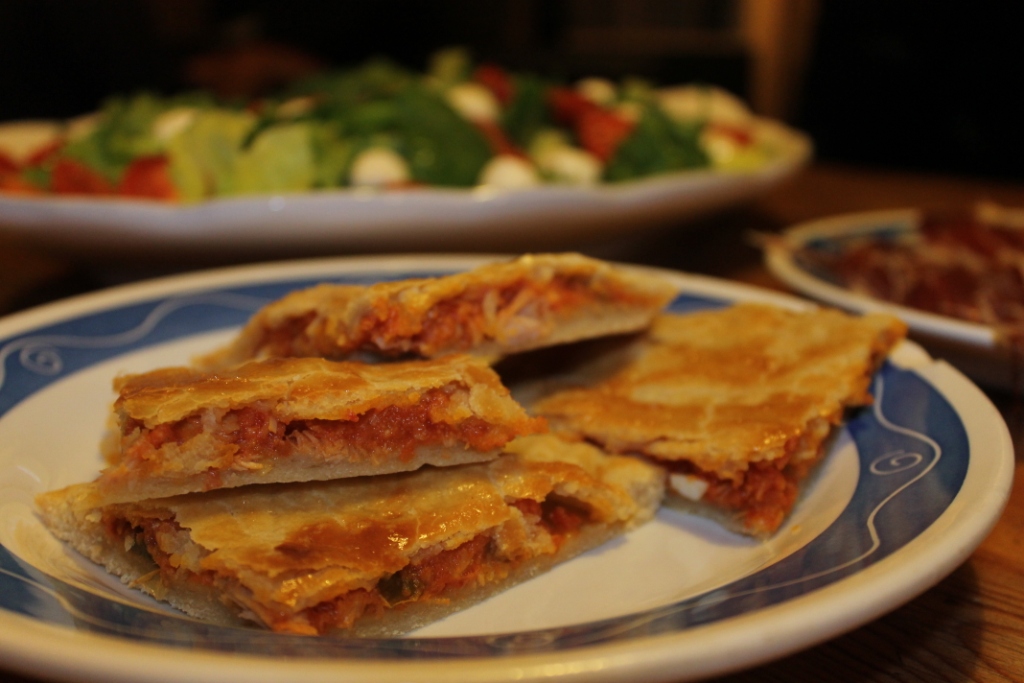
A compulsory part of any major meal here is the picaeta, which is a rough equivalent to “nibbles”.  In our family, one of the most appreciated nibble foods (apart from the ubiquitous home-roasted peanuts, olives and crisps), is Auntie Joaquina’s Coca Gallega, a pizza-like pasty which is cut up into squares and devoured almost as soon as it gets to the table.
This recipe is easy, although you should remember to do the basic tomato mix the day before to ensure that it has the right texture and depth of flavour. Feel free to leave out the tuna if you don’t like it, or don’t want to consume the noble fish, and (speaking from experience) it is no great disaster if you forget to add the pine nuts, although they do provide good little nubby bits to bite.
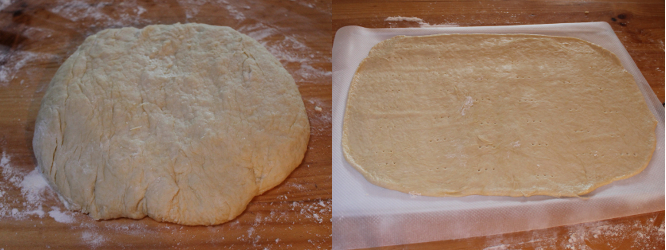
The most complicated part of the recipe is moving the pastry once you have it rolled out, but a rolling pin and a bit of flour solve things admirably.
This recipe gives you quite a bit of pizza. We had four friends staying over for the Easter weekend, and I served it with a big green salad and a plate of Serrano ham for dinner – there was enough left over for morning tea on Sunday.   It’s perfect for taking along to a buffet-style party or picnic!

What you need for the filling:123
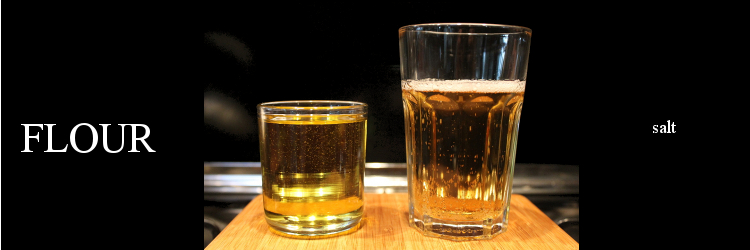
1/3 glass of olive oil456beeroil
1 kg of tinned tomato
1 green Italian pepper
1½ spoonfuls of sugar
5-6 cloves of garlic
3 tins of tuna in oil
50g of pine nuts
4 boiled eggs
What you need for the pastry:
1 glass (200ml) sunflower oil
1½ glasses (300ml) beer
a good pinch of salt
plain flour (as much as the liquid admits)

What you do:
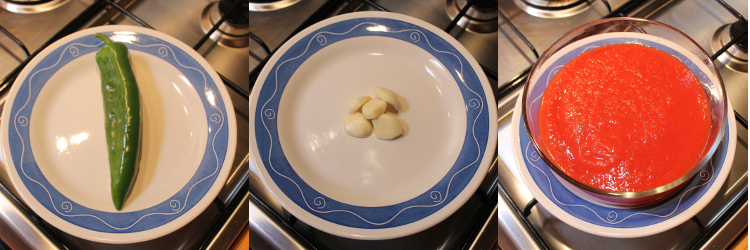
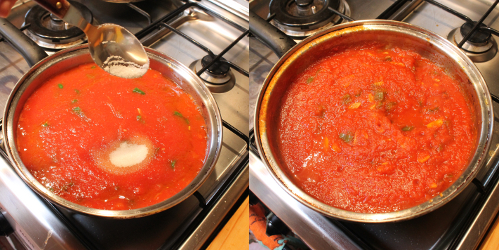
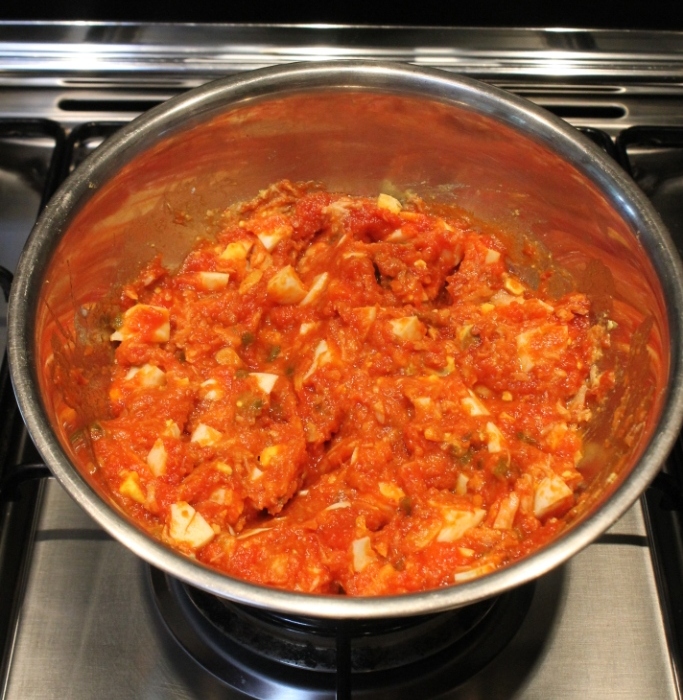
It’s best to prepare the tomato base the day before you want to cook the pizza. Heat the olive oil in a large frying pan and gently cook the garlic without letting it burn. Chop the pepper into small pieces and add to the garlic, frying lightly. If your tinned tomatoes are not already pureed, smoosh them up in the blender until they are smooth, then add to the pan. Chuck in the sugar to reduce the acidity of the tommies. You now need to let as much liquid as possible evaporate, while the tomato fries itself tasty.  It took about ¾ of an hour the other day, on a medium flame and with a piece of foil over the top of the pan to stop tomato splatting all over the place.  Once you think the mixture is dry enough, remove it from the heat and leave it in the fridge until tomorrow. tomatoThe following day, drain the tuna of all oil (or brine), chop the eggs into small chunks and add both, together with the pine nuts, to the now cold tomato. Mix well and taste for seasoning. Set aside while you make the pastry and get the oven warm.IMG_1212Heat your oven to 160ºC, preferably with the heat only coming from the bottom. If you can’t choose, then place the pizza down low in the oven to avoid any burning on top.  Pour the beer and oil into a large mixing bowl and add a pinch of salt. Now add flour bit by bit (about half a glass at a time) and mix in with a metal spoon until a dough begins to form.  You are looking for quite a soft, oily dough but one that doesn’t stick to your fingers. When it’s ready, turn it out onto a floured surface and work it lightly – this isn’t bread, so there is no need to knead for any longer than a couple of minutes.  pastryDivide the dough into two parts, one slightly larger for the bottom layer.  Using a flat oven tray (about 60 x 60) lined with baking paper as your guide, and enough flour to stop things from sticking, roll out the bottom layer until it is about 2-3mm thick. Prick with a fork.  Spread your tomato mix over the pastry, exactly as you would a pizza.  Use it all.
Now roll out your lid; it should be a little thinner than the bottom. Transferring it to the pizza can be tricky, but if you lightly flour the surface of the pastry and your rolling pin, you should be able to carefully roll the flat dough up onto the pin and then unravel it over your tomato.
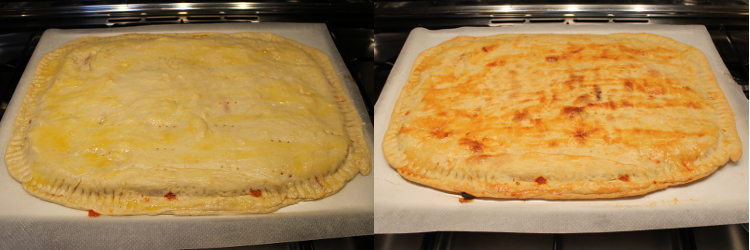
Use a fork to press the edges together and prick the top surface. Brush with a beaten egg and pop it into the oven for about 40 minutes, checking from time to time. UntfinisheditledIf you find the base is cooked, but the top is still very pale, you can switch to the grill only, keeping your eye on the pizza to make sure it doesn’t get frazzled. Allow to cool completely before serving (it’s even better the next day!)serving

Serve with: other nibbles, or a salad and some cured meats for a main meal.

Iaia’s yoghurt cake

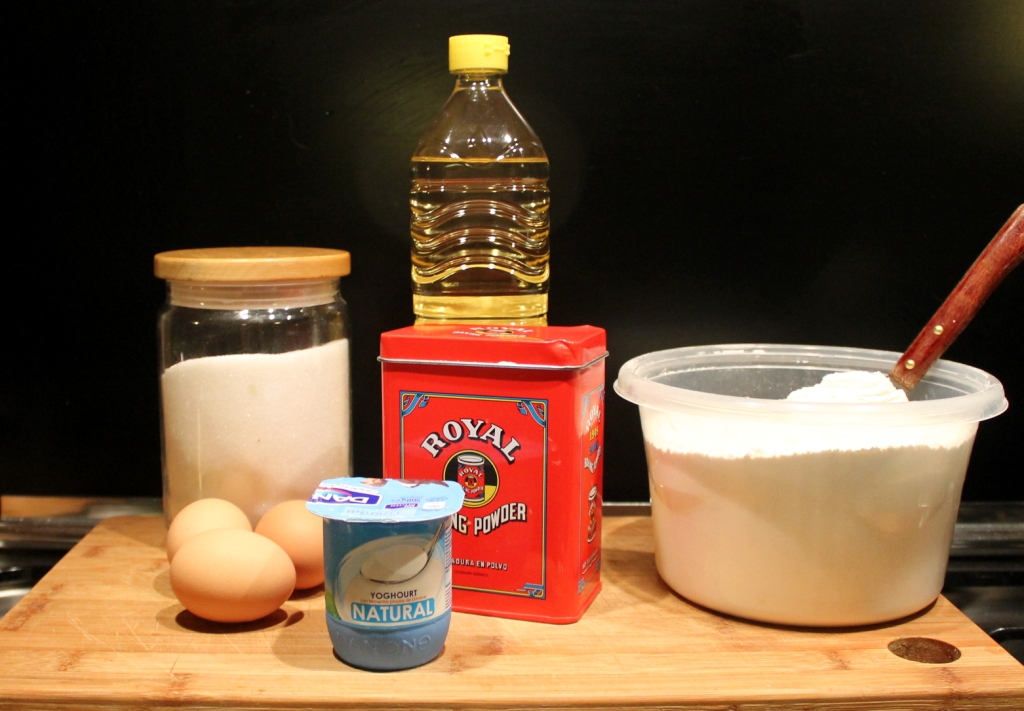
A simple sponge based on the yoghurt pot measure, which in Spain is 125ml. If you have bigger pots, you might need to add another egg and a bit more baking powder. I cooked this one last night, and it has already been quaffed by three teenage girls.  I might also have had a piece or two myself.

What you need:ingredients
1 pot of natural yoghurt
1 yoghurt pot of sunflower seed oil
2 yoghurt pots of sugar
3 yoghurt pots of plain flour
1 sachet of baking powder (16g)
3 eggs
the zest of a lemon or an orange

What you do:
Heat your oven to 180ºC and line a 23cm round cake tin (spring-form makes it easier to get the cake out later). Pour the yoghurt into a small bowl and set aside so you can use the pot to measure the other ingredients. potsMix the sugar and egg yolks together in a large mixing bowl, then add the yoghurt and oil, stirring until smooth and glossy.  Sieve the flour and baking powder into the bowl pot by pot, stirring well but not over-beating.  Add the zest and then whip up your egg whites and fold gently into the mix. Bake for 30-40 minutes (every oven is different) and then allow to cool completely before the slicing and gobbling.

finished cake

Serve with: tea

Caldereta de rap (monkfish stew)

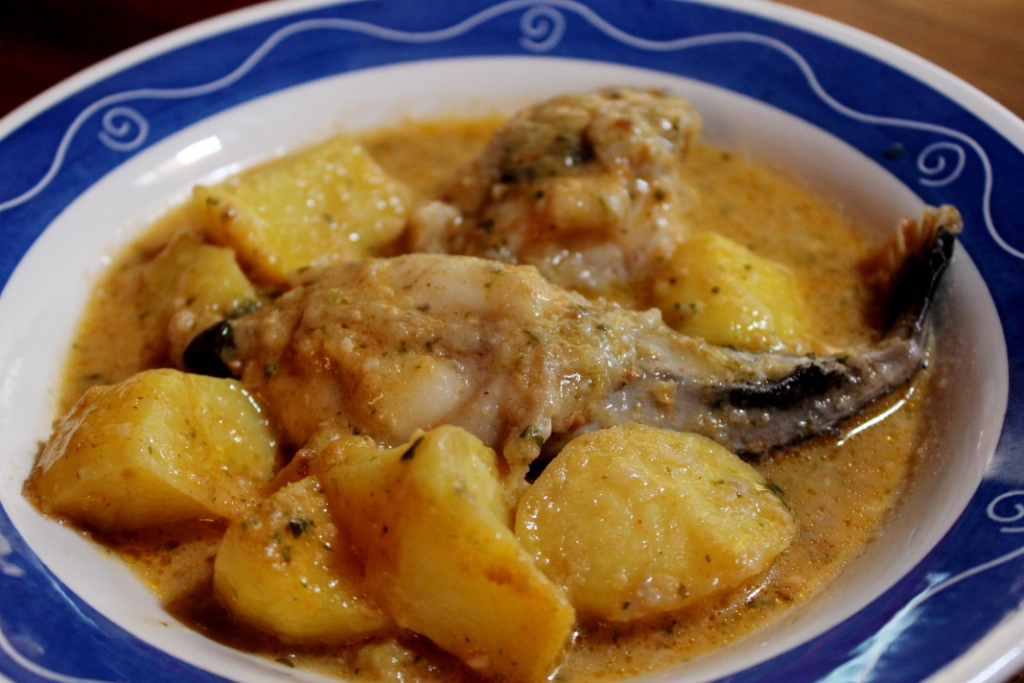
This is one of Iaia’s signature dishes.  She tends to cook it for us on birthdays and we all love it, especially the thick sauce, which can be either scooped up with fresh bread or spooned up after mashing it into the potato chunks.

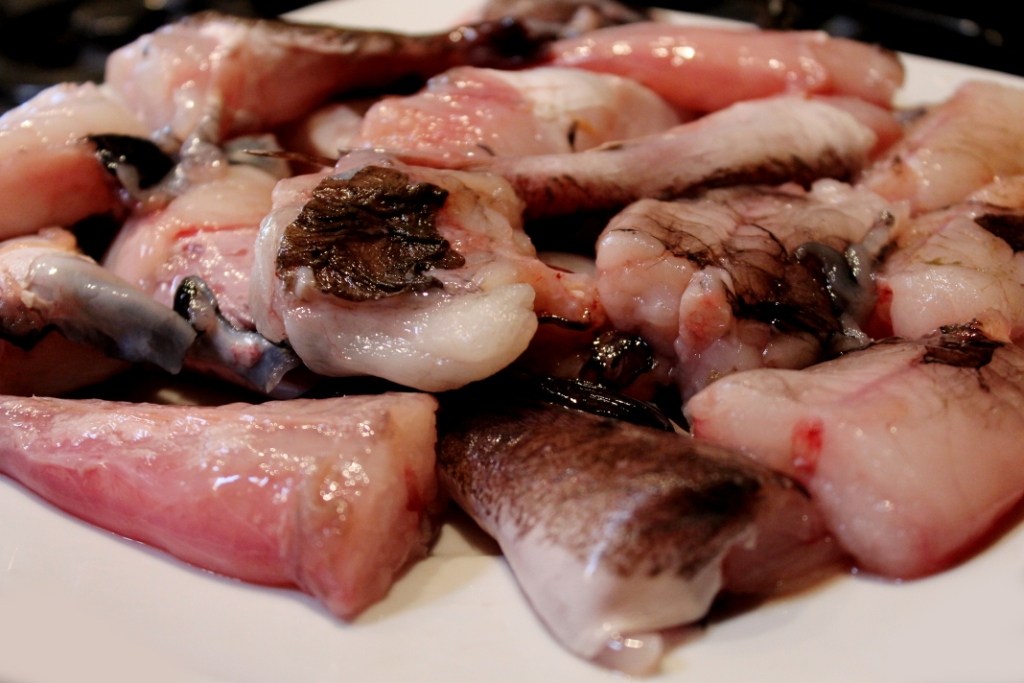
Fresh monkfish flesh is a lovely rosy pink. fishtails The frozen stuff does not taste the same, and Iaia refuses to use it. Try to buy smaller fish as their muscles are less fibrous and far more pleasant to eat. Leave some of the skin on if you don’t find it irksome, as this will act as a natural thickening agent for the sauce and enhance its sweet, fishy goodness.

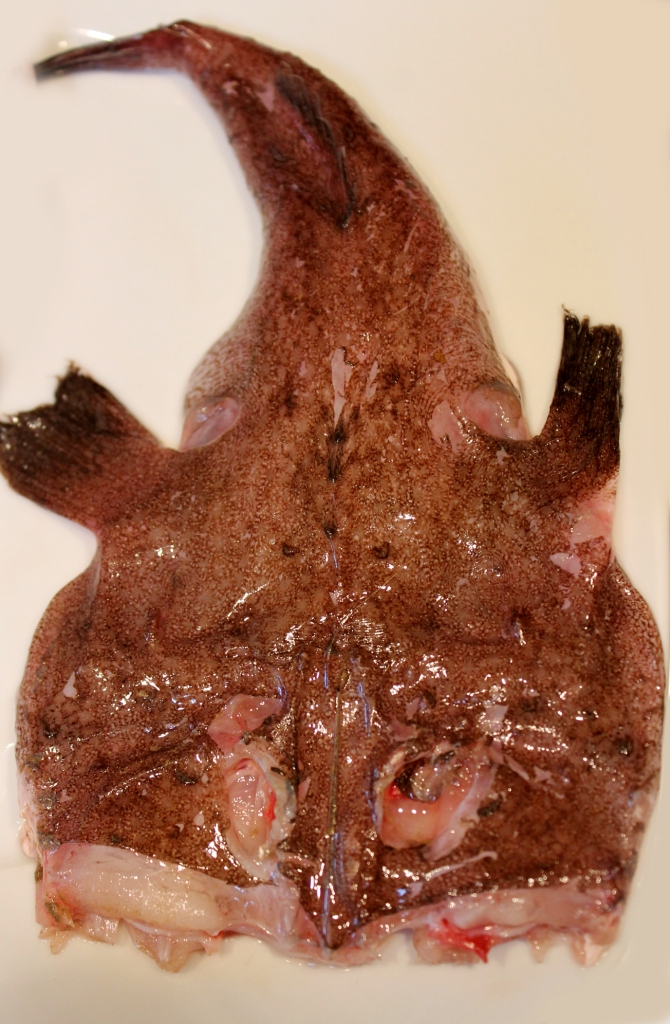
Get the fishmonger to clean the fish but bring wholefishthem home with the heads on, which you can then scissor off and freeze for the best fish stock ever.  The cuts that go into the stew are the whole tail and the loin, both with the bone in.

Iaia swears by olive oil for just about everything and quite happily pours a good half litre into her pan to fry the potatoes. Once they are done, she siphons off about two-thirds of that oil and saves it for paella on Sundays.

What you need for 6:
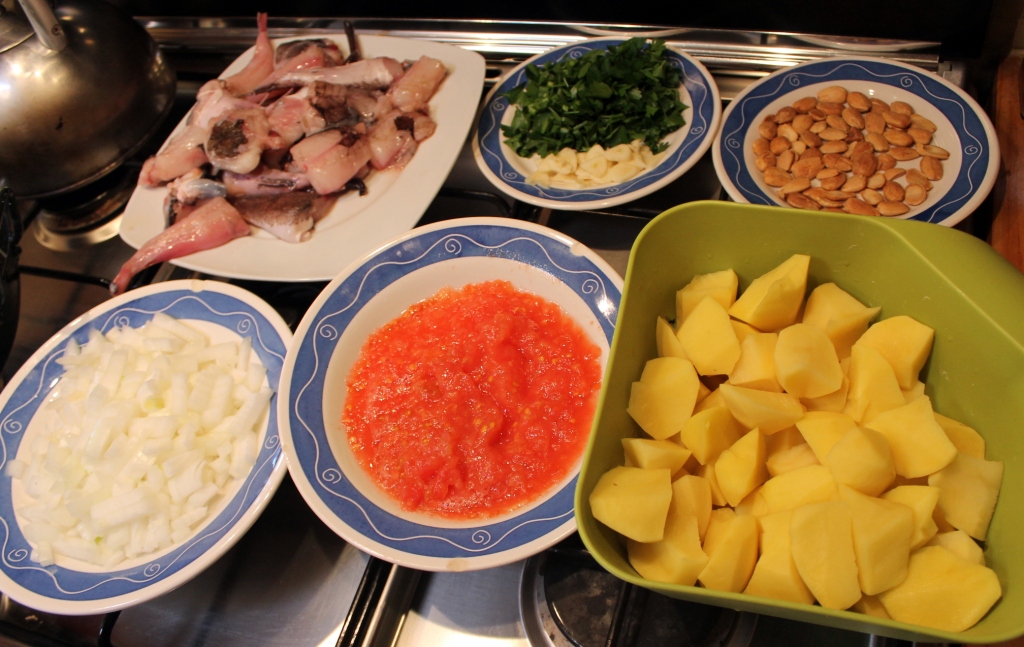
About 850g fresh monkfish piecesingredients
1 kg potatoes
2 pear tomatoes
2 onions
3-5 cloves of garlic
small bunch of parsley
50g toasted almonds
½ litre of oil for frying (Iaia uses olive)
sweet paprika
2 small chillies, whole*
750 ml good fish stock
flour for dusting the fish
salt and pepper to taste
*optional and to be taken out before the whole dish becomes mouth-numbingly hot!

What you do:
Finely dice the onion, slice the garlic, grate the tomato and chop the parsley. All of these ingredients will end up being blended, so don’t be too fussy about perfect knife work.

Cut the potatoes into chunks. Iaia has a special technique – she stops each cut about ¾ of the way through and then breaks the piece off, saying that this will stop the potato chunks from breaking up as they cook. It seems to work!

Heat your olive oil in a deep pan and fry the potatoespotatoes in batches until golden, but not necessarily cooked through. Iaia says she uses so much oil because you have to have enough to cover the potatoes so that there is no chance of them getting crushed and deformed by constant turning and stirring.

Once the potatoes are done, remove two-thirds of the oil and reheat. Season your fish well with salt and pepper and dust with flour before laying it gently into the hot oil to fry.  You don’t need to cook the fish through; 2-3 minutes on each side is enough. When you remove the fish, place it directly into a wide, shallow, flameproof casserole dish, which is where you will cook and present the final dish.  Distribute the fried potatoes evenly over the fish pieces.

In the same oil, lightly fry the sliced garlic and then add tomatomixthe parsley and onion, cooking until the onion is softened. Pour in your grated tomato and fry until you notice the mix thickening slightly as the water from the tomatoes evaporates. If you are using chillies, settle them into the mix now, but take them out before you blend! Just before you take off the heat, pop the teaspoon of sweet paprika in and give it all a quick stir.

Pour the tomato and onion mixture into a blender along with the whole toasted almonds and pulse to a thick paste.  You can also do this with a stick blender, but avoid over-blending; texture is important here.

mixstockPour this picadillo, or flavour base, over the fish and then add just enough stock to cover everything. Check for salt – fish can be tricky and very easy to over-salt, so it’s best to add small amounts throughout the process than try to rectify with a great handful at the end.

Bring to a boil, turn down the heat and simmer gently for 20-30 minutes, adding stock if you see that it gets too dry, aim for a thick gravy-like consistency.

Like most stews, this one is even better the day after it’s cooked, but it will also benefit from standing for half an hour or so before serving.

finisheddish

Serve with: fresh bread and your best bubbly.