
Last week Iaia turned 70, and not realising that her two boys had planned a surprise party for her, she got all the ingredients together for a celebratory fideuà. Of course, there was no way we were going to let such deliciousness go to waste, so we had a second celebration today, and Eduardo, my father-in-law took the reins and talked me through the art of this fabulous dish.
The stock we used was homemade fish stock. Iaia often goes to the Friday market and buys a bag full of “stock stuff”, including monkfish bones, hake heads, little crabs and other odds and ends that are not otherwise sellable. She boils up a huge batch – maybe 10 or even 20 litres of stock – and freezes it in various-sized containers.
If you can be bothered, and if you can stand the stink, homemade stock is the best by far. Otherwise, buy the best quality fish stock you can find. Please, please don’t use stock cubes – they just don’t cut it for this sort of cooking, and I’m afraid Iaia would be horrified.
What you need for 9-10 people:
Uncooked langoustines and prawns (1 or 2 of each per person)
2 cleaned cuttlefish (or squid)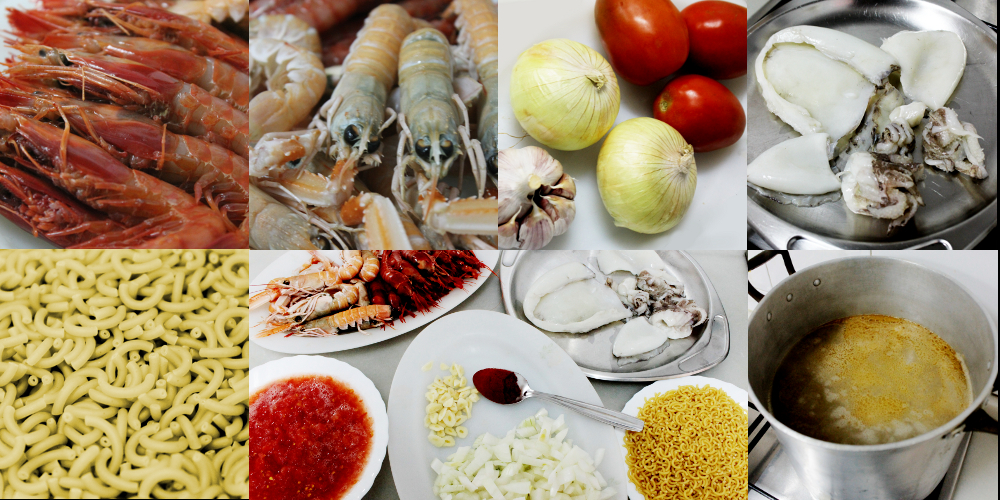
2 large onions
6 cloves of garlic
3 pear tomatoes
1 kg of fideos*
about 2½ litres of fish stock
250 ml of olive oil
1 tbsp sweet paprika
salt and pepper
*fideos are short lengths of thick, bucatini-like pasta with a hole running through them. If you can’t find them, try breaking spaghetti or bucatini into 1-inch pieces and adjust the cooking time and amount of stock to suit the pasta you use.
What you do:
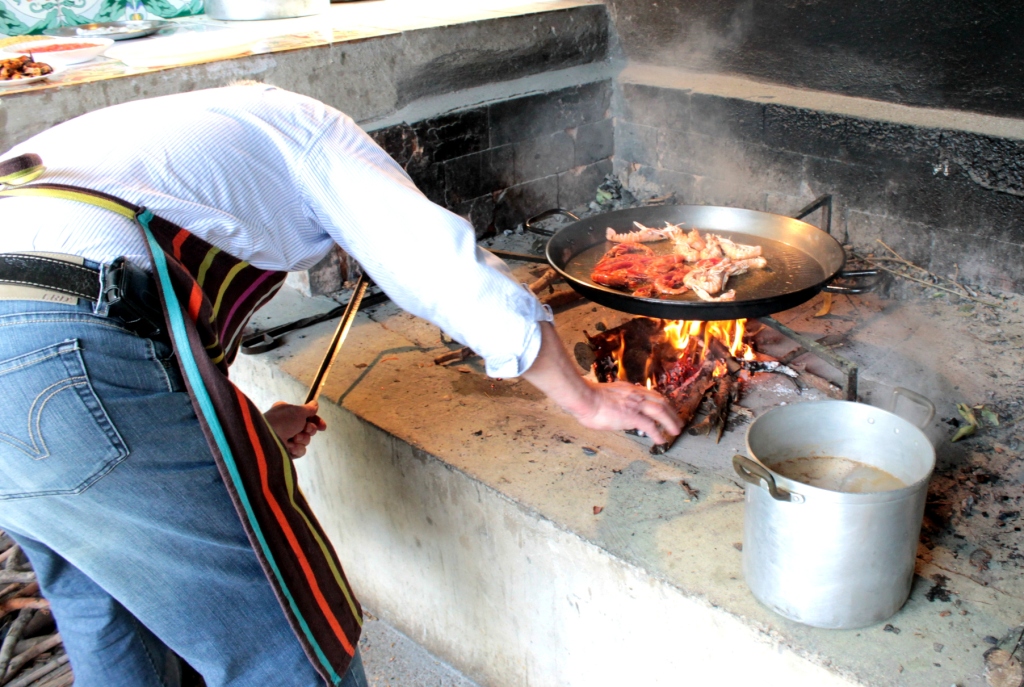 Eduardo cooks over an open fire, which is difficult and can be dangerous. If you can get hold of a paella gas ring and paella pan, then I would use them. Otherwise, if you scale down the recipe, you could probably do a pretty good version for 2 or 3 people in a large frying pan over a gas flame.
Slice the cloves of garlic and finely chop the onions. Grate the tomatoes and discard the skins.
Cut your cleaned cuttlefish into short strips and get
everything else assembled within easy reach before
you start cooking.
Pour the oil into your chosen 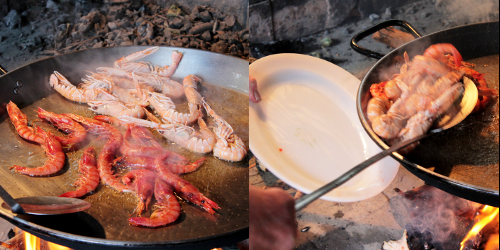 pan and heat well. Carefully place the langoustines into the hot oil and fry for a few minutes, turning them from time to time. Add the prawns and do the same, then haul all of the critters out and set them to one side. This is not so much to cook the crustaceans as to perfume the oil, and it does wonders for the final
flavour of the dish.
Lower the heat a little and fry the garlic and 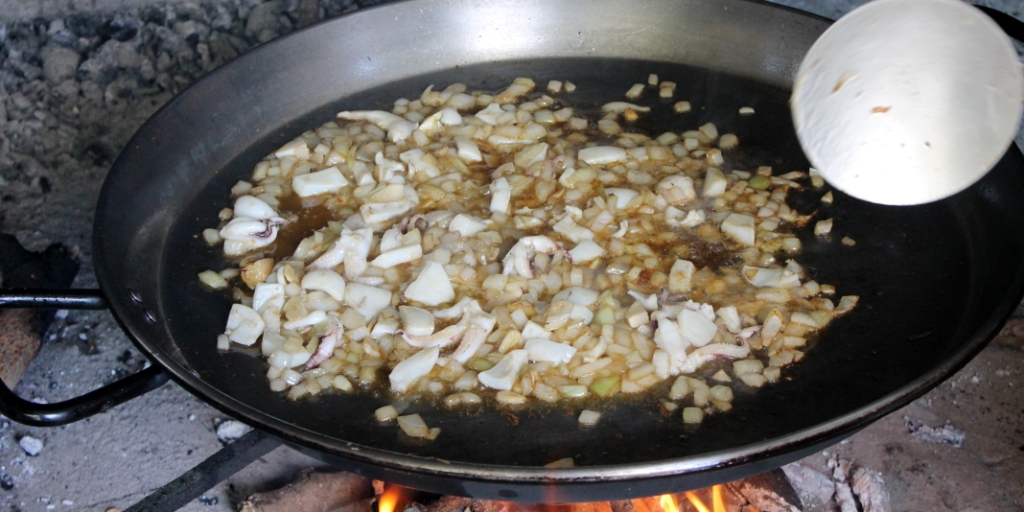 onion for a couple of minutes, or until they soften slightly. Add the cuttlefish. It’s a good idea to keep things moving throughout these early stages so that nothing catches and burns. Eduardo also mentioned that when he buys fresh cuttlefish or squid, he scalds it and then lets it dry before frying it,
apparently this stops it from spitting oil all over you, which is a good thing. After about 5 minutes, the cuttlefish will be opaque, and the onion and garlic well-softened. It is time to add the tomato and your first seasoning of salt. Keep pushing everything around the pan; burnt is bad.
(At this point, we had to take everything off the fire because my brother-in-law was late, and he was bringing the pasta. While we were waiting, we gave in to temptation and dunked some bread into the tomatoey base. It was superb. Be tempted.)
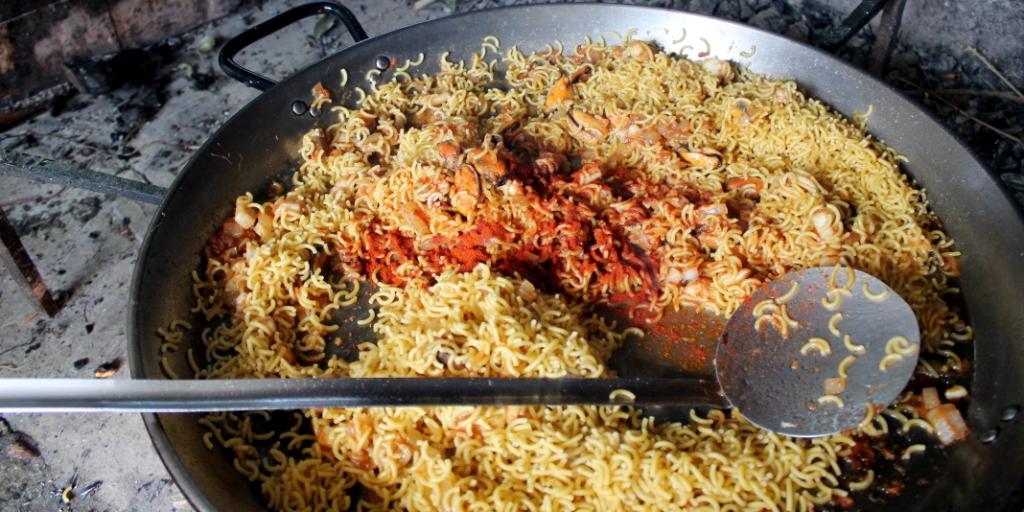 Once the fideos arrive, pour them all into the hot sauce, adding the paprika at the same time. Give them a thorough swirl to coat them with the flavoursome mix, and then pour your stock in. It is a bit of a hit-or-miss calculation; experience seems to be the key. Eduardo used about two and a half litres today, and the pasta was perfect.
As the liquid comes to a boil, lay your 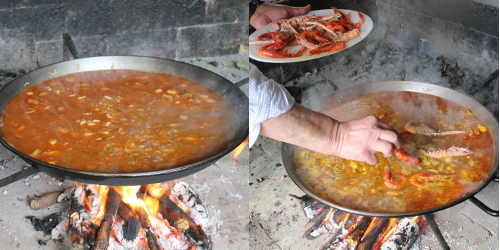 langoustines and prawns over the top and check for salt. Allow to boil vigorously for the time stipulated on the packet – usually about 9 or 10 minutes. The liquid should have all but disappeared by then.

We don’t eat this one from the communal dish but serve it on plates and sit at the table. It’s important not to leave the pasta in the metal pan for too long, or it will take on a slightly metallic tang. If there is any leftover after your initial serving, pop it onto a large dish and bring it to the table – most people will want seconds anyway!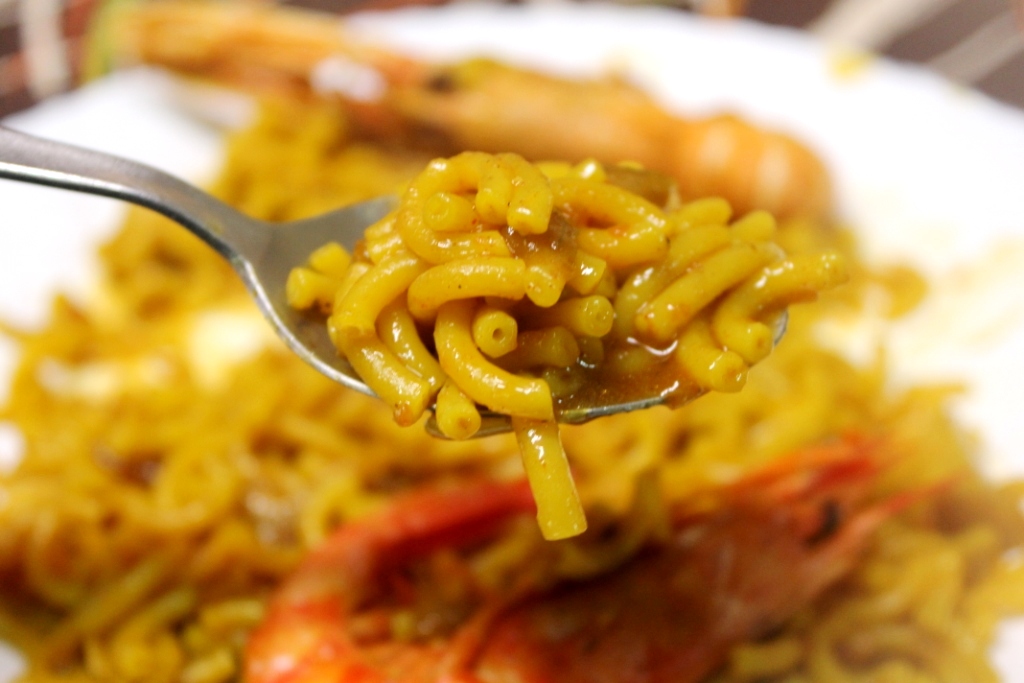
Serve with: bubbles or a cold, dry white
 Iaia's kitchen